The COVID-19 pandemic has left a strong mark in all aspects of our lives. It has impacted society – our habits, routines, and the way we interact. It has pressured the economy, its financial stability, and the way we do business.
Thus, what has changed in the way managers are doing performance management in these volatile times?
1. The way we do strategic planning
Before the pandemic, risk management, scenario planning, and business continuity plans were specific to large corporations. Nowadays, even small organizations will have a plan B ready for different scenarios of the COVID-19 evolution. There are industries, like retail, where all planning revolves around foresting based on historical data. Nowadays, using data from the past to plan the future seems a futile attempt to regain the feeling of control.
Moreover, most organizations, regardless of their industry, rely on annual if not 3 to 5 years planning. It is obvious that in the present circumstances and given the complexity of managing a business nowadays, these strategic planning practices seem useless.
2. The importance given to performance measurement
More than ever before, real-time data is a vital management tool. Access to data is critical in managing a crisis. One of the positive side effects of the pandemic was the pressure to digitize operations that create opportunities for data collection and better measurement of operations.
3. The way employees can be evaluated
Remote work and hybrid systems (combining work from home with office time) are no novelty, but in the COVID-19 circumstances, they gained significant recognition and became the norm rather than the exception for many organizations.
Managers and team leaders can no longer directly observe employees. There is a series of soft competencies, like communication, collaboration, proactivity, and creativity that are very difficult to evaluate in an online working environment, and yet they are essential skills for many jobs.
What is the way forward?
1. A different way of planning
Risk management must be an inherent part of organizational strategy, regardless of the company size. You don’t need a risk management office to have a proactive management approach and handle risks well. Small organizations can use their performance scorecard and populate it with leading KPIs or Key Risk Indicators.
For example, setting a red line level for # Days in accounts receivable can help you manage better cash flow, monitoring # Safety non-compliances can provide insights into the risk exposure to # Work accidents resulting in mortality. Identifying different scenarios in key areas of business and having contingency plans can give any organization a heads-up in case of a crisis.
Strategic planning must concentrate on shorter time horizons and reassess a series of factors that organizations may not have considered on a quarterly basis.
Government interventions, international economic context, competitors’ reactions, customers’ preferences, customers buying power, suppliers’ situations, internal capabilities and optimization potential, and employees morale and productivity are factors that have changed post-pandemic and need to be investigated. Moreover, agile strategic planning processes must be set in place to enable the organizations to react fast to changes.
In the face of chaos, the most effective tool to put everyone on the same page is to use clear objectives, KPIs, and initiatives, even short-term ones. The challenge is to adapt the measuring and reporting of performance to respond to tight deadlines. Data must be available fast, preferably in real time.
Thus, identify five to 10 KPIs that are easy to use, concise (tackle the problem directly), and can be collected with high frequency (weekly, monthly). These will be the ones that help you navigate a crisis. Now is the time to replace complex measurements and reports with simple yet relevant tools.
In the medium term, most likely for many organizations, the entire strategy must be reconsidered and linked to relevant performance scorecards in which simple measurements can be combined with more complex KPIs to provide a holistic overview of performance.
3. Focus on building the right mindset for each job than defining the specific job outputs
Many organizations invest a significant amount of time in identifying the right KPIs and targets to capture as precisely as possible the employee’s performance or productivity. Moreover, the more complex the job is, the more difficult it is to capture all contributions in relevant KPIs. In a volatile business environment, such an approach makes targets and KPIs obsolete the moment they are communicated.
The performance criteria used for employee evaluations should be flexible, easy to adapt and more focused on the extent to which the role is successfully achieved, as compared to looking at operational details. For example, it should be less important if the employee delivered one or three safety awareness sessions to factory workers if their awareness level is at the desired level.
One methodology that can be used at the employee level is the Objectives and Key Results Framework. OKRs are set and reviewed quarterly, but they can be changed even more often if the result set is no longer of interest. They emphasize on the importance of personalizing the objectives and key results and making the employee accountable for setting and monitoring them. Not all key results have to be KPIs; some of them can be reflected by completing an initiative or other types of results.
The end purpose of an OKRs system is not to compare employees or indicate what percentage of your staff are high performers. This methodology aims to facilitate communication, clarify expectations, align work activities to corporate strategy, and to provide a tool for managers and employees for discussing individual performance and improvement opportunities.
Organizational processes should be designed in such a way that they effectively enable the strategic implementation of corporate objectives. Successful execution of strategy demands well execution of processes from all perspectives.
Processes that are properly understood and deeply rooted in the organizational realities will produce results that are reliable, easily controlled, and effectively managed. The documentation of processes allows for meticulous work to be conducted in relation to a company’s effort of architecting process frameworks and solutions.
Moreover, process documentation is intended to accurately describe the landscape of a process, the activities included within that landscape, the standardized workflow associated with a particular process, and its current state by comparison with a desired one. Process templates generally reflect on the degree of process documentation within an organization.
“Process templates are created to describe some aspect of a process, a process landscape, process flow, process solution or state. […] Process templates enable the capture and relation of process-centric objects within the same template or across multiple templates, each of which promotes its own view of a process.” (Von Rosing, Von Scheel, & Scheer, 2014, pp. 175-180)
With decomposing processes into KPIs, proper documentation that involves process description and the internal procedures should be in place. Meanwhile, process management tools such as process maps are consulted for a better perspective on the process itself.
The basic process management tools and templates that can be used for an effective process design are the following:
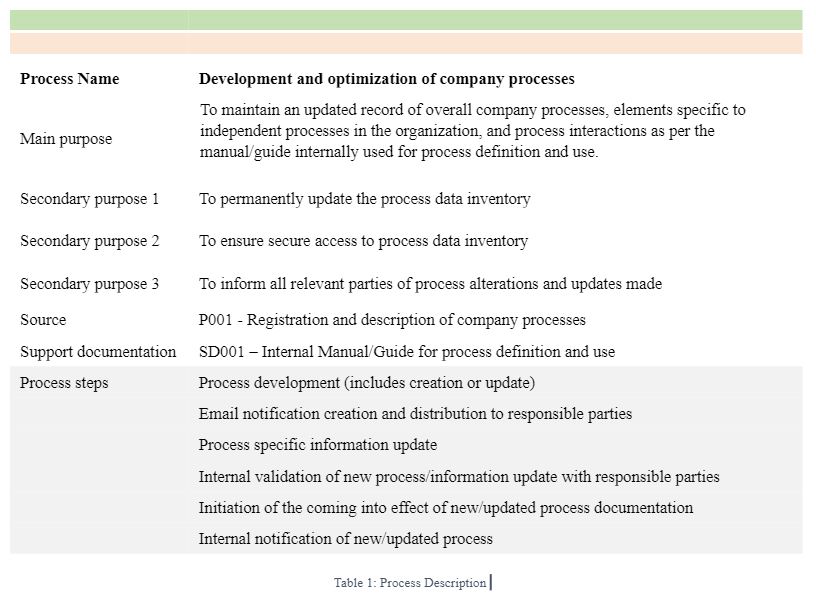
1. Process description: The process description is a template that supports the organization in understanding the functionality of each process in turn. It is vital that the process description concentrates on the purpose of the process as a constituent part of operational activity rather than the steps in the process.
The purpose of the process becomes a focal point around which processes are defined. This is especially important due to the fact that processes around which the company is currently organized may not be the most suitable for strategy. It is not excluded that the process description includes more than one purpose for a process in place.
Purposes can be main or secondary. The main purpose refers to the strategic purpose that the process serves for the organization. Secondary purposes are the ones that are directly tied to the main purpose of the process; however, they have a more functional or operational focus that generally derives from the process steps or activities.
Such a way of working with the process description not only helps to validate the linkage to organizational objectives but also leads to a more accurate distribution of KPIs. This will be measured by levels of organizational performance.
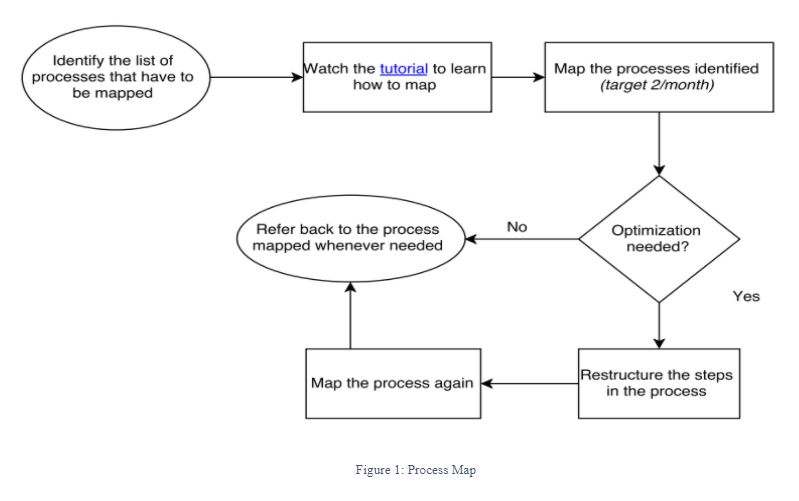
2. Process map:The process map is a process management tool “that shows input-output relationships among process dependent operations and departments and that documents in a step-by-step process sequence the activities that are required to convert inputs to outputs for the specific process.” (Hunt, 1996, pp. 8-10)
A process map provides an illustration of organizational processes as well as the interactions between the main process steps. A process map is especially important as it helps identify the main inputs stepping into the process and the main outputs stepping out of the process, while reflecting on the “as is” or” current state” of the process itself.
One of the most important roles of the process map is it helps identify bottlenecks in the process or waste that needs to be eliminated in order for the company to achieve process optimization.
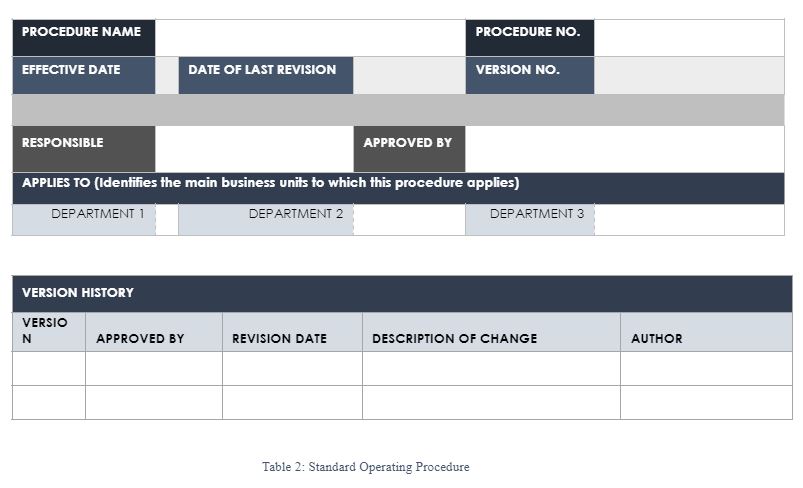
3. Internal procedures:Internal procedures are a necessary tool in breaking down processes into KPIs and process optimization thereon forward. They also deliver a standardized template for capturing specific process information.
Internal procedures provide a more detailed view of how processes are conducted for the organization as well as the Service Level Agreements instituted as part of the interactions with other processes in the organization.
Internal procedures also provide a set of detailed steps on how to perform process tasks, which significantly aid process performance measurement through KPIs.
Those basic process management tools and templates provide a simple and cost-effective solution to breaking down processes into KPIs. If used effectively, they can deliver tremendous benefits, such as preservation of process knowledge, documentary evidence of process understanding, a framework for process performance measurement, and overall improvement of business processes over time.
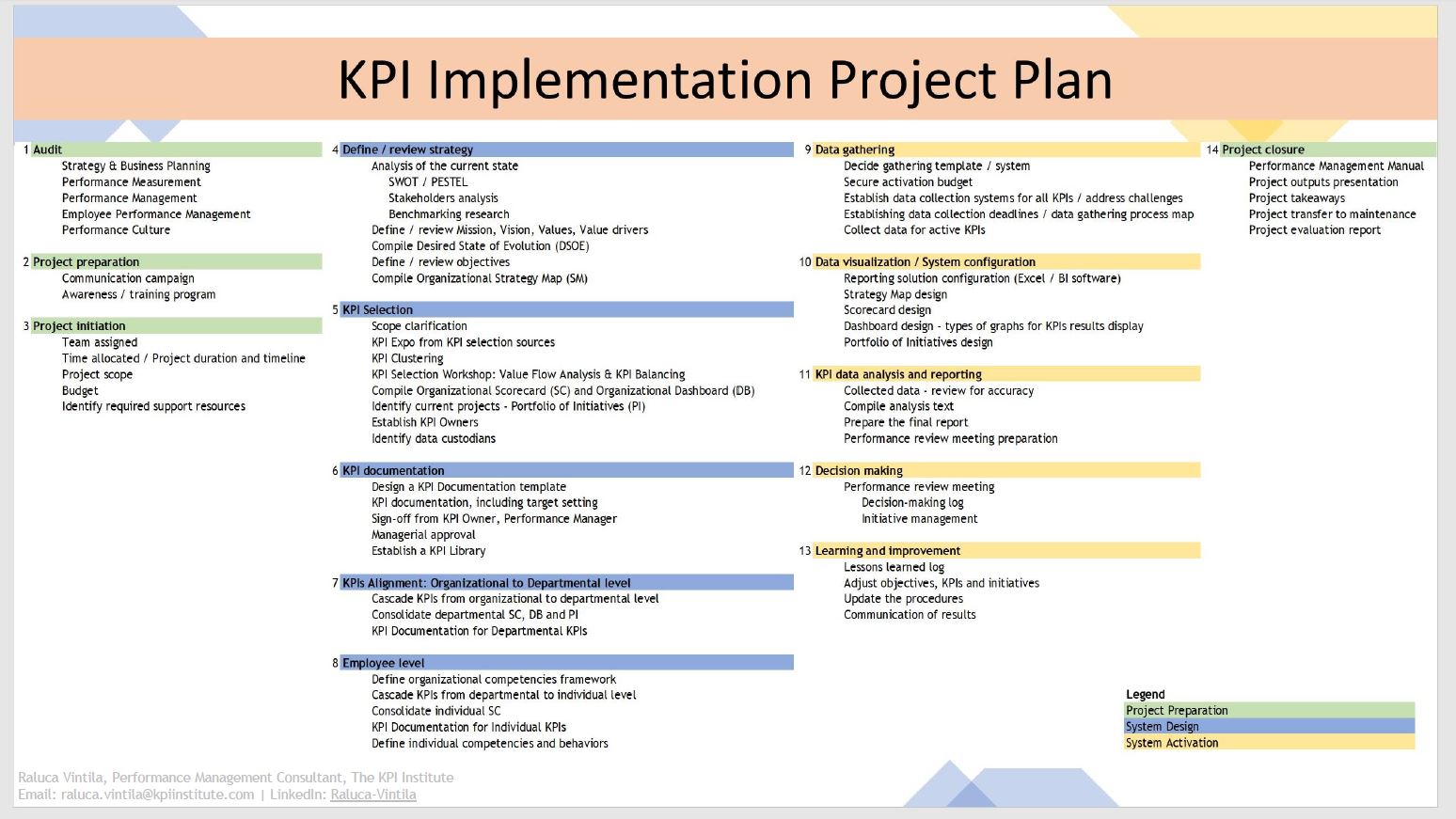
When formalizing and implementing a performance management system (PMS) based on key performance indicators (KPIs), there are multiple activities to be considered and many stakeholders to be engaged in the process. Therefore, you’ll need a project plan to make performance management an ongoing process within your organization.
What matters most is not to have an extra process in place, but to do it right by connecting strategy formulation with strategy implementation and KPI across the organizational levels. The way you will design and implement the PMS based on KPIs will play a huge role in the way it will be perceived by the employees. This is exactly why our approach is based on a combination of analysis and research, workshops and feedback activities.
Zooming out, the proposed project plan includes 14 stages:
5 Stages: System Design
5 Stages: System Activation
4 Stages: Project Management
Zooming in, all 14 stages include major sub activities that indicate how granular this puzzle can be. A real image of efforts and resources engaged.
What are the key elements to ensure that a KPI implementation project plan will be a success story?
The differentiator in creating successful conditions is represented by the employees’ trust in the project. Why? Because change brings fear, and fear must be managed in connection to the implementation of KPIs.
Fear of becoming replaceable or unnecessary
Fear of unrealistic (too high) targets
Fear of extra work
As what I wrote in a previous article, if fears exist, then managers should consider looking for a course, training, or coaching session on how to guide their employees in managing their fears. Another step is to have an organizational message with a system that reinforces the organizational culture and the real intentions and effects of such a project, reassuring everyone that they will not be swept away by it.
Could this project be considered for departmental level only?
The KPI implementation project plan can be applied to the departmental level only. It has advantages and disadvantages Since this KPIs system is not a stand alone, the departmental level will ultimately get connected to the strategic (superior) and individual level (lower).
One advantage of this approach is the system will be founded on a strong understanding of operations and specific processes and developed at departmental (mid) level. Another advantage is increased involvement of employees in developing the system. This can generate a high sense of commitment and engagement based on their contribution.
Meanwhile, the disadvantage of this approach is that starting with the lowest level may not ensure a strategic orientation, and it may be predominantly narrow instead, given the limited understanding of the overall organization’s mid- and long-term commitments.
If you would like to learn more about KPI measurement and KPI implementation, sign up for The KPI Institute’s Certified Professional and Practitioner training course.
How does cascading KPIs to the individual level look like?
Performance management as a practice facilitates the long-term success of an organization, as it brings focus and clearly defines the organization’s identity and strategy, while ensuring resources are allocated towards what matters.
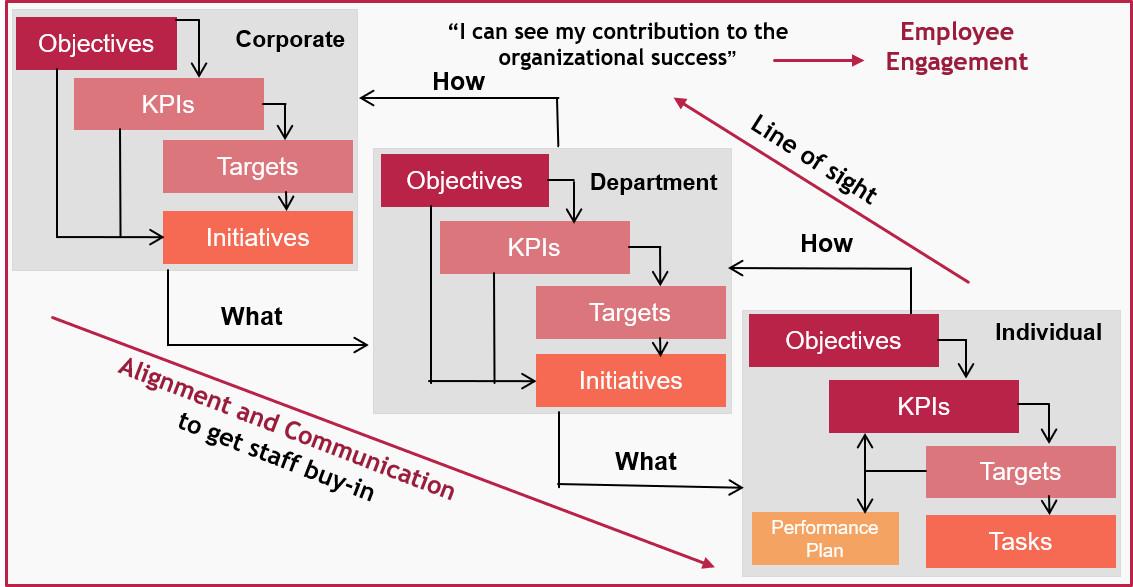
A structured performance management system enables alignment from the organization’s strategic direction towards its departmental key functions and individual priorities.
It ensures that strategic objectives are executed across all units and functions, while establishing relevant KPIs at each level of the entity. The cascading technique addresses the challenge of working in silos and drives cross-functionality and uniformity.
How do we cascade operational strategy to individual level?
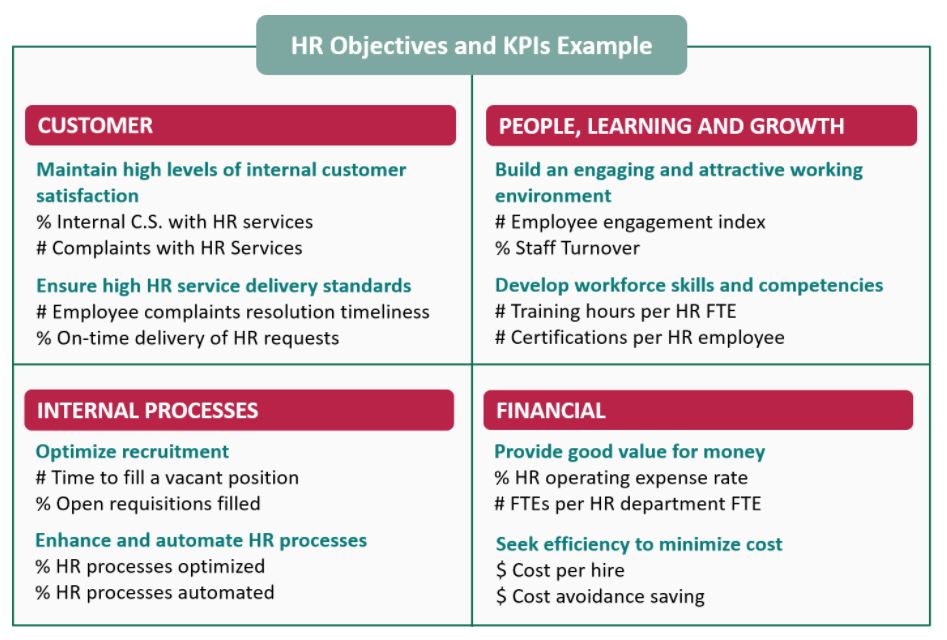
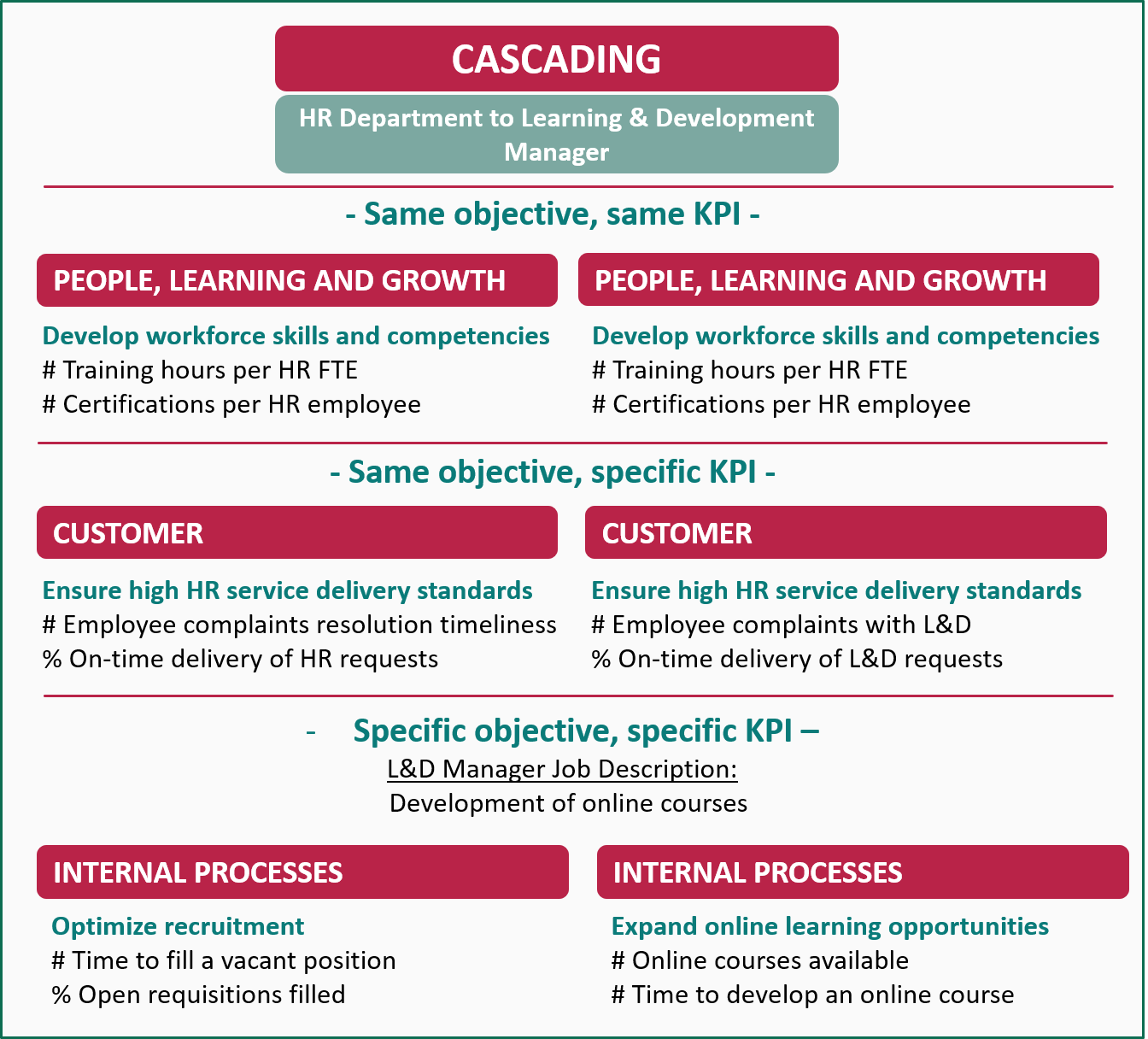
Let`s take a look at an example of an HR Department.
First, the same objective can be cascaded to multiple functions, each of them measuring it through different KPIs.
Second, department level objectives and KPIs can be cascaded and aligned at individual level either as they are, with the same or different KPIs:
Same objectives – same KPIs;
Same objective – specific KPIs.
Finally, some departmental objectives may not be applicable to cascade to lower levels; however, we can add specific objectives and KPIs based on the targeted employee’s job description.
SMART objectives
In terms of the quality of objectives, organizations must focus on developing SMART ones.
The SMART acronym is one of the most used phrases in business. It has its origins in the Goal Setting Theory school of thought and the Management by Objectives concept. The latter was introduced and popularized by Peter Drucker in 1954 through his book “The Practice of Management”. This approach aims to improve organizational performance by clearly setting and defining objectives/ goals agreed by both management and their employees.
Back in 1968, Dr. Edwin Locke published “Toward a theory of task motivation and incentives,” where he investigates the premise that conscious goals affect actions. His research and conclusions lead to four general principles designed to motivate and lead to best performance:
Goals should be challenging, however attainable.
Goals should be specific rather than vague
Employees should be part of the process of setting their own goals
Goals should be measurable and clearly understood
George T. Doran published a paper in 1981 called: “There’s a S.M.A.R.T. Way to Write Management’s Goals and Objectives.” Based on his proposal, a SMART objective should meet the following criteria:
Specific – target a specific area for improvement
Measurable – quantify or at least suggest an indicator of progress
Assignable – specify who will do it
Realistic – state what results can realistically be achieved, given available resources
Time-related – specify when the result(s) can be achieved.”
While there are many examples of objectives that are incompletely defined and don’t meet the SMART criteria, in the case of KPIs things are different. By their own nature and definition, KPIs are indicators of performance with the following inherent characteristics:
Specific – For the objective/ process/ functional area which it addresses;
Measurable – It has to be a metric, therefore it is required to be quantifiable;
Assignable – Ownership needs to be assigned to ensure achievement and improvement;
Realistic – Targets set for the KPIs need to be realistic, taking into consideration available resources, current baselines, benchmarks and market or industry trends;
Time-bound –Targets must have a predefined time, by which they should be achieved.
Consequently, a KPI shouldn’t even be called KPI if the smart criteria are not met. For this reason, the term SMART KPI is in a way doubling down on the SMART criteria.
Our recommendation is that we should not use the traditional approach to defining SMART objectives, but rather ensure that the objective is clearly formulated and easy to communicate. We will then ensure they are ‘SMART’ once we add the KPIs to our objective.
This involves decomposing the traditional approach to ensure clear linkage between performance management tools, concepts and roles such as KPIs, Targets and KPI Owners, thereby ensuring a clear understanding of the SMART criteria and its direct application in organizational contexts.
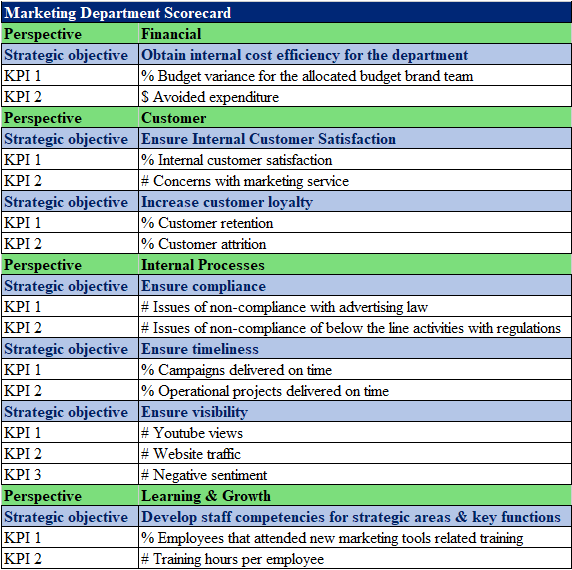
The Balanced Scorecard is one of the most important performance management tools used to improve business functions and their outcomes. This tool is used not only at the organizational level but also at the departmental level.
By using departmental scorecards, managers are able to get detailed insights into the performance of their departments. The scorecards can also determine the responsibilities of the employees in terms of achieving strategic objectives.
To implement an effective balanced scorecard for the departmental level, organizations should take into consideration these best practices.
1. Develop the right template.
Employees are often asked to collect data since every manager knows that it is essential in generating qualitative insights. However, the different performance reports could easily lead to different interpretations. A well-designed template leads to a clear, structured reporting and improves communication through standardization.
The template should contain four perspectives that meet the organization’s strategic needs. The most commonly used perspectives are Financial, Customer, Internal Processes, People Learning, and Growth.
Moreover, the template should also display the objectives associated with each perspective and the KPIs associated with each objective. For each KPI, the target and thresholds, the trend, and the previous and current result should also be presented.
2. Choose the right objectives.
When preparing a departmental scorecard, one of the most important steps is to select the right objectives for the different categories, and those objectives should align with the organizational and departmental strategy. Through the cascading process, the organizational objectives and KPIs are translated from the strategic level down to the departmental level.
The departmental scorecard must contain some specific objectives depending on the activities of the operations team. The same objective can be cascaded to more departments, each of them measuring it through different KPIs. Some organizational objectives may not be cascaded to lower levels.
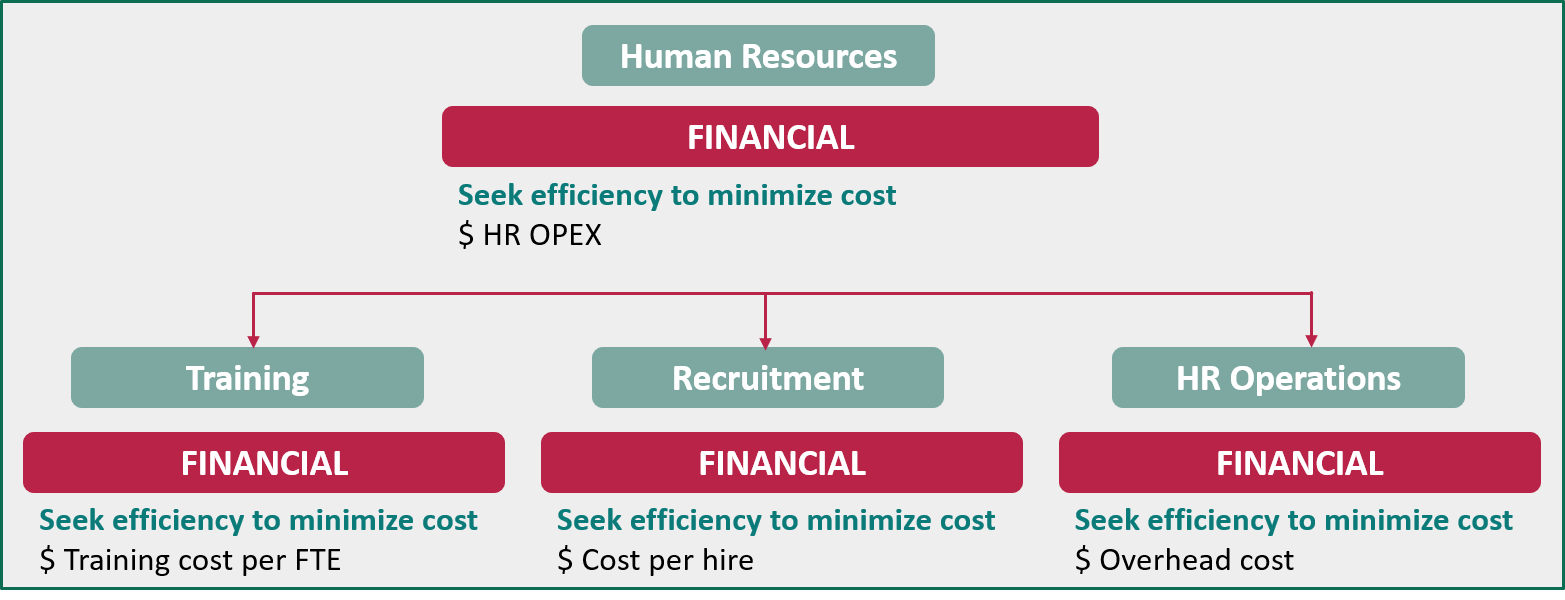
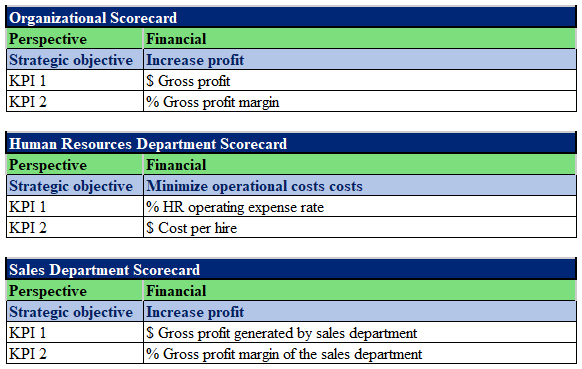
For example, the objective of the Financial perspective is to Increase profit. This organizational objective can not be directly cascaded to the human resources department since the human resources department has no direct influence on the revenue of the organization. However, they could reduce their spending in order to increase organizational profit. Therefore, the objective for the human resources department could be to minimize operational costs. Since the sales department is responsible for profit generation, they can cascade down this organizational objective without any modification.
Figure 1: Objective cascading example
3. Choose the right KPIs to measure the objectives.
As mentioned before, it is recommended not to cascade all objectives and KPIs from the organizational level to the departmental level, but organizations may add specific ones that represent the department. The most important attributes in KPI selection are relevance, clarity, and balance.
In many cases, organizational and departmental scorecards may not be enough to communicate the organizational strategy to all employees. Therefore, individual scorecards should also be created for them.
Data sources for a scorecard
During the scorecard development process, organizations may find it hard to determine the right objectives and KPIs. Objectives and KPIs must be based on relevant data. There are two types of sources of data to consider: primary and secondary.
Feedback from internal stakeholders can be considered as an internal primary data source, while feedback from external stakeholders is an external primary data source. Secondary internal sources could a company’s previous reports and strategy plans, while smartkpis.com and academic articles are external secondary sources.
Figure 2: An example of a marketing departmental scorecard





 3. Internal procedures: