For years, performance management leaned heavily on financial results and annual reviews to tell organizations how they were doing. That picture is changing fast, and few people are watching the shift as closely as Dr. Sarah Binsaied.
An Assistant Professor at the Institute of Public Administration in Saudi Arabia, Sarah holds a PhD in Nonprofit Marketing from Brunel University of London. Her work sits at the intersection of strategy, marketing, and organizational performance, and she brings an academic’s eye to questions that most executives only have time to answer on instinct: What should organizations actually be measuring? Which tools still hold up under pressure? And what happens when AI starts making judgments that used to belong to people?
In this interview with Performance Magazine, Sarah shares her perspective on where performance management is heading in 2026, why financial KPIs alone no longer tell the full story, and what leaders and researchers should be paying closer attention to as the field evolves.
Trends
What key trends in organizational performance management have you observed emerging so far in 2026?
In 2026, many organizations are moving away from fixed annual strategic plans toward more flexible and adaptive performance management approaches. This includes rolling forecasts, real-time tracking of KPIs, and goals that can be updated as needed. This shift helps organizations respond faster to market changes, new technologies, and evolving stakeholder expectations.
Which of the existing trends, topics, or aspects within performance management have lost their relevance and/or importance, from your point of view?
Relying only on financial KPIs is no longer enough in modern performance management. Today, organizations need to look at both financial and non-financial measures, such as employee engagement, customer experience, innovation, and sustainability. Financial results usually reflect what has already happened and may not reveal early risks or future opportunities. By using broader performance indicators, organizations can better understand long-term value and build a more sustainable competitive advantage.
What does the corporate performance management system of the future look like?
The future performance management system will rely more heavily on AI and predictive analytics. It will use real-time data and machine learning to identify possible performance gaps before they happen, and it will combine financial and non-financial indicators in a single dashboard. This will help organizations make faster decisions, adjust their strategy continuously, and move away from traditional annual reviews that risk becoming outdated quickly.
What will be the major challenges in managing performance in the future, and how should organizations prepare for them?
The main challenge will be employee resistance to change, especially when AI is used in performance evaluation. Some employees may feel worried or uncertain about these tools. Organizations can prepare by offering continuous digital training, clearly explaining how AI will be used, and building trust. Employees should understand that AI is meant to support their work and decisions, not replace or threaten them.
How is technology impacting the way organizations conduct strategic planning and manage performance? Any specific technology tools you would like to mention?
Technology is changing the way organizations approach strategic planning. Instead of relying only on fixed annual reviews, organizations can now use real-time data and predictive analytics to make faster, more evidence-based decisions. Tools such as Power BI help teams display KPIs clearly, connect data across departments, and spot performance trends early. This supports more flexible strategic planning and allows organizations to adjust decisions as new information emerges.
How is sustainability impacting the way organizations conduct strategic planning and manage performance? Any specific sustainability aspects you would like to mention?
In Saudi Arabia, sustainability is becoming an important part of strategic planning, especially because of Vision 2030. Organizations are now expected to measure ESG indicators, covering environmental, social, and governance aspects, alongside financial KPIs. This means tracking environmental impact, social contribution, and governance practices. As a result, sustainability is no longer just about meeting requirements; it is becoming a key factor supporting long-term performance and strategic success.
Practice
What should be improved in the use of strategy and performance management tools to make an organization even more resilient to future crises?
Strategy and performance tools should build in risk scenario planning as part of the core strategic framework, not as a separate activity. This means using scenario analysis, stress-testing, and contingency KPIs when building plans. Doing so helps organizations spot possible risks and disruptions earlier, adjusting their strategies before a crisis hits rather than reacting once the problem has already become serious.
While navigating through these challenging times, what would you consider a best practice in performance management?
A good best practice is involving employees in setting goals and KPIs, rather than assigning targets from the top alone. When employees help create the targets, they feel greater ownership and motivation, and the goals become more realistic, especially in uncertain situations. This approach also helps leaders draw on frontline insights, improving both employee engagement and the quality of performance measures.
How does benchmarking support the improvement of performance management and target-setting systems?
Benchmarking helps organizations understand where they stand compared with others in the same industry. Instead of setting targets based only on internal assumptions, they can draw on real examples from high-performing organizations. By comparing results, processes, and practices, organizations can identify performance gaps and areas for improvement. This also helps them set more realistic, informed targets while learning from strategies that have already proven successful.
Research
Which organizations would you recommend observing due to their approach to managing performance and its subsequent results? Why?
I recommend looking at Saudi Aramco, because it combines strong performance management with long-term strategic planning and operational excellence. The company uses structured KPIs across different business units, supported by clear governance and a culture of continuous improvement. This makes Aramco a useful example for understanding how large, complex organizations manage performance effectively and align daily operations with strategic goals.
What aspects of performance management should be explored more through research, given their importance in practice?
More research is needed to understand how employee wellbeing affects long-term organizational performance. Many studies focus on short-term productivity, but it is still unclear how wellbeing programs create lasting results over time. Organizations need stronger evidence on whether these initiatives lead to real performance improvement or only temporary benefits, especially since the impact may differ across industries, workplaces, and organizational cultures.
What are the key competencies of a successful business leader (C-level executive)?
Successful C-level executives need strong emotional intelligence and the ability to lead change in a clear, supportive way. They should understand employees’ feelings during transitions, communicate the vision simply, and build trust across the organization. Emotional intelligence helps leaders manage resistance, motivate people, and create commitment, making change more sustainable rather than dependent solely on top-down decisions or pressure.
What are the key competencies of a strategy and performance manager to succeed nowadays?
Nowadays, a strategy and performance manager needs strong communication skills and the ability to influence people at different levels of the organization. This role is not only about analyzing data but also about explaining it clearly and usefully. When managers can turn complex strategic information into simple messages for executives, middle managers, and frontline employees, they help create alignment, support, and better strategy execution.
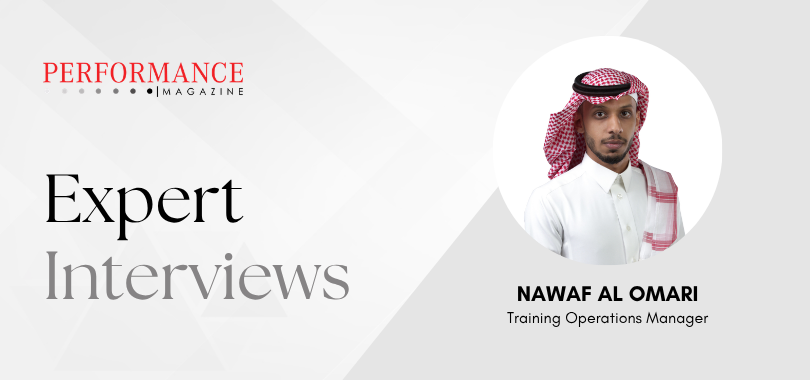
Nawaf Al Omari boasts over a decade of experience in optimizing teams and driving project management success. He excels at forecasting staffing needs, resource management, and fostering collaborations, with a 40% increase in stakeholder satisfaction. Prioritizing data-driven decision-making, he is adept at mitigating risks, tracking KPIs, and achieving cost reductions. Nawaf is strongly committed to delivering results and operational excellence.
In this interview with Performance Magazine, he explores how establishing strategy and performance management systems can improve the resilience of organizations to future crises. He also shares his perspectives on cultivating best practices in employee engagement that highlight professional development, well-being and flexibility.
Trends
In your opinion, what are the key trends in organizational performance management in 2024?
Employee alignment with corporate objectives is essential to the success of a corporation. By ensuring that everyone is working toward the same goals, productivity and efficiency are maximized. Some crucial techniques involved in this approach are clear communication, goal setting, performance management, rewards and recognition, and training and development.
Which of the existing trends, topics, or aspects within performance management have lost their relevance and/or importance in your opinion?
While performance management is continuously evolving, it’s important to understand that a few aspects have lost their relevance, such as limited employee involvement. Traditional performance management systems frequently did not involve employees in setting goals or providing feedback. The current trend emphasizes collaborative goal-setting, self-assessment, and two-way communication to create a more engaged and ownership-driven approach.
What does the corporate performance management system of the future look like?
Gamification is a cutting-edge strategy that may successfully bring employees on board with company objectives. This technique can improve employee engagement, motivation, and performance in the workplace by introducing game-like features, including competition, incentives, and feedback.
What will be the major challenges in managing performance in the future, and how should organizations prepare for them?
Leading a globally distributed workforce has distinct difficulties, particularly considering the growing popularity of remote and hybrid work arrangements. The reason is because it might be difficult to manage and assess performance in many places effectively due to the issues that come with collaboration, communication, performance evaluation, and engagement, as well as the new approaches required in these areas.
How is technology impacting the way organizations conduct strategic planning and manage performance? Any specific tools you would like to mention?
With the use of big data and analytics technologies, companies today can collect and examine enormous volumes of internal and external data to gain a greater understanding of consumer behavior, market trends, and rival performance. In addition, businesses can use sophisticated software to simulate several strategy alternatives and assess possible outcomes while reducing risks.
In terms of performance management, technologies can help organizations facilitate regular feedback and provide data-driven performance evaluation. This approach can help assess outcomes objectively, track progress, and define SMART targets.
How is sustainability impacting the way organizations conduct strategic planning and manage performance? Any specific aspects you would like to mention?
Sustainability is essential, not simply a trend. Enterprises that adopt and incorporate sustainability into their fundamental approach will be in a favorable position for long-term success. Organizations can create long-term value, enhance their reputation, and contribute to a more sustainable future. It’s a win-win for the environment, society, and the organization’s bottom line.
Practices
What should be improved in using strategy and performance management tools to make an organization even more resilient to future crises?
Organizations must take into consideration enhanced risk management, data-driven decision-making, and employee development and well-being to enhance performance management and strategy tools for greater organizational resilience to upcoming crises.
While navigating these challenging times, what would you consider a best practice in performance management?
Organizations must develop a performance management system that, even in times of difficulty, encourages engagement, resilience, and a workforce prepared for the future by using these best practices. During these difficult times, there can be a shift from passively assessing performance to actively assisting and growing staff members. Emphasizing employee development, well-being, open communication, flexibility, and adaptation during challenging circumstances can help businesses overcome obstacles and build a resilient and engaged workforce that is ready for the future.
How does benchmarking support the improvement of performance management and target-setting systems?
Enhancing performance management and target-setting systems may be achieved by benchmarking, i.e. the method of evaluating an organization’s performance against competitors in the same industry or against industry best practices. Organizations may discover areas for development, obtain important insights, and eventually create and execute a more flexible and effective performance management and target-setting system by utilizing benchmarking successfully.
Research
Which organizations would you recommend being observed due to their approach to managing performance and its subsequent results? Why?
Several firms are noteworthy for the way they handle performance management and the outcomes they produce. Here are a few companies known for their innovative performance management approaches:
Adobe removed annual reviews for frequent check-ins to foster continuous development.
Netflix applies 360-degree feedback for a more well-rounded perspective on employee performance.
Microsoft moved away from annual reviews to focus on goals and development through regular feedback.
Given their importance in practice, what aspects of performance management should be further explored through research?
Several performance management aspects require more investigation because of their increasing significance and dynamic character in the workplace. Some of these are the relationships between the well-being of employees and performance management as well as the analytics and data used in performance management.
What are the key competencies of a successful business leader (C-level executive)?
They should possess fundamental abilities in the areas of strategic vision and thinking, innovation, and adaptability to handle difficult issues and guide their enterprises toward prosperity.
What are the key competencies of a strategy and performance manager that are necessary to succeed nowadays?
In today’s fast-paced corporate world, a strategy and performance manager’s ability to succeed depends on a special combination of hard and soft skills. They should have strategic thinking and planning abilities and knowledge of performance management and change management.
What processes and tools do you look at when differentiating a successful performance management system from a superficial one?
It takes more than simply looking at processes and resources to recognize the effectiveness of a performance management system. The effect on employees and the broader culture of the company are important factors to consider. Businesses might develop systems for performance management that go beyond employee evaluations. They may promote a culture of ongoing education, growth, and involvement, making the workplace better for everybody.
What are the recent achievements in generating value from performance management in your organization?
Several noteworthy successes in deriving value from performance management can be attributed to recent technological advancements and changing work environments, such as continuous performance management, personalized development, and employee engagement.
Over the recent years since Vision 2030 of the Kingdom of Saudi Arabia (KSA) has been initiated, the massive changes within the operations of government entities have led to a rise of expectations for better communications with the stakeholders to achieve effective citizen engagement. Communication strategies and initiatives have been developed and launched with the initiation of KSA’s Vision 2030 in order to streamline the strategic objectives and clarify the roles of stakeholders and staff as well as identify the target audience and communicate with them more effectively.
To implement the communication strategy of any public entity effectively and efficiently, the communication plans should include what information should be communicated, who should receive that information, when that information should be delivered, and how those communications are tracked. Also, some actions need to be considered within the implementation of communication strategy, such as opening two-way communication means, using technology to streamline the communications, and focusing more on engaging with the audience–not just listening to them and answering.
Islam Salahuddin is a data analyst with a strong focus on storytelling and data visualization, growing statistical knowledge, and developing a set of technical skills and tools. As an expert in data analysis at The KPI Institute, Islam leads the generation of research on the domain of data analytics and the development of business analytics toolkits.
Jino Noel is a data science and technology leader with extensive experience in building data teams and practices across different organizations. His experience ranges from working in startups to large conglomerates across both Australia and the Philippines. At the time of this interview, he was the Chief Data Officer at Data Analytics Ventures, Inc. (DAVI). Currently, he is the Chief Data Officer at Angkas.
What are the key skills that a Chief Data Officer should possess nowadays?
A Chief Data Officer should have both data-related technical expertise as well as people leadership skills. Leading will always be part of the job, particularly for highly specialized technical people such as data engineers and data scientists. To be able to lead them properly, I believe it is better to be a technical person myself, so I can discuss technical matters fluently, which helps me gain their trust.
What data-related challenges have you faced as the Chief Data Officer of DAVI? How did you overcome these challenges?
Our data-related challenges are the same as any company. Being able to trust our data, cleaning up data from our sources, data latencies, and other related issues. DAVI overcame these by investing in people—hiring high-quality experts in our data engineering, data governance, and analytics teams to help us make sense of the data coming in—and building robust data pipelines that have increased the standard of quality of the data in our data lake.
How does DAVI make use of advancements in artificial intelligence (AI) and machine learning to help its clients understand their customers’ needs and buying patterns?
DAVI has recently started using machine learning to model our users’ propensity to buy certain products. This helps us create more accurate target audiences for our precision marketing campaigns. We are also moving forward with a recommendation engine project, with the goal of improving user engagement with our retail partners and with our promos and campaigns. On top of this, we are improving our machine learning operations expertise to make our model deployments repeatable and robust.
In the digital marketplace, data analytics acts as a guiding compass for app developers, enabling the creation of personalized, high-performing applications that align with user preferences. By leveraging data, developers can understand nuanced user behaviors and preferences, allowing them to tailor apps to meet specific user needs and aspirations.
Dive deeper into these discussions by reading Jino Noel’s full interview with The KPI Institute. Download the free digital copy of PERFORMANCE Magazine Issue No. 26, 2023 – Data Analytics on the TKI Marketplace. You can also purchase a physical copy via Amazon.







 Islam Salahuddin is a data analyst with a strong focus on storytelling and data visualization, growing statistical knowledge, and developing a set of technical skills and tools. As an expert in data analysis at The KPI Institute, Islam leads the generation of research on the domain of data analytics and the development of business analytics toolkits.
 Jino Noel