A simple search on Google about China’s Economy will return you with a staggering number of articles compiling a great amount of information about China’s economical performance. Indeed, with its economy growing at a rate of 9% a year and a valuation of its economy at $1.33 trillion in the second quarter of 2010, it is not hard to fathom why businesses are frantically seeking opportunities to expand and tap into this enormous market that is still growing at a ridiculous rate (Phang & Thomas, 2010).
There is no doubt that finding and attracting the best talent is a top priority for today’s organizations, especially for those activating in the global competitive markets. While attracting best people depends on the company’s image and how it is perceived as an employer, employer attractiveness studies are of great interest to inform both the employers on their image in the labor market and the employees on their decisions to choose a company.
Last week, Yahoo News reported that in June this year, a Chinese construction crew completed a 15-story building in only six days (Dykes, 2010 & Jia, 2010).
The steel building is located in south-central city of Changsha. It covers 610.83 square meters and is of 49.95 meter height. 200 workers with over 200 transport vehicles brought all the building components, which had been previously produced in factories, to the site and the construction was only to install and assemble the parts.
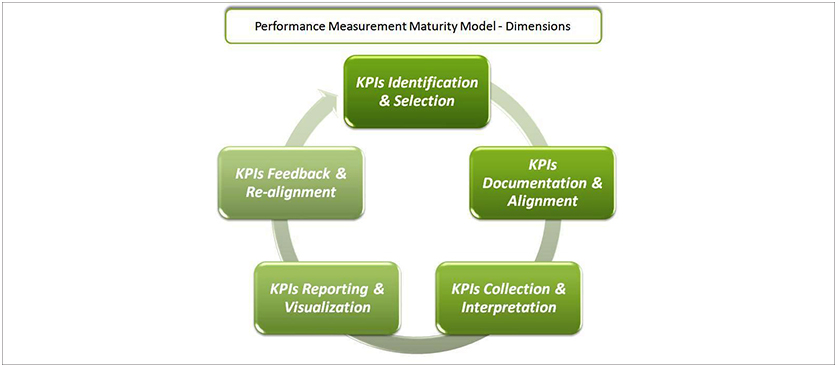
In scientific management performance is associated with two key processes, performance management and performance measurement which cannot be separated from one another. Performance management both proceeds and follows performance measurement. Performance measurement appears as a sub process of performance management that mainly focuses “on the identification, tracking and communication of performance results, by the use of performance indicators” (Brudan, 2010).
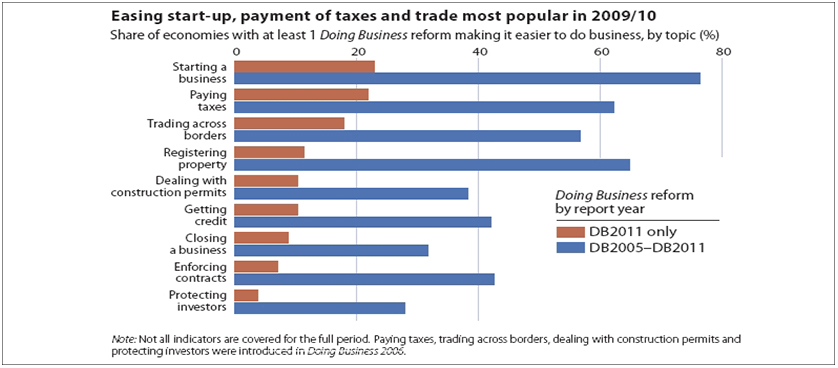
A recent International Bank for Reconstruction and Development (IBRD) & The World Bank report, Doing Business 2011: Making a difference for entrepreneurs, presents a series of quantitative indicators on business regulation and the protection of property rights in 183 economies, from Afghanistan to Zimbabwe. This year’s edition is the eighth in a series of annual reports benchmarking the regulations that enhance business activity and those that constrain it.



 Growing China