Have you ever felt the need for more time: time to recover from physical workload and psychological stress, time for your family and the hobbies you once used to have? In an increasingly competitive world, balancing personal and professional life has become more of a race for self-performance. It is not only about the workload and time distribution, but also repetition, routine and pressure that become highly important risk factors in managing an organization’s performance based culture.
Performance appraisals are critized by both employees and managers, and also by some HR specialists. The most frequent issues and negative attributes associated with performance evaluations are: waste of time, as sometimes nothing changes, just a formal procedure that brings no value, as well as an activity with negative impact on the relationship between managers and their subordinates.
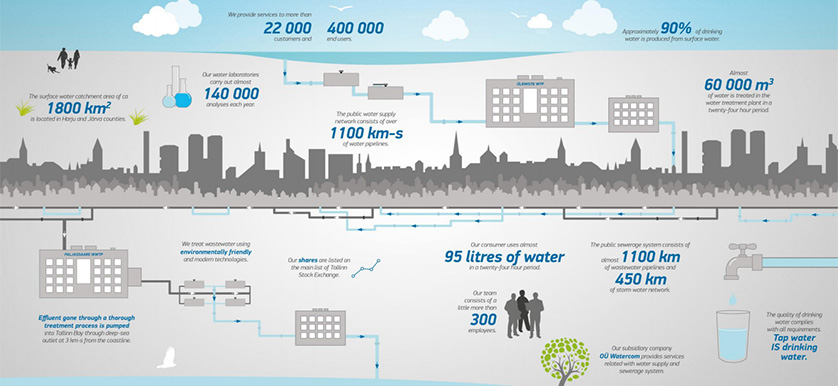
“We will compensate any violation of our promises to customers automatically. This means that if we do not keep our promise, then the next bill sent to customer is 20 euros less.” This is what Tallinna Vesi, a water services company from Estonia, promises its clients. On its website, there are 10 promises related to delivering accurate and on time services, which refer to supplying water and responding to client inquiries.
In Juran’s opinion, organizations need to ask themselves what their competitors do in order to perform at a high level. To find out the difference between performance results, companies introduce benchmarking as an approach for organizations that have adopted total quality management (TQM).
The phrase ”employees quit leaders not organization” is quite popular among HR professionals and it is not just an assumption. In 2005, Leigh Branham identified this issue by surveying 20,000 employees: leadership has a significant impact on staff retention.
Leaders not only influence how much time an employee spends in the organization, but also how well the individual performs. The human capital is a critical resource for an organization and can be transformed into a valuable competitive advantage. But how can leaders ensure that employees will perform at their best?