Think of workplace culture as the foundation of a building—no matter how sturdy the walls or advanced the design, weaknesses will emerge without a strong base, leading to potential failure. Similarly, even the most well-crafted strategies and key performance indicators (KPIs) cannot compensate for a weak workplace culture. In this interview, Mohannad Al-Ghazo, a management consultant at The KPI Institute, shares insights into why culture plays a significant role in fostering sustainable performance.
From your own professional experience, what key elements are indispensable in cultivating a performance-oriented culture, and how have they influenced your work?
A strong performance culture comes from clear goals, accountability, and openness. At Innovia Biobank, I introduced automation to track performance, which helped reduce bad debts and improve efficiency. Similarly, at The KPI Institute, I’ve seen how customized training and clear KPI frameworks help teams stay focused and improve results.
Strategic priorities today are being shaped by trends such as the rise of artificial intelligence (AI), reskilling efforts, and economic pressures, as highlighted in the World Economic Forum’s Future of Jobs 2025 report. In light of these trends, should we anticipate shifts in organizational culture? And if so, what might those changes look like?
Yes, organizations are moving toward AI-driven decisions, flexible work models, and continuous learning, and The KPI Institute helps companies adapt their KPIs to reflect these changes. For example, many companies now track digital skills development as a key performance measure, showing how important adaptability has become.
In light of ongoing workplace shifts, which cultural trends do you think are having the greatest impact on increasing work productivity and individual performance?
Remote and hybrid work flexibility, personalized performance incentives, and AI-driven decision-making are the key trends shaping productivity. Empowering employees with autonomy, leveraging AI for task optimization, and fostering a results-driven rather than process-driven approach have proven to enhance both engagement and efficiency.
In today’s agile work environment, sustainability continues to be a key strategic consideration. In your view, how can organizations truly embed sustainability values in their culture, beyond just meeting regulatory compliance?
Sustainability must be part of daily operations, not just policies. At Innovia Biobank, we automate lab processes to cut costs and reduce waste. At The KPI Institute, we help companies implement sustainability KPIs to improve efficiency, track progress, and enhance resilience. These KPIs ensure accountability, align with global standards, and drive measurable impact, helping businesses integrate sustainability into their core strategy for long-term success.
As organizations adapt to these cultural and strategic changes, what key actions can leaders take to make sure performance isn’t just maintained but enhanced?
Leaders must shift from monitoring tasks to coaching teams, leveraging real-time analytics for agile decision-making. In this shift, transparent goal-setting, continuous learning, and fostering innovation are crucial. By embedding a performance-driven mindset, as we did at The KPI Institute, we saw productivity surge through clear accountability and structured KPIs.
A major factor influencing workplace culture and performance is work structure. How do you see changes such as the back-to-office push influencing employee motivation and effectiveness? In your opinion, is a remote or office-based approach better?
A hybrid model is optimal as it balances collaboration with flexibility. While in-office work strengthens culture and alignment, remote setups boost productivity and work-life balance. The best approach depends on industry demands, but autonomy and trust in employees yield the highest performance levels.
Given these structural and cultural shifts, what methods have you observed that organizations use to assess employee performance nowadays, and do these methods really help people achieve better results?
Companies are moving away from traditional annual reviews to real-time tracking. At The KPI Institute, we work with companies that use performance dashboards to track progress throughout the year. This helps managers give faster feedback, keeping employees focused and improving overall performance.
How can organizations make a smooth transition from the traditional rating and ranking evaluation system to agile employee performance management?
Shifting focus from rigid numerical ratings to goal-based and competency-driven evaluations can evolve traditional ranking systems into a more agile and adaptive approach to performance management. Incorporating regular check-ins, self-assessments, and AI-driven insights can provide more meaningful feedback. Additionally, clear communication and training ensure employee buy-in, which makes the transition seamless and effective.
Looking at what works in practice, what is one tool, method, or approach that has proven most effective in your organization for driving employee performance?
Data-driven decision-making combined with automated KPI tracking has been the most effective. At Innovia Biobank, integrating systems, applications, and products (SAP) in data processing and customer relationship management (CRM) systems provided real-time insights that improved performance visibility and accountability across departments.
While performance incentives like targets and bonus systems are designed to drive results, they can sometimes lead to undesirable attitudes and consequences. How can organizations avoid the negative impacts of target setting at the employee level?
Organizations should balance quantitative targets with qualitative measures. Emphasizing collaboration, learning, and process improvements prevents a toxic, target-obsessed culture. Moreover, aligning individual goals with company missions ensures motivation remains purpose-driven rather than pressure-driven.
Over the years, what’s been the most surprising or counterintuitive lesson you’ve learned about organizational culture, and how has it shaped your approach to leadership?
Culture is more important than strategy or KPIs alone. At The KPI Institute, I’ve seen that even the best systems won’t work unless employees feel valued and supported. When people believe in the company’s vision, they perform better—not because they have to, but because they want to.
**********
Editor’s Note: This article was originally published in Performance Magazine Issue No. 23, 2025 – Employee Performance Edition.
About the Expert: An award-winning management consultant, Mohannad Al-Ghazo was recognized in 2023 as the Most Visionary Healthcare Diversification CEO. With over 13 years of leadership in healthcare, biobanking, and business transformation, he drives innovation and operational excellence across industries. He believes long-term success depends not just on strategy or KPIs but on agile performance management, which emphasizes adaptability, collaboration, and growth.
How are strategic objectives defined in the government today? In this interview, Dana Alsaaid unveils the meticulous approach and initiatives that her organization employs to align strategic planning with a nation’s overarching goals and how she navigates the complexities of strategy execution in the public sector.
In your position as Director of Corporate Performance Management, how do you approach the strategic planning process to align with the goals of the Ministry of Economy and Planning? Can you discuss any initiatives or methodologies you’ve implemented to enhance the efficiency and effectiveness of strategy planning within the organization?
The journey of strategic planning in the ministry mainly involves identifying strengths and potential risks—as a base for planning—along with the vision of leaders, which sets the general direction of the strategy. To improve the efficiency and effectiveness of this planning process, we believe in the importance of top management’s engagement and continuous feedback through collaborative workshops as well as leveraging available data analytics tools. We use the famous Balanced Scorecard (BSC) in preparation for proper and efficient execution.
What common issues have you noticed in strategy execution, and how should they be addressed?
Issues in strategy execution start at the beginning, which is in strategy formulation. A lack of clarity makes it difficult to implement a vision. A lack of alignment and buy-in would negatively impact any rollout of strategies. Along with those factors, limited resources in the budget or people affect how execution takes place.
Trends
In light of global economic shifts and geopolitical uncertainties, how can organizations create resilient strategies that can withstand external disruptions?
Since the world is becoming extremely dynamic, organizations should regularly conduct scenario planning exercises to identify potential disruptions and develop contingency plans. Diversified supply chains can play a pivotal role in handling those disruptions. Meanwhile, fostering a culture of agility that embraces change would lead to better adaptation.
What do you see as the most promising ways artificial intelligence (AI) can further impact corporate strategy, and what steps should companies take to remain at the forefront of AI-driven strategic advancements?
AI is revolutionizing corporate strategy by offering a powerful tool to enhance decision-making, optimize operations, and gain a competitive edge. It can assist in ideation during the strategy planning phase and lead to significant gains in efficiency through sufficient resource allocation to meet strategic goals. Organizations would do well to establish AI strategies and invest in AI infrastructure to enable the intended strategic advancements.
Does your organization use strategic foresight to enhance future readiness? If not, please detail the organization’s approach to planning in the short, medium, and long term.
For future readiness, our organization is conducting horizon scanning to identify opportunities and risks, whether globally or locally, to share key insights as inputs when planning for possible scenarios. In Saudi Arabia, the Ministry of Economy and Planning is leading the Sustainability and UN SDGs file, a main pillar for long-term planning that benefits future generations.
Strategy and Performance Management Practices
Do you see any application of AI to facilitate strategic planning or performance measurement? Is your organization using any such tool, possibly in certain areas of the organization?
Studies have been launched in the ministry to incorporate AI in modules and monitoring systems that facilitate decision-making by providing data-driven insights that can identify hidden patterns and trends for a more comprehensive understanding of the global economic setting. Moreover, AI would be hugely utilized in predictive analytics modules to forecast required economic targets.
How are strategic objectives defined in your organization, including the research process, involved stakeholders, and other pertinent details?
The process of defining strategic objectives is crucial in strategy planning since it translates the vision and mission of the organization into its goals. It should consider both the external scanning of opportunities and threats and the internal assessment of capabilities and resources. To ensure proper definition, both senior leaders and functional managers should be involved in incorporating the strategic direction and operational understanding in the process.
How do you balance long-term planning and short-term priorities?
This is a common challenge that organizations face, and it requires balancing between setting future direction and ensuring immediate success. The key element to this relationship is prioritization based on the impact and value of the initiatives, which helps to ensure that resources are allocated to the most impactful initiatives with the most suitable value.
In your experience, what is the most important tool for managing strategy, and why? How do you communicate strategy to different stakeholders within the organization to ensure a high level of awareness of priorities for both frontline employees and management positions?
First of all, I believe that the main principle in effective strategy management is engaging stakeholders in the planning phase. This ensures that objectives are achievable and the stakeholders are engaged in the execution. BSCs have proven to be effective in managing strategies for their cohesiveness.
It is also critical to properly communicate the right message to all levels of employees. Therefore, the messages should be tailored to all the different levels of expertise and communicated through multiple channels. A main component of such communication is the ability to incorporate it into everyday work and show every employee’s contribution to the implementation of the strategy.
What approaches or methodologies have you found effective in fostering cross-functional collaboration and ensuring that all departments work cohesively towards strategic goals?
In my experience, fostering a culture of teamwork, open communication, and shared accountability with a clear definition of common goals is the key to effectively ensuring cross-functional collaboration. Once this culture is established, a regular evaluation of the effectiveness of cross-functional collaboration will guide the efforts toward the organization’s strategic goals.
What critical skills and competencies should professionals develop to excel in strategic management?
For professionals to navigate the complexities of strategy, they should fully understand their respective industry and its operations. Additionally, analytical thinking and foresight competencies are critical to driving the competitive advantage. More importantly, strategy professionals should be able to manage change and communicate effectively with stakeholders.
**********
Editor’s Note: This article was originally published in Performance Magazine Issue No. 29, 2024 – Strategy Edition.
About the Practitioner:Dana Alsaaid is a strategy professional with expertise in strategy execution and key performance indicators (KPIs). She holds a Master’s Degree in Health Administration from George Mason University, Fairfax, Virginia. Currently, she serves as the Director of Corporate Performance Management in the Ministry of Economy and Planning of Saudi Arabia.
Khalid Alharbi boasts over 20 years of experience in partnering with business unit executives to develop strategic plans, direction, market analysis, partnership, growth guide, and operation excellency. He leads large and complex projects to achieve key business objectives and promote digital transformation. He is pursuing a career in engineering, project management, sales and strategy planning.
As a Strategic Planning and Performance Manager, Aubrey Phillips engages both people and data to optimize departmental efficiency. She has demonstrated leadership by spearheading interagency teams responsible for the development of Pinellas County’s COVID-19 dashboard and relief programs. Aubrey holds a bachelor’s degree in political science and environmental studies from New College of Florida, along with an advanced Geographic Information Systems certificate.
Turki Alderaan is the Director of the Risk Department at Al-Jouf University and a Senior HRB Partner at the Technical Vocational Training Corp (TVTC). He is also an organizational development (OD) expert in four governmental sectors. Additionally, he is a leadership and strategy professional, an executive and performance mentor, a performance design and measurement specialist, and an accredited professional trainer. In this interview, he imparts the valuable experience and profound wisdom he has accumulated over the course of his career.
Would you tell us more about your educational and professional background? How did your previous experiences lead you to your current position?
I have a bachelor’s degree in political science and HR management and a master’s degree in business management. I have since delved significantly deeper into the world of institutional performance management and had the opportunity to practice it professionally. I hold certificates from organizations like The KPI Institute (TKI) and the Society of Human Resource Management (SHRM). Currently, I work as an organizational development expert in both the public and private sectors, and I am the director of risk management at Al-Jouf University.
What are your main responsibilities and goals in your current role?
I ensure the application of systematic work standards, lead organizations to adopt the appropriate workflow to conduct organizational transformation, and develop organizational strategies. I utilize technical tools in business analysis to implement improvement measures according to specific performance indicators.
Please take us through your daily job routine. Could you describe your activities and work hours in detail? You may specify certain areas of your job, such as your work arrangement (remote, on-site, or hybrid) and the stakeholders you frequently contact or meet with.
I work for various organizations in both the public and private sectors, working remotely and on-site. At times, I work 16 hours a day, meeting government leaders who supervise my performance. I am grateful for the experiences that have enhanced my development and skills.
Do you think that strategy and performance management in the public sector is different from that in the private sector? How so?
Nations lacking competent strategies and performance management face challenges in achieving organizational transformation, resulting in a weaker position. The private sector offers flexibility, swift decision-making, and sharing. Meanwhile, the public sector excels in resources and an appealing working environment, encouraging many to focus on performance and how to measure it.
A positive work environment with ample resources and tools promotes productivity. Performance is measured through KPIs, feedback, and goal achievement. Regular evaluations and open communication foster a culture of continuous improvement. Quantitative metrics like resource ratio, budget allocation, and utilization rates provide insights into resource efficiency. Qualitative feedback, turnover rates, and job satisfaction surveys also contribute to assessment.
What are the main achievements you are proud of thus far during your time working in strategy and performance management in the public sector?
Across my 15+ years of professional experience, I am still proud of my first achievement with the Institutional Accreditation Team at Al-Jouf University, where I contributed to institutional accreditation in administrative and technical procedures. I did so by establishing modern departments and introducing concepts like risk management, governance, corporate performance management, etc., and linking them to the strategic plan and the design of the follow-up and control mechanisms.
What are the main challenges that you face working in strategy and performance management in the public sector? When faced with such challenges, what do you do?
Government sector strategic plans often exceed 500 pages, with leaders focusing on goals without clear follow-up mechanisms. Training programs can help consolidate knowledge and skills, enabling effective guidance and senior leadership support.
For the future of your career, do you intend to keep on working in the public sector, switch to the private sector, or does the sector not really matter to you? Why?
Working with both sectors has pros and cons, but the main goal is to leave behind a meaningful impact. My most significant contribution is to the government sector, wherein I aimed to help achieve the Kingdom of Saudi Arabia’s Vision 2030 by facilitating institutional excellence and systematically improving performance management.
If someone is looking to work in strategy and performance management in the public sector, what skills, knowledge, and experience would you advise them to acquire?
Enhancing communication skills is crucial, whether written, verbal, or physical. Aside from that, it is important to have the skill of writing and rewriting policies and procedure manuals to support management systems and performance measurement at all administrative levels.



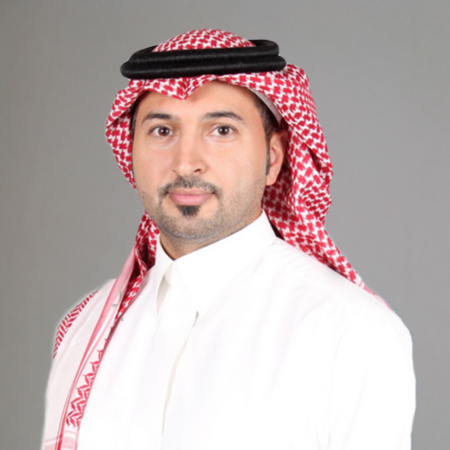 Khalid Alharbi boasts over 20 years of experience in partnering with business unit executives to develop strategic plans, direction, market analysis, partnership, growth guide, and operation excellency. He leads large and complex projects to achieve key business objectives and promote digital transformation. He is pursuing a career in engineering, project management, sales and strategy planning.
 As a Strategic Planning and Performance Manager, Aubrey Phillips engages both people and data to optimize departmental efficiency. She has demonstrated leadership by spearheading interagency teams responsible for the development of Pinellas County’s COVID-19 dashboard and relief programs. Aubrey holds a bachelor’s degree in political science and environmental studies from New College of Florida, along with an advanced Geographic Information Systems certificate.