As we move towards a more socially and environmentally conscious world, various sectors are recognizing the significance of integrating sustainability strategies into their operations. In this interview, Jose Pablo Retana, the director of sustainability at FIFA World Cup Qatar 2022™, shares how the sports community perceives sustainability and sets organizational goals to ensure its progress.
Across the globe, many governments and corporations are seeking cleaner and greener alternatives. It is becoming clear that sustainability should be an integral part of any organization’s strategic plan. Samirkumar Pathak, head of sustainability and ESG for Almarai, explains why this is the case and how this can be achieved.
Sustainability involves balancing economic, environmental, and social factors to ensure that the organization’s actions do not harm the planet, people, or future generations. Angela Hultberg, Kearney’s Global Sustainability Director, explains why sustainability must not be considered an afterthought and should be embedded in all organizational decisions.
Like a captain steering a ship through a stormy sea, leadership plays a crucial role in shaping the organizational climate, which in turn affects the individual’s level of commitment to the organization, job satisfaction, and productivity (Oktem, 2022). Creating a positive organizational climate requires management to focus on promoting autonomy, freedom, and support. Organizations can use internal environment scanning methods such as employee surveys, focus groups, and organizational culture analysis to gain insights into how leadership affects the work environment—knowledge that can then be used to create a positive climate to enhance employee knowledge, behavior, and effectiveness.
Critical factors such as interaction with team members, behavioral patterns, and the quality of the leader’s information—which covers updates, decisions, and strategic plans that they need to communicate to their team—all shape the organizational climate. Leadership behavior can significantly influence employee attitude and behavior. Studies have shown that managers who acknowledge their team members’ accomplishments can improve the perception of the organizational climate and leadership quality.
Conducting an internal environment scan can help assess the current state of the organizational climate and identify opportunities for improvement. Theorganizational culture analysis, a method of internal environment scanning, involves reviewing the values, beliefs, and behaviors of employees and aims to gain insights into how leadership is perceived and how it is influencing the culture of the organization.
One company that values itsorganizational culture and recognizes the significant role of leadership in shaping the work environment is Netflix. The company empowers employee decision-making by widely sharing internal documents, such as memos on title performance, strategy decisions, and product features.
Additionally, Netflix prioritizes open and direct communication by investing in coaching and modeling behaviors. To promote good decision-making, the company emphasizes the need for highly effective people and fewer management layers. The company encourages a “context not control” culture where leaders are expected to coach, set context, and provide feedback instead of micromanaging while employees make their own decisions. To foster this culture, Netflix values certain behaviors and skills in its employees, such as good judgment, selflessness, courage, communication, inclusion, integrity, passion, innovation, and curiosity.
The company employs a feedback system that includes surveys and focus groups to continuously improve its operations. A recentinitiative to promote work-life balance involved the implementation of an unlimited vacation policy, which was contingent on fulfilling job responsibilities and goals. To set a precedent, leaders take vacations themselves and urge their teams to do likewise.
As we can clearly see from Netflix’s example, leadership has a significant impact on the organizational climate. This highlights the importance of internal environment scanning to identify opportunities for improvement.
Improve your organizational climate by enrolling in ourCertified Strategy and Business Planning course. Gain valuable insights into the process of internal environment scanning and learn how to identify areas for improvement within your organization.
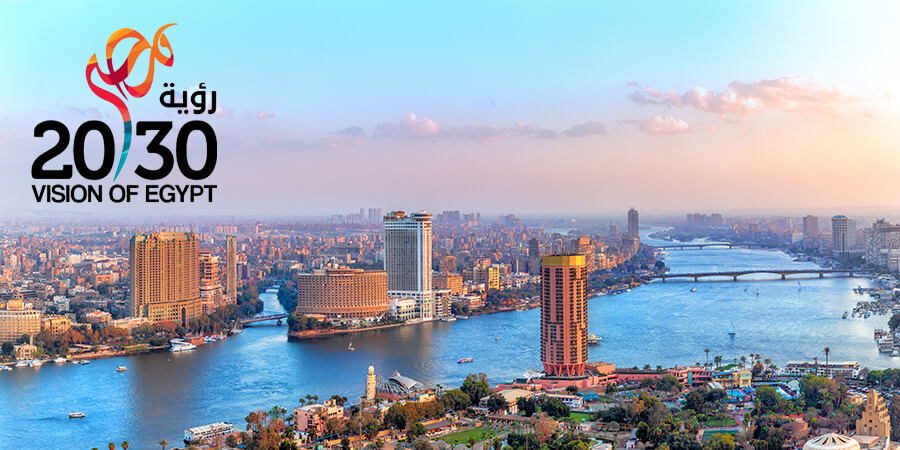
In 2016, President Abdel Fattah El Sisi exhibited tremendous support for Sustainable Development Strategy: Egypt Vision 2030. Since then, Egypt has undergone a major digital transition to modernize its economy, improve public services, and boost digital literacy. To attain such goals, the country has invested heavily in education, research, and technical infrastructure. This article will analyze Egypt’s recent technological developments across three main pillars.
Infrastructure development
The Egyptian government has invested considerably in the development of its digital infrastructure to provide reliable and high-speed internet connectivity across the country, such as expanding its fiber optic network to connect more households and businesses to the internet. As of 2020, more than 70% of the country’s population had access to the internet. Egypt has allocated more than $1.1 billion for the development of 5G technology and infrastructure. Adopting new technologies, such as 5G, will provide faster internet speed and improve connectivity across the country.
E-government services
According to the ICT 2030 strategy, Egypt has made significant progress in digitizing its government services, which has made it easier for citizens to access essential services online. In 2020, the Egyptian E-Government Services Portal was launched, providing a one-stop-shop for government services such as applying for passports and IDs. The portal offers more than 100 services, and as of 2021, more than 6 million citizens have registered for the service.
Financial inclusion & e-commerce
Meeza card, a national electronic payment card launched in 2019, allows citizens to receive their salaries, pensions, and other government payments electronically.
Egypt’s digital transformation has paved the way for private companies to launch several mobile payment applications, such as Fawry, Instapay, and Vodafone Cash, allowing citizens to pay bills, transfer money, and make purchases using their mobile phones.
The following explains why Egypt’s case should serve as a model based on two main motives:
Economic growth
The digital sector has been one of the fastest-growing sectors in Egypt, contributing significantly to the country’s GDP. According to a report by the governmental statistics, the ICT sector contributed 5% to Egypt’s GDP in 2021, and digital exports reached $4.9 billion by 2022.
Financial inclusion
The digitization of financial services has increased financial inclusion among Egyptians. According to a report by the MCIT, 56% of Egyptian adults have a bank account. Moreover, the money wallet accounts are expected to reach 57.9 million in 2025, which is higher than the average for countries in the Middle East and North Africa. In conclusion, Egypt’s digital transformation has advanced due to government investments in infrastructure, education, and innovation.
Digitizing government services, increasing digital literacy, and the government is pursuing digital transformation to meet its long-term aims. Last but not least, a valuable resource for those seeking to enhance their knowledge and skills in strategy planning is The KPI Institute’s Certified Strategy and Business Planning Professional course. It is recommended to sign up for this course to learn more about strategy planning.



 As we move towards a more socially and environmentally conscious world, various sectors are recognizing the significance of integrating sustainability strategies into their operations. In this interview, Jose Pablo Retana, the director of sustainability at FIFA World Cup Qatar 2022™, shares how the sports community perceives sustainability and sets organizational goals to ensure its progress.
 Across the globe, many governments and corporations are seeking cleaner and greener alternati