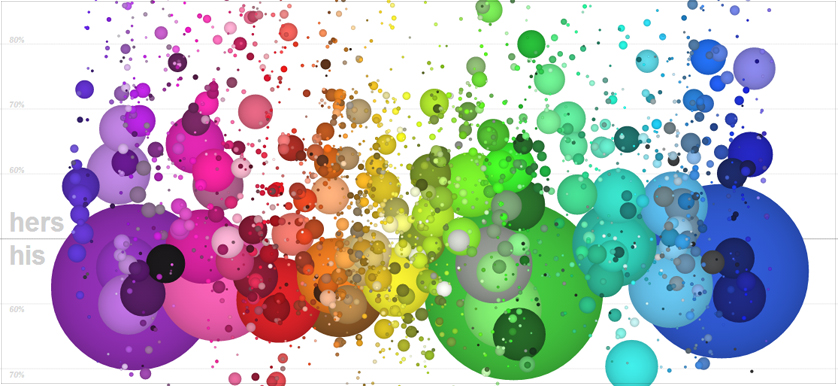
In the words of the data visualization expert Edward Tufte, “Graphical excellence is that which gives to the viewer the greatest number of ideas in the shortest time, with the least ink, in the smallest space.”
Current dynamics and globalization have brought on companies that include innovation in their core values. A commitment for innovation is more and more often part of corporate culture and values. Companies emphasize hiring people through whom they can achieve innovation, more specifically, they are looking for those traits that are aligning with actual corporate values.
Data visualization is, roughly, the visual representation of information. From business executives and managers to business analysts or operations/manufacturing/supply chain managers, they all use charts, tables, histograms of other types of graphics to better visualize their data. Bar charts, line charts, scatter graphs and maps are simple examples of data visualization that have been used for decades.
While activating in a company, employees attend several training programs, which can be general or specific in nature. Even if a training is general, specific, technical or targets soft skills development, it can be either truly helpful or insignificant for the same employees, all this depending on the future actions taken.
The UK Accident & Emergency (A&E) units are currently facing a major crisis, with the patients queuing in ambulances for hours, as the service is clearly over-capacity. How has the emergency system met its target of attending patients, given the strain it has been under recently?