What should leadership in the public sector look like as it faces significant changes in the world that impact agenda-setting and decision-making? As the strategic planning and performance manager of Pinellas County Government in the US, Aubrey Phillips leverages a unique blend of data analysis skills and interpersonal communication to optimize organizational efficiency.
One of her notable accomplishments was overseeing the development of Pinellas County’s COVID-19 dashboard and alleviation initiatives through interagency collaboration. Phillips holds a bachelor’s degree in political science and environmental studies from New College of Florida, along with an advanced certificate in Geographic Information Systems. In this interview, she discusses her professional journey and insights into the dynamic world of strategy and performance management in the public sector.
Would you tell us more about your educational and professional background? How did your previous experiences lead you to your current position?
I started working in local government as an undergraduate, eager to make a difference. Early on, I piloted using the Conservation Measures Partnership’s standards and saw the benefits of engagement and evidence. From there, I have continued seeking opportunities to practice change management, drive operational efficiencies, and influence organizational performance.
What are your main responsibilities and goals in your current role?
My role focuses on empowering employees to build a continuous improvement culture, celebrating learning, and driving strategic outcomes. My main responsibilities involve facilitating strategic and operational planning and analytics; providing courses, tools, and coaching; administering data systems and standards; and providing consultation, research, and analysis to improve service delivery and efficiency.
Please take us through your daily job routine. Could you describe in detail your activities and work hours? You may specify certain areas of your job, such as your work arrangement (remote, on-site or hybrid) and the stakeholders you frequently contact or meet with.
Anchored by a weekly team huddle, planning and time-blocking keep me focused through the week. I’m typically on-site part of the week, depending on the courses, facilitations, and meetings scheduled. Working organization-wide and with employees at every level, a hybrid arrangement helps me stay connected while minimizing windshield time.
Do you think that strategy and performance management in the public sector is different from that in the private sector? How?
Broad public records laws mean there’s no locker room in public sector strategy and performance management. Everything happens in the sunshine of the arena, presenting challenges but also opportunities for shared learning. Extending the metaphor, the goalposts in the public sector are more mercurial than relatively straightforward profit margins.
What are the main achievements you are proud of thus far during your time working in strategy and performance management in the public sector?
Whether establishing a nationally recognized community gardens program, engaging community partners and county staff to shape and deliver federally funded COVID relief programs, or analyzing and addressing key drivers of employee and community satisfaction, I take the most pride in work that has brought people together on solutions.
What are the main challenges that you face working in strategy and performance management in the public sector? When faced with such challenges, what do you do?
The main challenge is that there’s always more that can be done. Harnessing data and collective wisdom are keys to helping prioritize efforts that will do the most good. I also focus on my influence as a “decision architect” and use data to communicate the impact of decisions to others.
For the future of your career, do you intend to keep on working in the public sector, switch to the private sector, or does the sector not really matter to you? Why?
While my roots are in the public sector, where I work matters less than the mission. I expect my work will always aim to be in service to the public, and there are many private sector organizations making incredible contributions to moving strategy and performance management forward in the public sector.
If someone is looking to work in strategy and performance management in the public sector one day, what skills, knowledge and experience would you advise them to acquire?
Project and change management, process improvement, and data analysis and visualization are great to start with. Pair those with skill-building around relationships, the ability to have difficult conversations, facilitation, and learning on the fly to navigate change. From there, put some skin in the game, volunteer for opportunities to practice key skills, and seek feedback.
Read more of Aubrey Phillips’ insights on strategy and performance management in the upcoming government issue of Performance Magazine – Print Edition. Stay updated by subscribing to TKI’s LinkedIn page!
Harry Patria, the CEO of Patria & Co., is a data strategist and lecturer who founded a company that serves over 100 corporate clients, 200 analytical platforms, and 500 professionals. He is a Data Hackathon winner in the UK and graduated with distinction from his master’s degree to a PhD program with a fully-funded scholarship. Harry is a subject matter expert in several fields.
Dietmar Böhmer joined Tyme seven years ago and he has been leading the data and analytics function across the group, which includes TymeBank in South Africa and the newly launched GoTyme in the Philippines. He has led lending, data science, machine learning, and big data teams in banking for close to two decades and has lectured in the actuarial field prior to that.
What is the most crucial asset owned by an organization? In the modern business landscape, a company might possess a well-defined vision, mission, and set of value drivers, along with a carefully articulated strategy and aligned objectives throughout all levels of the organization. Nevertheless, employees may fail to adopt these values, as these are not inherently embedded in their actions due to the absence of a performance-driven culture.
Hence, the company must foster a culture that actively facilitates the execution of its strategy. This culture should empower every employee to operate in alignment with the established value drivers, behavioral norms, and competencies set forth by the organization to fulfill its mission while being consistent with overarching corporate goals.
Central to cultivating a successful performance-driven culture are leaders. They stand as key influencers, coaches, and role models. Organizations must shift their focus from having managers who assert authority to nurturing leaders who coach and guide. These leaders should serve as advocates for aligning and interpreting corporate objectives for employees at all levels. Proper training is fundamental in equipping them to effectively manage their subordinates.
To enable leaders to construct a thriving performance-driven culture, organizations can implement the following steps:
Build the desired organizational culture. Foran organization to define the fundamental characteristics of its desired culture, it must translate its mission and vision into tangible value drivers, anticipated behaviors, and needed competencies. These elements must be communicated extensively to all employees, ensuring their adoption, with an emphasis on starting this process with the leaders themselves.
Highlight a leader’s role in cultivating performance excellence. Leaders are essential in shaping the desired performance culture within an organization. They lead by example, embodying cultural values, behaviors, and skills. This sets a motivating tone for their teams and encourages others to follow suit. Effective leaders foster openness and feedback, which leads to transparency and collaboration. They recognize and reward behaviors that match the culture.
Additionally, they provide coaching and growth opportunities to empower employees. This creates an environment where everyone feels valued and engaged, forming the basis of a performance-driven culture.
Foster performance by promoting employees’ mental wellness. In creating a culture of performance, the importance of nurturing a healthy mindset and prioritizing employees’ mental well-being cannot be overstated. A positive mindset is crucial for a culture of excellence. Employee mental health directly affects engagement, productivity, and satisfaction. Providing resources like counseling, stress management, and flexible work options not only demonstrates commitment to well-being but also leads to a focused, creative, and productive workforce. A mental health-supportive culture enhances individual well-being and aligns employees with organizational values, ultimately improving performance.
Empower performance culture through data interpretation. Organizations have a wealth of data that offer insights into employee engagement, performance, and overall health. Leaders must use data analytics to guide culture development. By studying metrics like satisfaction, productivity, and alignment with values, leaders can spot improvement areas and measure initiative impacts. This data-driven approach refines strategies based on evidence, creating a flexible culture. Regular data analysis shows employees that their contributions matter, boosting transparency and commitment to growth.
Successful examples
Googleprovides a noteworthy example of a strong performance culture as exemplified by initiatives like Project Aristotle and Project Oxygen. Project Aristotle highlights team dynamics and psychological safety, fostering an environment where all members freely share ideas and take calculated risks. Meanwhile, Project Oxygen focuses on effective leadership qualities such as coaching, communication, and genuine care for team members. These initiatives underscore Google’s dedication to establishing a culture of collaboration, innovation, and leadership, creating a thriving workplace for both teams and individuals.
Another notable example is Netflix,which embodies a performance culture centered around “seeking excellence.” This entails encouraging each employee to excel and contribute to produce their best work. Netflix values individual responsibility and open feedback, creating an environment where high standards and innovation are prized. The company hires top talent and empowers them with trust and autonomy. This adherence to excellence shapes their decision-making and has contributed to Netflix’s success.
Creating the right organizational culture lays the foundation for success. Leaders drive performance excellence by setting an example and supporting their teams. Taking care of employees’ well-being adds to the positive atmosphere, and using data helps leaders make smarter choices. Combining these aspects builds a culture where everyone thrives, innovation flourishes, and organizations prosper.
**********************
This article is written by Chadia Abou Ghazale, a seasoned banking professional with 24 years of experience and who excels in budgeting, sales performance management, data analysis, and resource planning. Beyond banking, she is a dedicated reader of self-development topics and passionate networker. Chadia believes that life’s purpose is the pursuit of knowledge. Her extensive expertise and unwavering enthusiasm are a dynamic combination, driving success in her career and enriching her life’s adventurous journey.
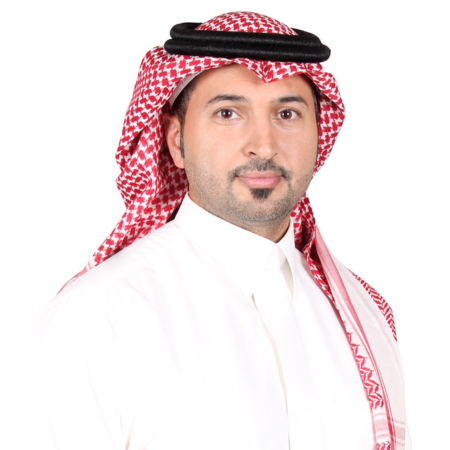
Khalid G. Alharbi boasts over 20 years of experience in partnering with business unit executives to develop strategic plans, direction, market analysis, partnership, growth guide, and operation excellency. He leads large and complex projects to achieve key business objectives and promote digital transformation. He is pursuing a career in engineering, project management, sales and strategy planning. In this interview with Performance Magazine, he shares the highlights and insights of his career, providing valuable glimpses into his journey and accomplishments.
Would you tell us more about your educational and professional background? How did your previous experiences lead you to your current position?
I started as a telecom operation engineer working in the field and gradually moved to telecom planning. This gives me a full insight into the value chain of my profession. Then, I moved to the project management field as a Certified Project Management Professional (PMP) working in 2030 Vision programs.
After that, I went into the business development and sales field, looking for more opportunities based on my company’s strategic direction utilizing the skills in planning and project management I acquired from my previous work. Finally, I worked directly in formulating, implementing and measuring the performance of different strategies since 2018.
What are your main responsibilities and goals in your current role?
My major responsibilities as the Strategy and Policy – Acting General Manager are overseeing the sector’s strategy formulation, implementation and monitoring, directing research and statistical studies, including the standard development and licensing process while ensuring compliance with overall cultural strategies, policies, and standards.
Please take us through your daily job routine. Could you describe in detail your activities and work hours? You may specify certain areas of your job, such as your work arrangement (remote, on-site or hybrid) and the stakeholders you frequently contact or meet with.
My daily activities and work hours are spent monitoring the team tasks and responsibilities toward the strategic direction while conducting the coaching sessions. On top of that, I review indicators and matrices achieved looking for improvement.
Do you think that strategy and performance management in the public sector is different from that in the private sector? How?
Yes, by changing the targeted customer, including beneficiary and strategic direction. For example, the strategic direction in the public sector often focuses on the final beneficiary (citizens, residents and other government sectors) and the services provided to them. Moreover, the public sector focuses on measuring beneficiary satisfaction, improving service quality, sustaining provision, and reducing the sector’s burden in service delivery.
As for the private sector, the focus is on return on investment, as well as ensuring cash flows and the effectiveness of operational processes to reduce expenses.
What are the main achievements you are proud of thus far during your time working in strategy and performance management in the public sector?
So far, the main achievement I am proud of is my participation in formulating and implementing two strategies in the public sector.
What are the main challenges that you face working in strategy and performance management in the public sector? When faced with such challenges, what do you do?
One of the main challenges that I face working instrategy and performance management in the public sector is the shortage of manpower which leads to distraction.
For the future of your career, do you intend to keep on working in the public sector, switch to the private sector, or does the sector not really matter to you? Why?
Recently, the public sector has closely aligned with the private sector in terms of social and economic impact. This has led to a strategic shift, prompting me to consider either public or private.
If someone is looking to work in strategy and performance management in the public sector one day, what skills, knowledge and experience would you advise them to acquire?
From my point of view, to excel in strategic work and stand out, one must master employee management, ensuring subordinates adhere to policies and procedures while also possessing deep strategic thinking, maximizing gains, building strong relationships, and gaining trust to effectively implement required tasks.
In addition to analytical skills, data linking, project management, and financial planning, one should also possess the ability to set standards, develop policies, and master persuasive storytelling.
Khalid G. Alharbi will delve deeper into his insights on performance management in the public sector in the upcoming government edition of Performance Magazine. For updates on the publication release, please follow The KPI Institute’s LinkedIn page.







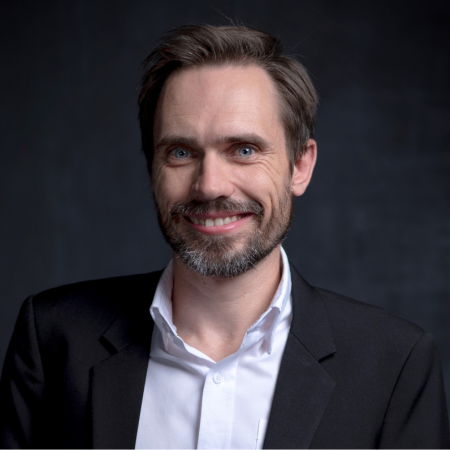 Dietmar Böhmer joined Tyme seven years ago and he has been leading the data and analytics function across the group, which includes TymeBank in South Africa and the newly launched GoTyme in the Philippines. He has led lending, data science, machine learning, and big data teams in banking for close to two decades and has lectured in the actuarial field prior to that.