In today’s data-driven world, organizations are constantly grappling with an abundance of data coming from various sources and in different formats. Data integration has emerged as a critical process that enables businesses to connect these disparate data sources by consolidating them into repositories called data silos, creating a comprehensive and unified view of their information. This single source of truth empowers organizations to make more informed decisions and derive valuable insights for better business intelligence.
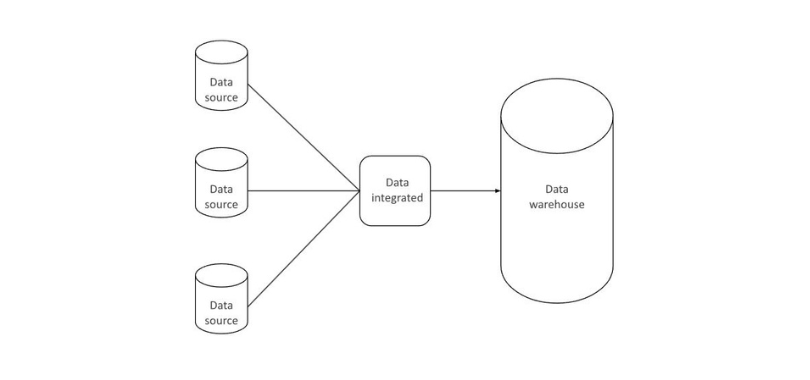
These disparate data sources can vary in type, structure, and format. Successful data integration finds a way to connect these sources, either by building relationships between them where they reside or by periodically extracting, transforming, and loading data (a process known as ETL) from these sources into one big database dubbed a data warehouse.
For example, when sales data is combined with customer data, the organization can gain a deeper understanding of customer behavior and preferences, which would allow personalized marketing efforts and improved customer satisfaction.
Data integration can be challenging as there is no one technical way of implementing it. Rather, the process depends on the needs and resources of each organization. Organizations with no technical capabilities would need to seek a third-party service provider.
Despite the variance across organizations, one thing remains consistent—every data integration process should be approached systematically by taking into consideration the following key strategic steps:
Defining integration goals: Organizations need to clearly outline the objectives and outcomes they want to achieve through data integration.
Assessment of data sources: This includes identifying all the data sources within the organization and understanding the structure, format, and quality of the data coming from each source.
Data mapping and transformation: This entails defining how different sources will be mapped to a common format. This may involve cleaning and preparing data silos in the first place.
Defining technique and tools: Based on the previous steps, a technical decision should be made on how to do the integration and the degree with which manual labor and automation will be utilized.
Building integration processes: This answers the question, “How will future data be integrated as well?” It involves defining workflows and processes that should be scalable, reliable, and capable of handling future data growth.
Testing and monitoring: As data integration is a continuous process, organizations should always test and monitor the integrated data thoroughly to ensure accuracy, consistency, and reliability. Validating the integration results should be done against predefined criteria, along with making necessary adjustments if discrepancies are found or to adapt to changing data sources and business needs.
In conclusion, data integration plays a crucial role in enabling organizations to harness the full potential of their data. By connecting disparate data sources and creating a single source of truth, organizations can unlock valuable insights, improve decision-making, and enhance operational efficiency. Following a systematic approach and leveraging appropriate integration tools lets organizations achieve successful data integration and gain a competitive edge in today’s data-driven landscape.
In 2016, President Abdel Fattah El Sisi exhibited tremendous support for Sustainable Development Strategy: Egypt Vision 2030. Since then, Egypt has undergone a major digital transition to modernize its economy, improve public services, and boost digital literacy. To attain such goals, the country has invested heavily in education, research, and technical infrastructure. This article will analyze Egypt’s recent technological developments across three main pillars.
Infrastructure development
The Egyptian government has invested considerably in the development of its digital infrastructure to provide reliable and high-speed internet connectivity across the country, such as expanding its fiber optic network to connect more households and businesses to the internet. As of 2020, more than 70% of the country’s population had access to the internet. Egypt has allocated more than $1.1 billion for the development of 5G technology and infrastructure. Adopting new technologies, such as 5G, will provide faster internet speed and improve connectivity across the country.
E-government services
According to the ICT 2030 strategy, Egypt has made significant progress in digitizing its government services, which has made it easier for citizens to access essential services online. In 2020, the Egyptian E-Government Services Portal was launched, providing a one-stop-shop for government services such as applying for passports and IDs. The portal offers more than 100 services, and as of 2021, more than 6 million citizens have registered for the service.
Financial inclusion & e-commerce
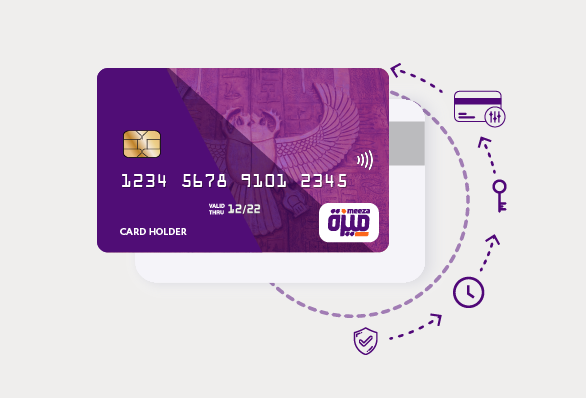
Meeza card, a national electronic payment card launched in 2019, allows citizens to receive their salaries, pensions, and other government payments electronically.
Egypt’s digital transformation has paved the way for private companies to launch several mobile payment applications, such as Fawry, Instapay, and Vodafone Cash, allowing citizens to pay bills, transfer money, and make purchases using their mobile phones.
The following explains why Egypt’s case should serve as a model based on two main motives:
Economic growth
The digital sector has been one of the fastest-growing sectors in Egypt, contributing significantly to the country’s GDP. According to a report by the governmental statistics, the ICT sector contributed 5% to Egypt’s GDP in 2021, and digital exports reached $4.9 billion by 2022.
Financial inclusion
The digitization of financial services has increased financial inclusion among Egyptians. According to a report by the MCIT, 56% of Egyptian adults have a bank account. Moreover, the money wallet accounts are expected to reach 57.9 million in 2025, which is higher than the average for countries in the Middle East and North Africa. In conclusion, Egypt’s digital transformation has advanced due to government investments in infrastructure, education, and innovation.
Digitizing government services, increasing digital literacy, and the government is pursuing digital transformation to meet its long-term aims. Last but not least, a valuable resource for those seeking to enhance their knowledge and skills in strategy planning is The KPI Institute’s Certified Strategy and Business Planning Professional course. It is recommended to sign up for this course to learn more about strategy planning.
Any successful and developed performance management system must include the following main stages: planning, implementation, evaluation, and improvement.
Institutional performance management begins with the planning stage, which ends with the preparation of the strategic plan—a plan developed for several years that aims to bridge the gap between the current situation and the desired future vision. Determining the plan’s link with financial planning and the rest of the material, human, and technical resources and property, as well as at the planning stage there is a link with the general framework of risk management as it is necessary to determine the type of risk that could impede the implementation of the strategic objectives and how to deal with the risk during its occurrence, which requires the existence of institutional agility in leadership while dealing with it.
At this stage, the policy development guide is adopted, which is considered one of the basic capabilities to ensure the implementation of strategic objectives and government directions. Indicators and targets must also be set because of their importance in planning, monitoring and evaluation to see what has been achieved of the strategic objectives.
The execution phase involves ensuring the plan’s successful implementation of the strategy. This is where operational action plans are developed and implemented, which include strategic initiatives and projects that ultimately lead to achieving the results of the strategic objectives and bridging the performance gap in the strategic objectives that were measured through performance indicators. This phase also involves the application of a general framework for change management, which is designed to bring about a positive shift that moves the organizational unit and organization from one state to another in order to achieve the strategic objectives in an efficient and effective manner, which may deal with changing the organizational structure, policies, programs, procedures or processes in accordance with the application of the ADKAR model criteria for change management.
It is also possible to choose initiatives and projects (especially the strategy) from the reality of the organizational unit’s work plan, to which the concepts of change can be applied. At this stage, performance indicators are measured, the main purpose of which is to know the level of achieving the strategic goals. Therefore, on all indicators, whether strategic or operational, there are “Lead” indicators that measure efforts to achieve the goals or “Lag” indicators that measure the long-term results of the strategic goals, on all of them to contribute to achieving the strategic objectives of the organization. Any indicator that is far from achieving this should be excluded from the measurement.
Measuring performance indicators contributes to the enhancement of institutional learning, motivates employees to achieve higher levels of strategic performance, and enhances accountability and transparency in the institution. At this stage, implementation begins through the general framework of risk management in terms of identifying risk treatment options, the method of treatment, preparing a risk treatment plan, and following up on the extent of implementation of said plan.
Policies that support the realization of the strategy are applied through the preparation and development of an implementation plan that includes various resources, timetables, risk management, communication, monitoring, and evaluation. Monitoring is necessary to assess the effects of the policy so that there is a possibility to adjust the plan and methods of implementation (if required).
A policy follow-up mechanism must also be set up and this can be done by developing and measuring policy effectiveness performance indicators. Finally, at this stage, strategy governance was addressed, which is the framework for action that ensures the implementation of the strategy and the achievement of its objectives in terms of forming work teams, follow-up, review, accountability, reporting, and evaluation.
The third stage is the evaluation stage, and it includes auditing processes, which aims to provide accurate data on how to implement the main stages of the general framework for operations management by defining, designing, documenting, applying, measuring, and following up on the performance, improvement, and development of processes. Institutions can also measure the maturity of processes through several criteria, namely: strategic alignment, culture and leadership, personnel, governance, methodologies and methods, and information technology.
They can also evaluate services through several criteria, including: linking services to strategic directions and goals, focusing on customers, defining performance standards and indicators for services to reach customer happiness, evaluating service delivery channels, measuring and evaluating customer happiness and adding value to them, and evaluating the human resources that provide services. This stage also includes evaluating indicators and targets, as well as evaluating policies and measuring their effectiveness.
The fourth and final stage is the improvement stage, and it includes reviewing and updating the strategic plan. There are two types of review and update of the plan: periodic annual review and comprehensive update of the plan after the end of the plan period of 3 years or 5 years. This stage also includes updating and improving operations, and there are 7 main steps to do so. The processes are: selecting the work team, analyzing the current process, developing indicators of the results of the process, determining the extent of process stability, determining process viability, and determining the feasibility of an improvement.
This stage also includes the improvement of services as the mechanism for improving them depends on various improvement sources, such as suggestions, complaints, satisfaction studies, studies and analyses, the results of measuring service performance indicators, and others. As for the steps and stages of improvement, they are: describing and analyzing improvement opportunities, identifying improvement action, evaluating the priority of applying improvement action, and evaluating the possibility of applying improvement action.
And here comes the role of benchmarking, which is the process of searching for and implementing best practices that increase the rate of improvement by providing the finest models and achieving improvement goals that lead to creating outstanding performance for the organization. It is a systematic and continuous process of comparison, measurement, learning, and continuous improvement by studying different models inside or outside the entity to reach the same level or excellence by applying the developed methods based on the results of the study. Comparisons are also one of the most important drivers of change in organizations, particularly when the outputs of comparison are employed in offering initiatives and innovations that improve previous work methods or lead to unprecedented successful methods which achieve pioneering in various fields.
Finally, analysis and improvement tools must be used to analyze all the problems facing the organization, including those related to the results of performance indicators. And in addressing the cases in which analysis and improvement tools are used, some important tools in analysis were explained, such as: Pareto analysis, mind map, brainstorming, the Five Why tool, and others.
About the author: Dr. Hisham Ahmad Kayali is a Strategic & Performance Management Specialist who has worked with the Dubai municipality. He participated in the full cycle of updating Dubai Municipality’s strategic plan based on balanced scorecard (BSC) perspectives. That included linking the strategic objectives to critical success factors, key performance indicators, and initiatives for the cycles of 2010-2014, 2013-2015, and 2016-2021. He has a Phd in Economic Science at Plekhanov Russian University of Economics.
Experts define high-performance culture as a set of shared beliefs and values set up by leaders. These shared beliefs and values are then embedded and communicated through different strategies that eventually form employee perceptions, behaviors, and understanding.
All companies want their employees to arrive each day motivated, prepared, and energetic to do what it takes to make the work done. However, it’s more of an idealism than a reality. A State of the Global Workplace report from Gallup shows that only 15 percent of employees are engaged at work. Meanwhile, new research from Zenefits revealed that 63.3% of companies consider employee retention more challenging than hiring.
The pillars of a high-performance culture
Several reports and case studies emphasize the impact of motivation on employee performance. While there are means to address waning motivation, a “well-performing” company isn’t good enough. With the capacity to trade globally, and markets immersed with companies scrambling for market share, it is more critical than ever to have a distinctive, high-performance culture.
There are many frameworks to analyze high-performance culture in an organization. One example of a well-developed and data-driven framework for assessing a high-performance culture can be seen in the Organizational Health Index.
Developed by McKinsey in 2017, the Organizational Health Index (OHI) survey measures 37 individual management practices and nine outcomes against a global database of more than 1.5 million individual responses.
The pillars of a high-performance culture are:
Direction;
Innovation and learning;
Leadership;
Coordination and control;
Capabilities;
Motivation;
Work environment;
Accountability;
External orientation.
The role of OKRs in building a high-performance culture
Objectives and key results (OKR) is a goal-setting tool used for measuring organizational/departmental/individual objectives through challenging and ambitious key results. Extracted from the organization’s visions and missions and aligned with the department’s goals, OKR involves activities such as planning, activating, managing, and adjusting.
With OKRs, teams can cascade and align goals to the different levels of an organization, defining outcome-based key results that help verify the success of the objective. OKRs act as a guide for daily work and connect all employees to a larger purpose, which is what the organization intends to achieve.
If OKRs are perceived as more than just a goal-setting tool and instead as a communication one, it shows why the OKRs are brilliant at building a high-performance culture. The effort of achieving daily goals at the individual and team levels eventually leads to the achievement of the overall objectives at the organization level in the long run.
As a result, when implemented correctly, OKRs can help a company enable a high-performance culture and achieve far more than their team thought possible. OKRs help the organization adopts performance culture in the following ways:
OKRs provide organizations with a clear direction, coordination, control, and orientation.
Direction, coordination, control, and external collaboration play a vital role in helping organizations jump from their current state to the state they want to achieve. To guide the organization in achieving what they desire, it’s important that the organization ensures that its vision and strategic clarity are understood by the stakeholders in every layer, and while doing so, the organization must also facilitate the involvement of its employees.
OKR helps organizations align priorities and make sure everyone at every level in the organization moves towards the same goals. Employees must be given the opportunity to provide their insights when the organization decides in the next 12 months. It is recommended to start with an OKR workshop where all key stakeholders responsible for company strategy ask for and gather input from employees on what they think the top priorities should be.
Those inputs can then be aligned with the existing company strategy and broken down into three to five OKRs. The process can be done using collaborative notes and documents or even a whiteboard to ensure that collaboration and ideas are well-captured. The goal of the process is to reach an agreement on what priorities should be achieved in the following year.
The process is then followed by aligning the company OKRs with team and individual OKRs. OKRs provide teams and individuals with a clear set of directions and achievements. OKRs are also a reason to remove things that are unrelated to the scope of the objective they wanted to achieve, keeping their focus and avoiding unnecessary activities or resources.
If every team gets the opportunity to create their own OKRs that they will be working on in a particular quarter, for example, it can assure a successful OKR program while helping the organization realize its strategy and maintain its focus.
OKRs increase employees’ motivation, innovation, capabilities, and accountability.
OKRs can be used to develop a set of productive behaviors that establish an essential motivating culture. Through the process of building OKRs, employees set the outcomes they’ll achieve. These outcomes are in line with the organization’s setup that supports autonomy and motivation.
In addition, OKRs focus on outcomes over outputs. It is a way to resolve organizational problems and gives employees the flexibility to experiment, innovate, and think outside the box. It also allows a humanistic approach, rather than a systemic approach. OKRs promote positive behavior by providing continuous reflection and iteration about the organization’s goals, sharing progress updates, and keeping goals collaborative, all while observing freedom and trust.
More than just a goal-setting framework
OKRs are more than just a goal-setting framework. They enable stronger and healthier relationships within companies and support powerful dynamics in an organization that will significantly increase performance levels.
To start doing the OKRs right, companies can hire an OKR expert to start partnering with their organization or provide their managers with training. The KPI Institute’s Certified OKR Program can equip them with the right tools, knowledge, and guidance in deploying OKRs in their organizations.
Editor’s Note: This piece was first published in the 22nd PERFORMANCE Magazine – Printed Edition. The KPI Institute’s Business Research Analyst Aida Manea discusses in this article how AI supports decision-making by eliminating biases and diminishing the number of human errors.
Through a variety of ways, artificial intelligence (AI) can help organizations enable and focus on better decision-making. AI could take over administrative roles and allow humans to prioritize more valuable things that require more time. The intelligent agent can take over manual tasks and enable process automation. AI can also plan decisions or predict results based on historical data.
That holds true even at the departmental level. Freeing managers from worries related to repetitive, administrative, and employee compliance tasks gives them more time for performance management activities. This is reflected in the use of AI as a behavioral assessment tool, data-driven processes where teams are coordinated through feedback, and more opportunities for meaningful human interaction.
AI in Performance Management
According to a study conducted by the University of Twente, there are two ways to implement AI in an organization. On a small scale, AI can assist a manager in improving small parts of the system, like inventory optimization. On a larger scale, AI could play a role in redesigning core processes at the organizational level.
One thing to pay attention to is knowing which type of implementation to choose. In an environment where human interaction and feedback are essential, it would not be the wisest choice to go for the second option as it could affect human connections.
The best-case scenario is to benefit from an assisting AI as it would help the manager make decisions while the assistant processes a vast amount of data. This will not only speed up the decision-making process but also guarantee the data veracity.
AI makes its mark on performance management systems through digitalization. Real-time feedback is important now more than ever due to the changes within performance management. The traditional yearly review is now being replaced by more frequent and informal check-ins as this would enable the shift from talking about people to talking with people. The 360-degree feedback practice focuses on asking colleagues for feedback on an employee’s performance.
Another strong point of AI is that it eliminates the biases toward individuals by assessing patterns and historical data with no opinion that might dilute decisions. While the line managers or HR may have their personal opinions about employees coincide with their responsibilities, AI supports decision-making by eliminating biases and diminishing the number of human errors.
AI for HR
At the HR department, the implementation of an AI system will not only process the data faster but will also deliver robust data collection, frequent fact-based performance, and improvement discussions. HR managers are responsible for their teams’ attitudes and behavior so that they can truly contribute to organizational goals.
In 2018, IBM realized the need for AI in mitigating biases and improving departmental performance. This is why IBM Smarter Workforce Institute wrote the paper “The role of AI in mitigating bias to enhance diversity and inclusion,” in which practical recommendations are offered for organizations that are looking to adopt AI in their HR daily activities.
Efficient and effective recruitment – A recruiter’s main challenges are prioritizing all the roles they are responsible for and finding a way to differentiate among candidates that applied for the same position. Deploying AI determines how long a job requisition will take to fill based on past data so that recruiters can prioritize the roles available.
Moreover, AI can predict future performance by determining the match between a resume and the job requisition and filtering candidates. The challenge in IBM regarding effective recruitment is to help HR managers surface the top candidates for the open positions and prioritize the most important requisitions. Their solution is IBM Watson Recruitment, an AI system that assesses information about the job market and past experiences of potential candidates in order to predict the necessary time to fill in positions and spot the most suitable candidates.
The huge advantage for recruiters is that they can focus on building and nurturing relationships with applicants. At the same time, AI collects the demanded skills from job requisitions and generates a score against skills mentioned in resumes. Finally, IWR watches over the hiring decisions to make sure they are free from bias and turns the candidate and recruiter’s experiences into better ones.
Enhancing motivation – At IBM, the individual needs of employees are essential, and managers get alerts about it. For example, the manager is alerted when there is an employee with years of experience in the company, has skills, and is ready for a promotion. The same applies to the case of employees with a higher propensity to leave or when employees from a specific department are at risk of missing their targets.
Through this alarm signal, managers are able to make decisions over the organization’s talent management approach. Another AI implication is the chatter analysis used to capture the top three internal issues from social media sources. Leaders can receive personalized recommendations to increase the team’s engagement. Other benefits brought by AI can be smarter compensation planning and career development.
The drawbacks of AI systems can be avoided by making sure the data is never used as a sole determinator in decisions.AI initiatives can barely break organizational barriers, based on a survey conducted by Harvard Business Review in which only 8% of firms engage in core practices that support the adoption of Artificial Intelligence. The shift towards AI should start by aligning the organizational culture and the internal operating ways to support digital transformation. Here are the three main actions to scale up AI:
Replace siloed work with cross-functional teams collaboration. The mix of perspectives increases the impact AI has over the processes as it ensures that projects address broad organizational concerns and not just isolated ones. Moreover, if end users are required to test what development teams work on, the chances of adoption increase.
Abandon the top-down approach. Integrating AI into processes will increase the trust of employees in algorithms. They are the ones who will ultimately make a decision based on the algorithm result and their experience. Once they feel empowered to make decisions without having to consult a higher-up, they will get a taste of what AI can offer: freedom of action.
Embrace an agile, experimental, and adaptable mindset. The idea of having an idea baked before it is deployed must be replaced with a test and learn vision. This reduces the fear of failure and allows companies to correct minor mistakes before they become costly ones by receiving early feedback from users.
AI’s ability to promote automated processes, analyze data, predicts trends, and even build frameworks helps the organization in its strategy and business planning. In order to maximize the product and effects of AI, it is essential to establish a strong strategy mindset.
The KPI Institute offers a program that would help you design an organization’s strategy and plan your business using a strategic framework. Enroll now in the Certified Strategy and Business Planning Professional Live Online course! For more details, visit The KPI Institute’s website HERE.