Rejection is part of everyone’s life. It can happen in a variety of circumstances such as being ghosted by a person you care about, not being invited to a friend’s party, or being eliminated as a job candidate. However, the need to be connected to others as a social being makes rejection have a greater impact on one’s feelings, thoughts, and behaviors.
Research done by Case Western Reserve University found an immediate reduction of 30% in reasoning as an effect of rejection. This might explain the tendency to maladaptive thoughts such as relationship avoidance or dependence. Furthermore, rejection can also incite negative emotions and reduce self-esteem. However, these consequences can be avoided by applying certain strategies.
Process rejection
Grief is a common emotional response to rejection. While grieving starts with denial, it is generally followed by anger. In this case, it is necessary to express anger in a healthy way such as exercising or meditating. Another option is to engage in any hobby or activity that can help calm the emotion down.
Once your emotion has settled, you can begin to process it. Through her book titled Bouncing Back from Rejection: Build the Resilience You Need to Get Back Up When Life Knocks You Down, Leslie Becker-Phelps recommends writing a journal to unwind all of the emotions stimulated by the rejection. By exploring the thoughts that accompanied those emotions, it will help assess the rejection objectively and then reframe the negative thinking. In job-hunting, for example, instead of thinking that no one wants to hire you, try to reframe it by thinking that the organization you are applying for have its own difficulties in finding a good-fit employee, there may be a viable reason as to why you got rejected, and focus on how to improve.
Revive self-esteem
Processing rejection does not necessarily mean that there will not be an emotional wound afterward. Oftentimes, the wound is reflected in low self-esteem. Becker-Phelps explained that making a list of strengths and starting each morning by reading them will help improve this.
Another way to boost self-esteem is to surround yourself with people who appreciate you. Spend some quality time with family and friends to gain moral support. If the rejection makes you feel dejected, connecting with your loved ones will help in reminding you that you are valued.
Practice acceptance
Accepting that rejection is unavoidable is also key to helping ease the pain from it. However, it takes time to see rejection as something normal and necessary for growth. Repeated exposure to rejection might help build confidence and overcome fear.
In his TED Talk session, Jia Jiang, the owner of Rejection Therapy, told his experience of 100 days of rejection. On the first day of the challenge, he asked a stranger to lend him $100 and the stranger responded, “No. Why?” He felt so embarrassed by the rejection that he just walked away. However, once he calmed down and watched the recording of the event, he realized that the stranger invited him to explain himself which could have been a chance to negotiate.
From then on, he makes it a point to always try and explain his reasoning even after being rejected. He learned that one can still have a chance after being rejected if one just does not run away.
Even though rejection hurts, people cannot really escape from it. If it is dealt with in unhealthy ways, it can negatively impact one’s feelings, as well as relationships with oneself and others. Therefore, it is important to regulate one’s emotions and thoughts either by using one’s own effort or with support from loved ones. Familiarizing oneself with the feeling of being rejected through repeated exposure could also help overcome the pain.
Our brain is one of the most miraculous forces in the universe, and learning how to master it is one of the keys to our success. A unique way to unleash this force is by playing.
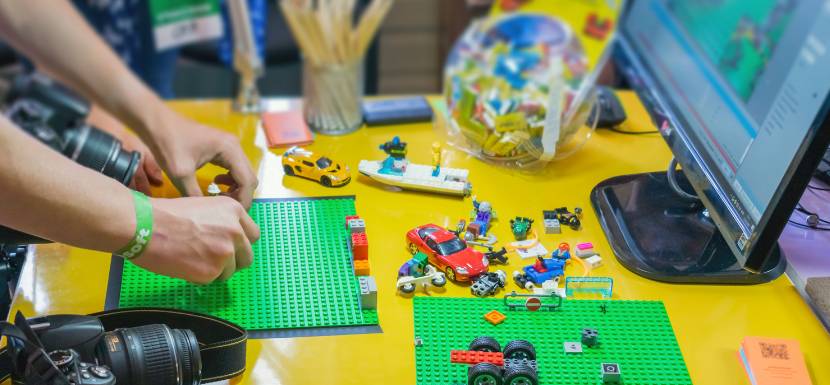
The LEGO® SERIOUS PLAY® (LSP) method could help businesses and people solve critical challenges and create strategies. The LSP is a facilitated thinking, communication and problem-solving technique that can be used by organizations, teams, and individuals. It draws on extensive research from the fields of business, organizational development, psychology, and learning. It is based on the concept of “hand knowledge.”
The history begins in 1995, when Kjeld Kirk Kristiansen, the grand child of the founder of LEGO® started to lead the company. While the company was successful, a new strategy was needed. At the same time, Johan Roos and Bart Victor, two professors from the IMD business school in Lausanne, were looking into different ways of creating strategies. Kristiansen connected with the two professors, and over the next couple of years, they implemented their strategy concept using LEGO bricks instead of usual methods, like if words, Post-it Notes, and whiteboards. The business school professors experimented with and became more adept at building with LEGO® bricks. However, something still did not click. The bricks alone did not result in new thinking and more imagination. Paradoxically, what was missing was what LEGO® as an organization knows at its core: how humans learn and develop. To address this, Robert Rasmussen became involved in 1999. From that point on, they worked and developed the method.
LEGO® SERIOUS PLAY® is based on a set of fundamental beliefs about leadership and organizations:
Leaders don’t have all the answers.
Their success is dependent on hearing all voices in the room.
People naturally want to contribute, be part of something bigger, and take ownership
All too often, teams work sub-optimally, leaving knowledge untapped in team members.
We live in a world that can be described as complex and adaptive, and allowing each member to contribute and speak results in a more sustainable business.
Creating the Mission and Vision Through LSP
Company or departmental vision or mission statements are often long. They have been formulated by several people who all wanted to include something. They are not always memorable, and many employees can’t recite them, and many don’t even understand what they mean, let alone support them. In 2017, Derek Good, LEGO Serious Play facilitator, had a workshop and helped a team create a short, succinct, and memorable vision or mission statement from the existing one. The team was formed from a group of leaders in a university’s brand and marketing department.
After two warm up exercises, the group was asked to create two models:
Representing their ideal working environment and
Representing what they could do to demonstrate living the current mission.
This got them thinking about the future and their current belief in the existing direction.
Next, each person was asked to build a model that represented an aspect of trust. Each person was then asked to place a red brick on the most important element of their individual model.
Then, in pairs, they formed a shared model and were asked to eliminate any excess bricks while still holding the same meaning of the newly combined model. They did several rounds of this, and they were consistently told that they may still have too many bricks, and so long as they kept the essence of the meaning, they were to remove any excess bricks they could. The pairs were able to reduce the models significantly.
They were then paired in three groups, and the facilitator shared the vision and mission statement on a screen and asked the participants to use the same procedure: What words can be reduced from the statement but keep the essence of the meaning? After three rounds of discussion, they managed to have a new vision and mission statement: a seven-word mission statement. The initial one had 29 words.
This was done in less than 30 minutes, something that in the past took them more hours, but not with the expected result. The people involved were extremely enthusiastic about the process. It is amazing how our minds can send us the right solution to our challenge by playing.
The LSP method is not based on any new or groundbreaking science. Instead, it is grounded in action research and evidence drawn from a range of existing science disciplines and proven research within these fields. The dominant disciplines are Constructivism, Neuroscience, Flow, Play, and Imagination. Also, if you want to learn more about how to create your own strategy for your company of your activity, you can check our Certified Strategy and Business Planning Professional, which can help you better understand how strategy works.
The topic of work-life balance is at the front of the minds of many companies and employees. In today’s fast-paced culture, human resource professionals are looking for ways to improve their firms’ bottom lines, boost employee morale, retain people with vital company expertise, and keep up with workplace changes.
Pandemics continue to wreak havoc on people’s lives and livelihoods across the world. While most talks center on the fear of contracting the disease, living in houses, overcrowded nursing homes, and business closures of all kinds, the crisis has also produced some positive outcomes. Reduced vehicle traffic and traffic accidents, decreased levels of air pollution, which must contribute to lower heart attack rates, and a renewing atmosphere could be considered the “silver lining” during these times.
The pandemic became a bridge for community action, family communication, behavior, sanitation, cleanliness, and online and distance education to happen. It is a blessing to be able to breathe clean air and drink pure water. It is now up to people to live a life considerate of all the gifts that nature has bestowed upon them. This kind and sensitive way of life will give you hope for a healthy and stress-free life.
Does work from home raise productivity?
“Working remotely has given me more space for long-term thinking and helped me spend more time with my family, which has made me happier and more productive at work,” Mark Zuckerberg,Facebook founder and CEO wrote. He has also said that he expects about half of Facebook’s employees to be fully remote within the next decade.
According to aStanford study of 16,000 workers done over nine months, working from home enhances productivity by 13%. Workers in the same research reported higher job satisfaction and a 50% reduction in attrition rates.
Whether they are a parent, carers, or pet owners, today’s remote employees must juggle a multitude of duties while working from home. Many employees have struggled to reconcile the obligations of their business with the needs of their families or households. This is why the concept of work-life balance is often tossed around. Employers, on the other hand, have acknowledged that each employee is unique. To ensure self-managed and independent personnel, several firms choose to offer personality-like assessments in the workplace.
Work-life balance is not a new notion in human resource research. It would continue to be studied in a variety of ways. This only makes sense because work-life balance has an 8.3 percent impact on job satisfaction and a 4.4 percent impact on employee retention.
Useful statistics for both employer and employee
Commuting saves remote employees an average of 40 minutes every day.
Fewer real estate expenditures, lower absenteeism and turnover, and greater catastrophe readiness are the key savings for firms.
Since 2020, people have been meeting by video calls 50 percent more since COVID-19.
Nearly 70% of full-time workers are working from home during COVID-19.
After COVID-19, 92 percent of those polled intend to work from home at least one day per week, and 80 percent expect to work from home at least three days per week.
23 percent of those polled said they would take a 10% pay cut to work from home full-time.
Being at home during COVID-19 saves people on average close to $500 each month. As a result, you’ll save around $6000 every year.
Only 20-25 percent of businesses cover some or all of home office equipment and furniture costs.
After COVID-19, 81 percent of respondents expect their employer will continue to promote remote work.
Compared to those who did not, 59 percent of respondents indicated they would prefer to work for a company that offered remote work.
The pandemic has brought different kinds of challenges to various industries. Most thrive by keeping up with trends and reinventing systems to adapt to the changing needs. This is true for the education sector. One of the most interesting educational trends today is the Genius Hour, which focuses on achieving results through an unconventional process. The education trends that will be discussed here are those that use certain instruments or methodologies. Let’s take a look at them and see how they can be observed and applied to organizations and to individual work.
Trend 1: Mobile learning
Mobile learning or m-learning can be seen as an evolution of e-learning (electronic learning) where any of its three components can be mobile at one time or all at the same time: the learner, the gadget used, and the learning itself. A few of the best uses of m-learning in education and training are just-in-time learning, where one can pick out a mobile device at any moment learning is needed; mobility of the learner, such that one can learn from a cafe or any place of choice; and mobility of learning, an example of which is learning about the things that one can see along the way by making use of mobile technology lenses, such as the Google Lens.
On the other hand, organizations have the concept of the mobile workforce. It refers toIBM employees being connected through different mobile technologies, like laptop computers, smartphones, and other mobile devices, and not bound by a central physical location. An international study posted that a mobile workforce had a 67 percent increase in productivity, 53 percent increase in employee engagement, and 43 percent revenue growth. Supporting this finding is The Economist Intelligence Unit’s study on Mobility, performance, and engagement, where one of its key findings is “workers who say their employers use mobile technology well are typically more productive, creative, satisfied, and loyal.”
Different types of mobility can be observed from the mobile working experience of employers using mobile technology. One that can be inferred is working with mobile devices and apps while at work, which was reported by the study’s respondents to have increased their productivity by collaborating effectively (33% in Japanese respondents compared to 21% globally) and led to quick and easy access to information (53% in Australia and New Zealand compared to 42% globally).
Another kind of mobility is the ability to work from any location at any time. This was chosen by the participants from the countries surveyed (Australia, France, Germany, Japan, New Zealand, Singapore, UAE, US) as the most important productivity driver. The UK respondents, on the other hand, point out that the ability to access information easily is their most important productivity driver, the second being the ability to work from any location at any time.
Mobile working, whether merely using mobile devices at work, making oneself mobile while working, or working from a choice of place and time, can be viewed in parallel with the fifth industrial revolution’s (IR 5.0) personalization. As IR 5.0 is described by many as achieving personalization by means of higher product customization, so as working can be personalized through the benefits of mobility at and of work.
How to effectively implement mobile work
The Economist Intelligence Unit’s study mentions that the “employers using mobile technology well” have the practice of offering technical support for employee-owned mobile devices for technical issues affecting work. Another good advice it mentions is to make sure people have the right technology and use it in the right working environment; it can be inferred that this refers to mobile gadgets and applications used for work. Another recommendation that can be useful is strategizing for employee adoption and considering how to provide tools that employees need to succeed.
Trends 2 and 3: Gamification; Nanolearning and microlearning
Gamification in the education and training sector has been heard even in previous years as an effective strategy for 21st-century learners. In organizations, The KPI Institute (TKI) teaches it as one of the approaches in changing the organizational culture. In some of the certification programs offered by the TKI, such as the Certified OKR Professional, gamification is a part of a module taught.
In this Performance Magazine article aboutgamification, three steps are mentioned as key to its implementation: (1) adapting to the organization’s needs, objectives, and culture; (2) rewarding and having benefits provided to motivate employees; (3) engaging employees in a system that they can use to solve problems within the organization.
Nanolearning is a smaller version of microlearning, but in the education and training field, both of which are related to chucking information so that learners obtain optimal learning within 2-5 minutes for nanolearning and 6-10 minutes for microlearning.
Small bits of learning can be inferred to be highly effective since experts have found that in the year 2000, the average attention span of people was 12 seconds, and by 2015, this fell to 8.25 seconds.
From an individual motivation perspective, this finding can be relevant to chunking tasks into smaller pieces as necessary. Another thing learned from the in-house training organized by The KPI Institute about time management is that chunking tasks not only makes them more manageable, but it also gives a sense of accomplishment for every time tasks are completed. Hence, it can increase one’s motivation to work.
Trend 4: A student’s well-being as a growing mental health challenge
This last trend is about bringing the challenge to a spotlight rather than highlighting a practice. As per observation, the pandemic has forced most educational institutions worldwide to resort to distance learning, whether temporary or eventually leading to hybrid delivery (online and on-site). The same can be said to the workforce, where more people and organizations shifted to remote work. In the training statistics of The KPI Institute alone, the years 2020 and 2021 had a total of 84% and 99% live online training delivery, accounting for a 30% increase in the total training delivered online throughout 2008-2021. The result of the shift to the online environment can be feelings of isolation and the disadvantage of less social interaction and connection.
How to cope with the challenge
In the field of education, the result of mental health challenges is dropping out (Boston University as cited by Bandalaria, 2021). This is avoided through predicting, with the help of machine learning, and intervening early. In the workplace setting, the same prediction can be done through the help of the # Employee Engagement Index. In April 2021’sTKI KPI of the month, the concept is further discussed in an infographic, and practical do’s and don’ts are advised.
Further, thismental health at work article may also shed some light to cope with the challenge from an organizational and individual perspective.
The three other trends mentioned above as a part of improving employee well-being can also be a part of the solution to address the growing mental health challenge.
In conclusion, adopting these trends from the education field to a workplace setup requires proper alignment of organizational or professional mission, vision, and goals, down to the people’s needs and preferences. Though the trends mentioned here highlight the good impact, careful consideration and further review must still be done prior to implementation. Random literature (for example, Accenture’s article states that people are working an extra 2.8 hours a day at remote work setup to achieve the same level of productivity in-office) may suggest that not all trends will fit a person’s or organization’s work needs.
Emotional intelligence can improves business results often by order of magnitude. Today, the leader’s mood plays an important role in this dynamic. New research has shown that leaders should redefine what they do first and best.
The human mind proves that leaders’ moods could affect the feelings of those around them. The reason for that lies in what scientists call the open-loop nature of the mind`s limbic gadget, which relies upon outside assets to control itself and serves as our emotional center. However, the closed-loop gadget is self-regulating, and our mood usually depends on our connections with different humans. The open-loop limbic gadget is a triumphing layout in evolution. It allows humans to come to one another’s emotional rescue; for example, permitting a mom to appease her crying infant.
Resonant Leaders Inspire People
Resonating means being in harmony or in sync with those around you. Mary Tuk engages with the people around her, those who report to her and others. She tells them not only what is important to them in their lives and work but also to their personal and professional vision. She listens to them because she cares. Employees sense this and respond accordingly. This creates an environment of open dialogue, mutual respect, and trust.
Personal and shared visions have a long history in management and organizational practice but only recently have they begun to systematically build empirical knowledge about the role of individuals and shared visions, teams, or organizations when developing personal or shared visions. Positive Emotional Attractors (PEA) and Negative Emotional Attractors (NEA) are two major states that are strange attractors, each characterized by three dimensions. These are (1) positive emotional awakening and negative emotional awakening; (2) endocrine excitement of the parasympathetic and sympathetic nervous systems, and (3) neurological activation of standard mode networks and task-positive networks.
Building a compassionate relationship in a shared vision is difficult even in the simplest times. But in a highly competitive industry like banks, this is a big challenge. Imagine trying to excite people in the future by working on performance, energy updates, and sustainability when the world around you seems to be collapsing. Emotional and social intelligence skills show that in many countries around the world, they predict the effectiveness of leadership, management, and professional activities. They can be called emotional intelligence (EI) and social intelligence (SI) behavioral levels.
To be an effective leader, manager, or expert, a person should properly understand and handle his or her emotions based on each person or situation and interact effectively with others. One needs to understand the emotional signals of others . These competencies occur in three clusters: (1) Cognitive intelligence (CI) competencies, such as systems thinking and pattern recognition; (2) Emotional intelligence index (EI) abilities, such as adaptability, emotional self-control, emotional self-awareness, positive attitude, and achievement orientation; and (3) Social intelligence (SI) abilities, such as empathy, organizational awareness, inspirational leadership, influence, coaching and mentoring, conflict management, and teamwork. Other competencies are like threshold competencies, and that means they have to be defensive.
Emotional intelligence at work
Emotions can also be a valuable tool in the workplace. Through learning to read and influence the emotions and reactions of others, emotional intelligence can be rewarded in your organization. Here’s how that can happen:
Make sure leaders practice the right actions. If the leader does well, you can see it in the team.
Allow colleagues to distinguish between emotions and personality. Try this exercise: The manager puts a huge calendar on the wall, and the team members mark the calendar with emojis that show their feelings. Encouraging employees to say “I feel frustrated” rather than “I’m frustrated” can increase their emotional awareness.
Make employees feel valued. When employees have a say, they feel more connected. Talk frequently with your employees to find out what they think of changes and projects so they can talk and hear. If they tell you they are angry, frustrated, or worried, make it okay. Also, say thank you and show people that you are grateful.
Make feedback routine and factual. Give and receive negative and positive feedback. It helps everyone become a better employee. It’s a good idea to start with a question, “How are you? What are you thinking?” If you give negative feedback, don’t do it personally. Also, please accept feedback from the team. “What would you change if you were in my position?” Remember to control your reaction to what you hear. If you don’t like it, think about why and pause before answering.
Make assertion training accessible to all employees. Explosive anger, resentment, and frustration result from disgusting emotions. For many, it is difficult to express themselves properly. Teaching employees when and how to deal with difficult situations can help people avoid emotional relapses.
Facilitate stress management. Be aware of your employees’ increasing workload, deadlines, and stresses. Provide support if possible. Implement stress-relieving strategies and training to reduce emotional ups and downs.