Measuring performance in tutoring programs


Tutoring is a very broad concept and it is usually understood in different ways by different people, but there can be a general common understanding.
Get the opportunity to grow your influence by giving your products or services prime exposure with Performance Magazine.
If you are interested in advertising with Performance Magazine, leave your address below.

Tutoring is a very broad concept and it is usually understood in different ways by different people, but there can be a general common understanding.


Key performance indicators (KPIs) are measurements enterprises use to determine how they’re doing with meeting their goals. High-level KPIs relate to the overall performance of the business, while low-level ones typically evaluate the processes of respective departments.


After the financial crisis that began in 2008, banks have been taking steps to improve their performance management and measurement capabilities in light of new economic and market conditions and new management needs.


The Balanced Scorecard provides any organization with a homogeneous view on the execution of strategy. It may take several months to several years for the Balanced Scorecard to reach its full implementation within the organization, but the end of the journey can be marked by impressive results.

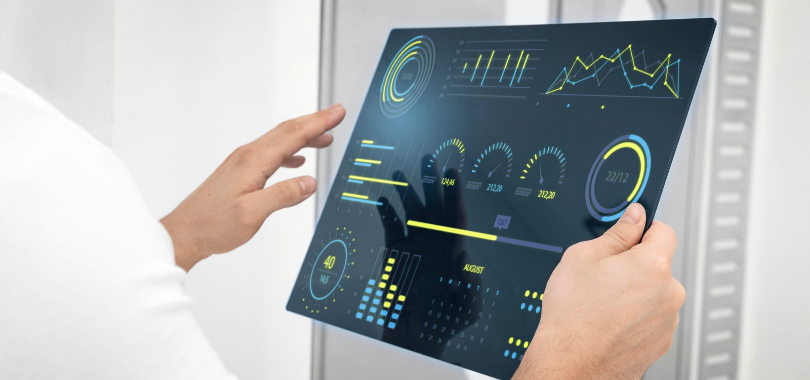
An important component of performance measurement is represented by the data collection capability.
However, when applied in the organizational context, this process is neither easy, nor lacking obstacles, as practitioners often discover.
Some of the most common challenges encountered by organizations are related to three main themes, namely:
As the decision-making process is significantly influenced by the performance data provided in monthly reports, providing unreliable information might seriously damage your business, by influencing you towards making the wrong decisions.
The following recommendations are meant to assist professionals in their efforts to optimize the data gathering process.
Identify those employees who will become responsible for gathering data. The profile of a data custodian should include experience in measuring, reporting metrics/KPIs, skills to work with technology (it can be business intelligence tools or Microsoft Excel), knowledge in regard to the assessed processes, the sense of integrity and ethics.
Some companies may hire specialized professionals, such as data analysts, while other organizations might choose to assign the data custodian roles to existing employees.
A flow chart will provide data custodians with more visibility regarding the data collection steps, as well as with the clear deadlines that need to be respected.
This document will ensure consistency in measuring each KPI, by presenting details such as KPI definitions, calculation formulas, data sources and measurement limitations.
A well-documented KPI library will significantly influence the quality of the KPI measurement.
For many companies, hiring a specialist, such as a data analyst, may not be an option and they have to rely on existing resources. In this context, it is highly important for people to be trained on this matter.
Developing this internal capability can be done through several initiatives, from formal training events to internal learning and sharing.
A Community of Practice for data custodians can be established, where different challenges are discussed and solutions are identified. Participants can exchange experiences and come up with initiatives to improve the current data gathering process.
From time to time, auditing the data gathering process leads to improvements by identifying critical issues that may be altering the quality of the data produced.
Use technology in order to ensure an efficient data gathering. Having automated processes improves both the accuracy of data and its availability in due time.
By having these six tips in mind when collecting data for KPIs, managers can streamline the data gathering process and provide reliable data for decision making.
For professionals looking to strengthen their data gathering, analysis, and KPI measurement capabilities, The KPI Institute offers the Certified Data Analysis Professional and Certified KPI Professional courses, providing practical knowledge and tools to improve the quality of performance data and support more informed decision-making.
Terms of use | Privacy Statement | Cookie Policy | Disclaimer | Online Dispute Resolution (ODR)
Copyright © 2004-2026 The KPI Institute Pty. Ltd. All rights reserved