Annual performance reviews! Whether you like them or hate them, they have been around for quite some time and for, many people, they pose a significant life question: “Which came first, the rating or the pay decision?” (Paul Rubinstein).
Which company in this world doesn’t want to have the most performant employees on the market? This is one key aspect which fuels the strategy implementation, growth and the organization’s competitive advantages. Reaching high levels of performance actually translates into a calibration of people processes covering the entire employment cycle from selection and recruiting to engagement initiatives and implementation of retirement policies. This leads to adopting an organizational performance culture in which talent is developed in-house.
Since Performance Management has become the central concept of nowadays’ business productivity, entrepreneurs, professionals and analysts are gathered and connected by innovative tools and techniques which are meant to achieve not only organizational productivity, but also operational, personal and individual growth. Cascading the Performance Management, starting with the individual level and going up to the organizational level, consists in reestablishing the organizational culture and values.
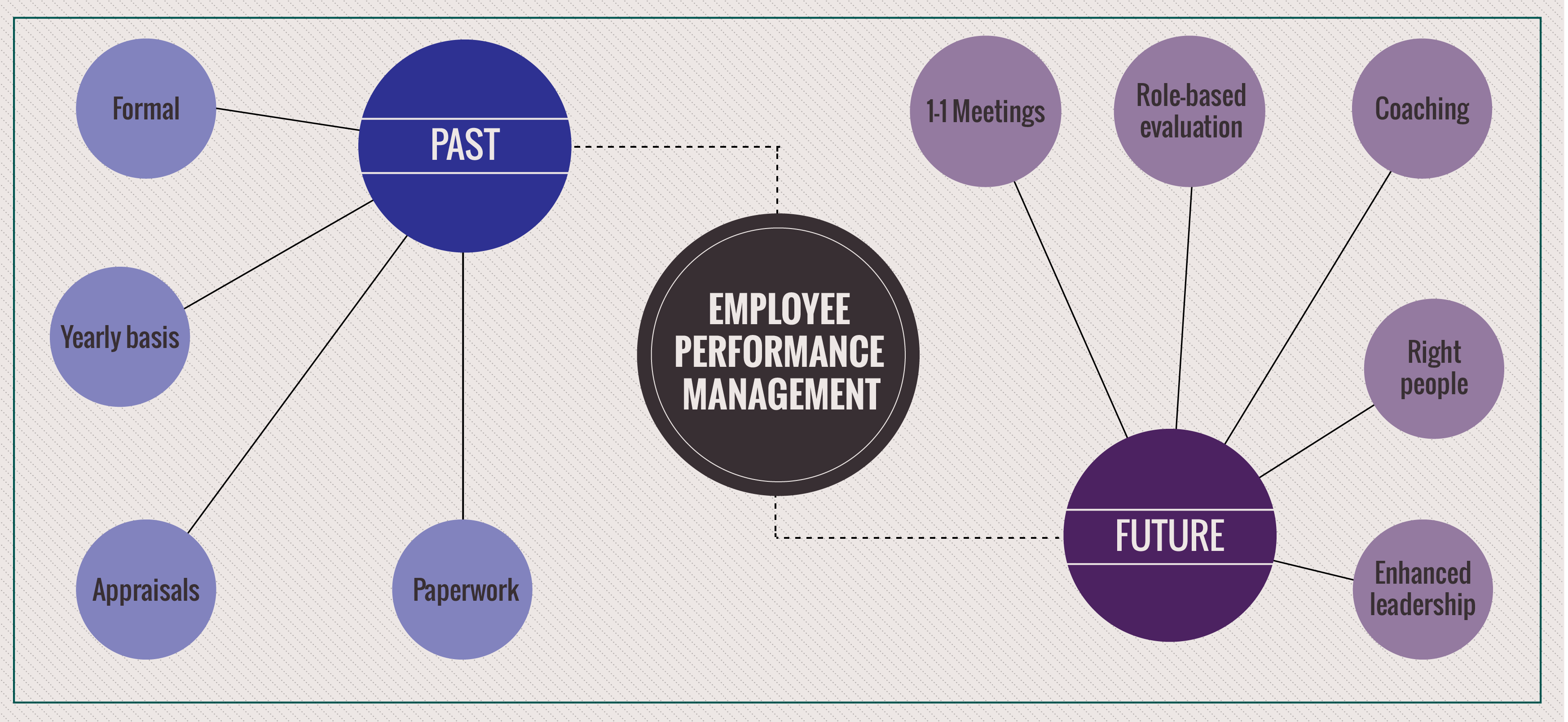
Performance management, and especially performance management at individual level is a hot topic, debated by HR professionals, managers, employees, academics, researchers and practitioners alike. In the past almost 50 years, ever since it started being formally implemented, both the process itself and the name used to describe it have gone through numerous changes. So what is in store for performance management?
Today’s working environment focuses on productivity, quality, innovation and organizational effectiveness. The qualities displayed by a top performer are consistent across industries and different sized companies, and people strive for success in a highly competitive environment.