Improving children’s quality of life in developing countries is today a priority of thousands of not-for-profit organizations. It is a difficult journey, influenced by many macro and microeconomic, political, social, cultural, and religious factors. Many such efforts are structured in programs and projects.
Monitoring their implementation as well as their impact is a requirement not only for tracking if they make a difference but also for attracting new funding and other resources for future programs. Overall, many non-profit programs employ robust performance management systems to support the achievement of their purpose. Designing and using such systems is not as straightforward as it may seem.
The process of creation is very important in music. In order to create great symphonies you have to be results-orienteted, metrics driven and always think outside the box. The same applies to performance management.
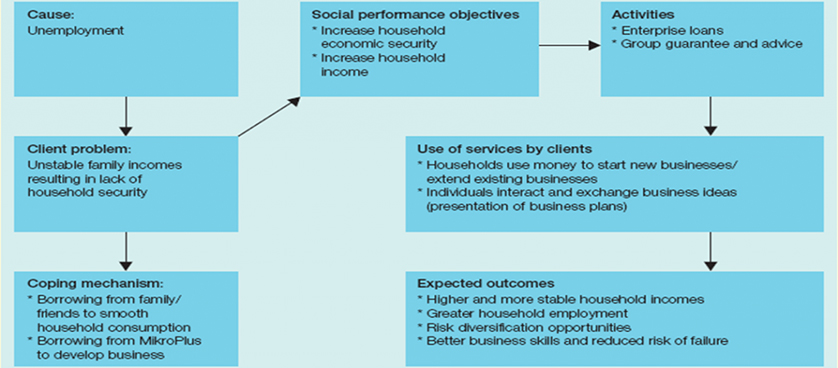
Microfinance institutions (MFIs) are mainly private-held companies, whose owners tend to have long-term interests (Ingo, W., Krauss, N. 2008). Most MFIs are strongly related with a social mission. For example, the most common “raison d’être” for MFIs is to broaden access to financial services, reduce poverty, empower women, build community solidarity, or promote economic development and regeneration.
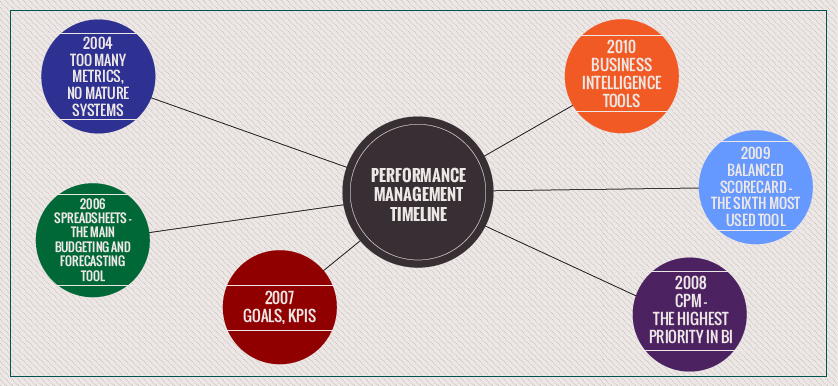
Performance Management is one of the most dynamic business disciplines today. Its evolution accelerated over the last 20 years and due to the large number of concepts it employs and unstructured body of knowledge, having a comprehensive big picture view of the topic is rather challenging. One way of achieving this is by reading a lot and doing a critical review to the various ideas proposed. Another option is by monitoring the pulse of the discipline as reflected in studies and survey reports covering performance management topics.
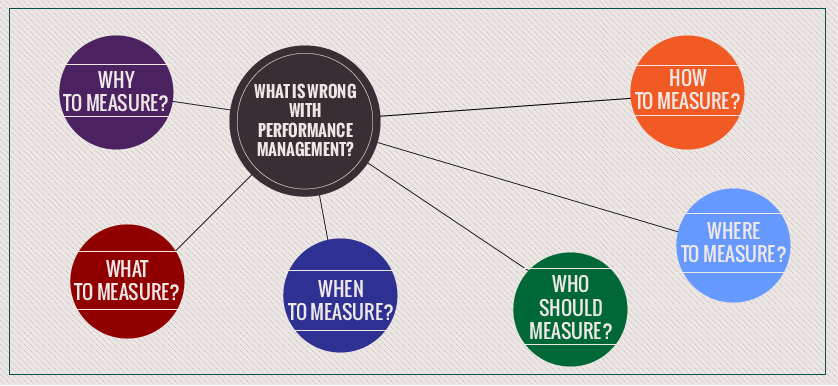
A simple answer is over-reliance on measurement and its merits.
Since ancient times, humans had a fascination with measurement. In discovering the natural universe, measurement has its merits and one might say it is indispensable.