Performance Management is one of the most dynamic business disciplines today. Its evolution accelerated over the last 20 years and due to the large number of concepts it employs and unstructured body of knowledge, having a comprehensive view of the current state of its evolution is rather challenging. One way of achieving this is by monitoring the pulse of the discipline as reflected in studies and survey reports covering performance management topics (Brudan, 2010).
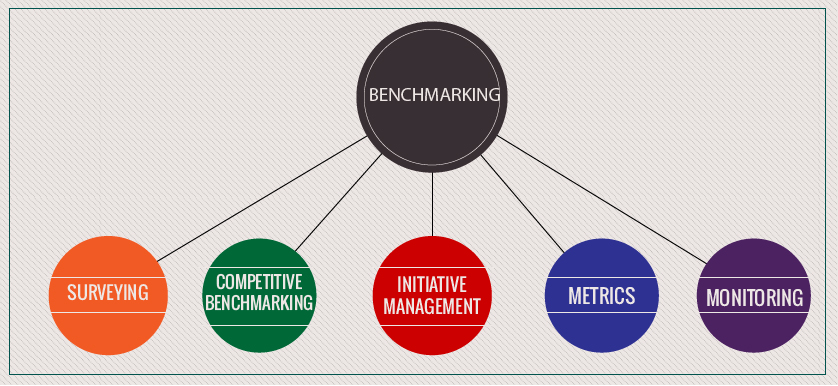
Benchmarking as a management concept is reported to have its roots in land surveying, where the altitude of objects is estimated based on a pre-established point of reference on an arbitrary landmark (McNary, 1994). Frederick Taylor is reported to be the first to use benchmarking along with other principles in a business enterprise to improve performance. Elements of benchmarking can be recognized in Taylor’s scientific management approach applied during his time at Bethlehem Steel Company (McNary, 1994), popularized in “The Principles of Scientific Management” .
According with a 2007 SAS report on performance management issues, alignment is the most important benefit of performance management efforts. The report was based on survey data gathered online from 1143 respondents from cross-industry organizations across the globe (SAS, 2007). The report presents a detailed picture over the use of performance management tools, frameworks, systems and practices in the worldwide organizations.
Among the most important findings that were outlined from the survey(SAS, 2007) are:
• Performance Management practices have spread over most of the organizational functional areas. According the SAS survey findings, the operations function is most likely to drive the effort followed closely by the finance and human resources departments.
• Even though most of the performance management practices are multi-departmental, only a third of them are aligned across all departments.
• Most companies are looking for performance management initiatives that could boost their competitiveness.
• Cultural resistance, the human factor, is the primary factor to achieving performance management success.
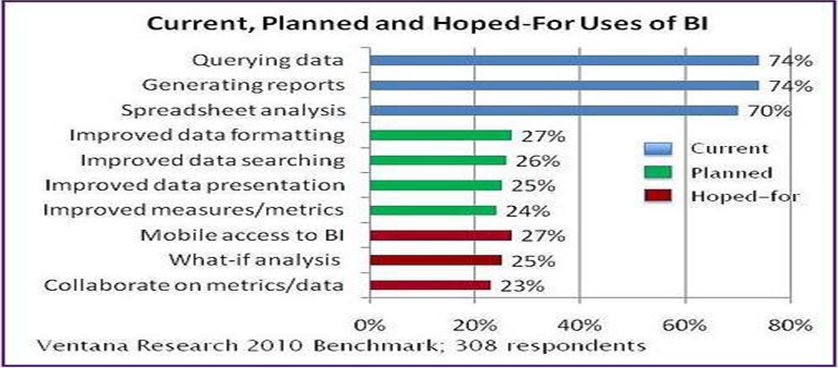
Many business users still rely today on spreadsheets, presentations and e-mail as their tools for information and analysis, despite major investments in technology and their willingness to manage or improve organizational performance.
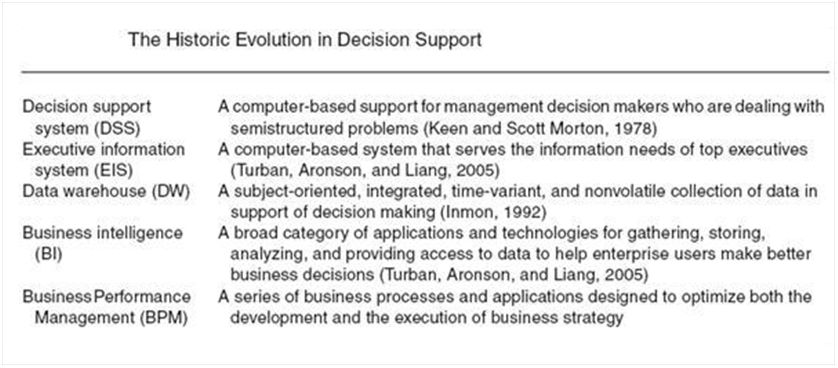
Simply stated, Business Performance Management (BPM) can be described as a series of business processes, systems and applications designed to optimize both the development and the execution of business plans.