Perhaps a customer service associate started making mistakes.
Mayhaps a project that seemed like it was a winner suddenly tanked.
Perchance a government department that consistently hit its KPIs suddenly started missing them.
Possibly a construction site that was on track suddenly started falling behind schedule.
Presumably a real estate project that looked like a sure success suddenly stopped attracting buyers.
What’s the first question that pops into most organizations’ minds at that very instant?
“What’s wrong with the employee?!”
It can be a myriad of matters, ranging from motivation, discipline, lack of care, or just a rough attitude. It’s an easy question to ask. When things aren’t going well, after all, our first inclination is to examine the person at the center of the work. It feels equally easy to answer, too. Unfortunately, it’s often the wrong question to ask. In our last piece, we examined the oldest myth in performance management – the one about great performers simply being born with more talent. While talent plays a role, it’s not the full picture. You can develop skills, acquire knowledge, improve abilities, and gain experience nowadays more than ever before in the history of humanity. So, if performance isn’t just about raw talent, though, what is it about? The answer is a bit more intricate and poses several interesting questions, more than many people like to admit, because often, questions don’t give answers, but open up more of the same. Performance isn’t created in a vacuum. It’s not the sum total of how smart, hard-working, or driven someone is. Performance is moreso the result of dozens of forces (seen and unseen) acting upon a person on a daily basis. This has been repeated thousands of times, but it’s valuable to look at it from different angles.
For example, think about growing a plant. If a plant isn’t growing well, we don’t assume it’s a “bad plant,” with a “bad attitude” or a “lack of drive.” We examine everything that has to do with the plant: the soil, sunlight, water intake, temperature exposure, and whether anything is getting in its way. However, when an employee isn’t performing well, we tend to examine the person first. Sometimes that’s appropriate; that much is true. Other times, more often than not, the environment has already created the conditions for poor performance, and this is the myth that we aim to bust in this article: employee performance isn’t primarily determined by attitude. All of the internal elements matter: attitude, effort, accountability, and resilience. Yet, in addition to all these, we also have external elements: bosses, peers, organizational systems, cultures, and outside influences. Understanding the role these external forces play doesn’t mean absolving employees of their responsibility, but rather explaining their performance in relation to all of them. Once we can explain performance by taking into account every layer that can sway it one way or another, we can finally do something about improving it.
Layer 1: The Individual – Capability Is Only the Starting Point
You can’t talk about employee performance without talking about the employee (duh). Each employee comes into a workplace with a unique set of knowledge, technical skills, experience, personality, motivation, and natural talents that undoubtedly play a role in how well they perform. To ignore that fact would be as foolish as saying talent doesn’t matter at all…which is where something breaks in a lot of organizations, and the collective thought bubble pops. If someone isn’t performing, the quick assumption becomes the person lacks something, and they need MORE of something else: more motivation, more discipline, more commitment, more resilience, more passion, more energy, more footwork, like the workout videos of old. Now the environment has become a weird gymnastics exercise of jumping through mental hoops to reason something that might be true, but may not, into a definitive state of truth. One of the most surprising findings from recent research on workplace wellbeing is how much of an employee’s performance is affected by things that their manager may never see. Research from Humankind found nearly 73% of employees felt personal stress was hurting their ability to focus, engage, be motivated, make good decisions, and perform well at their job. Whether it was finances, poor sleep, childcare duties, health concerns, or emotional burdens, these personal factors were quietly depleting the cognitive bandwidth individuals have to deploy at work. None of these struggles will ever show up on a performance review.
A manager doesn’t see the parent who spent the night up with a sick child.
A manager doesn’t see the employee who’s losing sleep over bills.
A manager doesn’t see the hours spent in transit to a job, taking care of aging parents, managing relationship drama, or coping with illness.
What a manager does see is work that’s slowing down, deadlines being missed, less enthusiasm, and lower productivity. By the time that these performance indicators appear, the underlying causes may have been developing for weeks or months.
This is not to say organizations should be tasked with fixing every one of a person’s personal challenges (that’s neither realistic nor appropriate), but it does mean that we must stop deluding ourselves into thinking that individuals somehow become different human beings the moment they enter our buildings. Employees don’t leave their lives at the door; they merely get better or worse at hiding them. Even if there’s nothing overtly going on in a person’s life, we fall into another trap when discussing performance. We often assume that if someone has enough talent, performance will automatically follow, but that’s not how real, everyday life functions. We’ve covered previously how Gallup has long pushed for the argument that while natural talent is a relatively stable proclivity, knowledge and skills can be acquired over time, rendering talent-only advantages null.
Thus, while hiring individuals with a high natural ability does increase your chances of having a top performer, it’s far from a guarantee. Likewise, a person with only average natural abilities may exceed expectations if they’re placed in the right role, have the right skills, and work within the right environment. The same principle is emphasized by management professor Morten Hansen in his research of thousands of professionals. Hansen discovered that how people work accounted for more of the difference in performance than almost anything else. While talent mattered, it was far from the single largest differentiator. High performers didn’t simply outwork the competition; often, they were outworking their competitors more strategically, since capability only sets potential; it doesn’t guarantee performance. Two people with very similar backgrounds and intellectual capabilities can perform in vastly different ways. If we’re only focusing on the person, those discrepancies can seem baffling, yet in truth they are being influenced by forces that we have yet to examine. This is because, after the person, perhaps the single biggest factor affecting performance is their manager.
Layer 2: The Manager – The Greatest Performance Multiplier or Subtracter
If you ask someone why they love working for their company, they’re likely to mention their team or their opportunity to learn & grow. If you ask someone why they left, you’ll notice that a very consistent answer emerges: “my manager.“
Oh, the age-old truism that people don’t leave companies, they leave managers. It’s not universally true, of course, but there’s a reason this saying endures. Managers are our window onto the company. They are responsible for our expectations, the feedback we receive, our access to opportunities, the obstacles we must overcome, and the emotional temperature of the place we work each day.
Two employees can be in the same company, earn the same salary, work with the same policies, have the same benefits, and yet have drastically different experiences because they have different managers.
Psychologist Amy Edmondson has devoted decades of research to identifying a critical ingredient of high-performing teams: psychological safety. In a nutshell, it’s the belief that people can be their genuine selves at work without fear of embarrassment or punishment, can take risks without fear of repercussion, and can challenge one another without damaging personal relationships.
Notice what psychological safety is not: it’s not a lowering of standards. It’s not about avoiding accountability. It’s not about making people comfortable all of the time. Instead, it is about enabling them to contribute without fear of appearing incompetent, even if it feels inherently risky. This is a crucial distinction, because fear changes our behaviour. When we’re afraid of appearing incompetent, we stop asking questions. When we’re afraid of being criticized, we stop pitching new ideas. Eventually, our performance begins to dip because fear has begun to eclipse curiosity.
In fact, a well-known Google study called Project Aristotle, which investigated the reason behind their consistently high-performing teams, came to a strikingly similar conclusion. After scrutinizing hundreds of teams, Google’s researchers found that the most important factor in success, more so than any other, was the degree to which teams were psychologically safe. The other factors (dependability, role clarity, meaning, and impact) were all secondary, built on the foundation of safety.
We invest considerable money and effort trying to find and hire exceptional individuals. Yet, very few of us invest the same resources in creating conditions that allow those individuals to actually achieve their exceptional potential. Moreover, psychological safety is just one factor. There are many others, such as recognition, constructive feedback, trust, autonomy, and role clarity, just to name a few.
Employees who have to second-guess priorities, wait days for simple approvals, or are terrified of making small errors spend the bulk of their mental energy protecting themselves rather than doing meaningful work. Good managers work hard to minimize that friction, while bad managers create it.
In short, the management of performance doesn’t just happen in annual performance reviews. It’s influenced every day by the culmination of dozens of seemingly small interactions between a manager and their reports. Eventually, those interactions ripple out beyond individual relationships and shape the team itself.
Layer 3: The Team – Why Great Individuals Can Still Become Average Teams
Consider five of the most exceptionally gifted individuals and gather them together in one room. Common sense would suggest this would inevitably result in an exceptional team. In reality, things get complicated.
We’ve all experienced teams that, while absolutely flush with talented, experienced professionals, somehow stumble from one deadline to the next. Their meetings become an exercise in repetition and good ideas fester in the far corners of their minds, never shared, never discussed. Elsewhere, teams comprised of average employees somehow manage to turn out exceptional results like high-speed conveyor belts.
When the environment that a tight-knit group builds together starts to shape their work experience, performance starts shifting from individual to collective. By the very nature of work in an organization, no team can avoid this, and every one nurtures its culture, willingly or unconsciously. Over time, everyone learns what gets rewarded, what gets ignored, and what gets punished. Most of these lessons don’t make their way into employee handbooks, but they often exert a far stronger influence on behaviour than any formal policies.
Every team has rules, but what’s more interesting is how many were never written down.
Maybe it quickly becomes apparent that it’s not worth disagreeing with the boss.
Perhaps people learn that asking for help is interpreted as a sign of weakness.
Possibly they notice the loudest voice in the room always wins the discussion, regardless of the actual quality of the ideas presented.
Mayhaps people learn that taking risks is celebrated only when they succeed, but punished harshly when they fail.
Perchance it becomes obvious that keeping your head down and avoiding difficult conversations is the safest way to get ahead.
None of this has to be codified in an internal policy. People simply observe it, adapt to it, and then, over time, pass it along to new team members. This is why culture can spread like wildfire. Almost nobody changes because someone announced new values at an all-hands meeting, but everyone changes when they watch how behaviour is rewarded or punished.
Psychologists call this social proof.
People look to those around them to signal how to behave, particularly in times of uncertainty. In workplace settings, that means employees often adopt the norms of their colleagues long before they consider their company’s stated policies.
If everyone in a team talks freely in meetings, then new team members are usually inclined to speak freely as well. If everyone in a team falls silent when something goes wrong, new team members learn that silence is golden.
Another invisible force comes in what researchers call emotional contagion.
Emotions spread, and that affects team performance. If you’ve ever worked in a team environment, you’ve undoubtedly seen it. A perpetually pessimistic person can single-handedly drain the energy of an entire department. Conversely, an optimistically positive and solution-oriented teammate can boost everyone’s motivation during challenging times.
Managers certainly affect the emotional climate of their teams, but the teammates amplify it day by day. A culture of trust or fear becomes a self-reinforcing loop. This leads into another point taken from Project Aristotle.
Google’s Project Aristotle identified dependability right after psychological safety in their findings.
Trusting your teammates goes beyond their ability to emotionally support you; it involves relying on their execution. Few things sink a team’s performance faster than unpredictability. When employees are unsure about whether their teammates will come through on their assignments, they start to contingency plan or hoard information just in case. Self-protection, rather than collaboration, becomes the default.
The reverse is also true: when employees are confident their teammates will come through, coordination is smoother, and meetings are more efficient as trust replaces excessive oversight.
This is perhaps the least understood ingredient in the recipe for high-performance teams: they don’t eliminate conflict – they eliminate unhealthy conflict.
High-performing teams do disagree. They do question assumptions, debate ideas, ask uncomfortable questions, and clash in their value systems. However, they do so in a way where disagreement isn’t a personal affront. Disagreement becomes a function of the problem-solving process.
That’s what psychologist Amy Edmondson found over and over again in her studies as well: teams that had a high level of psychological safety didn’t necessarily commit fewer errors than others; they actually reported more errors because they were way more willing to admit they had made a mistake. The result wasn’t decreased performance; it was faster learning.
Ironically, cultures that punish mistakes foster conditions where mistakes grow costly and become harder to fix. Hidden problems are invariably more dangerous than problems in plain sight.
As you might have noticed, by this point, a pattern is emerging.
So, what does all of this lead to?
Individuals matter. ✔️ Managers matter. ✔️ Teams matter. ✔️
Yet there is something bigger. They all exist within something larger – the organization.
Layer 4: The Organization – The Structures Behind the Results
Companies love to measure outcomes: sales, revenue, productivity, customer satisfaction, profit margins. What companies don’t really love to measure is the systems that drive those outcomes.
Systems
This is an issue because employees don’t operate in isolated moments; they operate within systems, and those are the quiet forces that make succeeding easy or painfully hard.
Think about how many performance issues are actually system issues hiding in plain sight:
An employee misses deadlines.
Is it poor time management?
Or was that employee’s priorities changed three times in a single week?
A project is dragging.
Is the team unmotivated?
Or does every single decision need to go through a four-department approval process?
Innovation has disappeared.
Are your people less creative?
Or have they learned that challenging the status quo is more risky than rewarding?
It’s all too easy to chalk performance problems up to individual accountability because individual behaviour is visible. Systems are much harder to see, but they often exert much more influence.
Management pioneer W. Edwards Deming famously asserted that 95% of organizational problems are systemic in origin. Accountability matters, yes, but he insisted that people cannot perform better than the systems they are asked to work within.
Just think about your local governmental bureaucracy.
It functions chiefly by rulesets. We need rules. Rules are good – they provide consistency, mitigate risk, offer direct A-to-B avenues for solutions, and enable scalability.
However, we reach a tipping point for every added approval, every unnecessary report, every meeting, every administrative layer, every conflicting process. When rules outweigh the necessity for which they exist, they begin creating friction. They shift focus away from delivering value and toward navigating the organization itself. Eventually, the process itself becomes the focus, not the work.
Role Clarity
Very few things sap performance faster than confusion around what’s expected.
Who’s making this decision?
What does successful work look like here?
Which of the two conflicting priorities should I tackle first?
When expectations are unclear, even talented employees will pause before acting for they fear doing the wrong thing. Studies have shown that clear roles correlate strongly with employee engagement, confidence, and overall performance. Role clarity frees employees to focus energy on solving problems instead of figuring out the answers.
Politics & Culture
Life is a series of politics at play, and organizations are part of daily life.
With that in mind, however, issues arise when politically motivated behaviour are more rewarded than productive behaviour.
If a promotion system reliably favors visibility over contribution
If challenging colleagues’ ideas is riskier than agreeing
If employees are incentivized to compete with one another instead of solving problems collaboratively
If protecting your own department is rewarded more than helping the organization as a whole
The organization trains people that success is a result of politics, not formal policy.
This leads to a distortion of culture.
Culture, much like politics and behaviour, is learned. Despite an army of mission statements, posters, core value initiatives, and well-wishing sticky notes, organizational culture isn’t created by what organizations say they are, but what they do.
Culture is built on what organizations repeatedly tolerate, reward, punish, or ignore. That’s why two companies can claim the exact same values, but have wildly different experiences for their employees. Organizational culture isn’t the motto on the wall; it’s what happens when no one’s watching. These hidden structures influence performance daily, often without managers’ awareness, since they are felt & lived, rather than examined in a performance sheet.
Yet, even organizations with excellent managers, healthy cultures, and efficient systems have one final, insurmountable challenge: people are, at heart, human beings who exist long after clocking out.
Layer 5: The World Outside Work – The Part Performance Reviews Never Measure
There is one last layer to performance, which organizations know conceptually, but often fail to account for realistically: life. It almost seems self-evident, yet, a pervasive, almost subconscious bias exists in the workplace that assumes employees somehow leave their personal lives at the door.
They didn’t – your employees didn’t stop being parents the moment they logged onto Microsoft Teams. They didn’t stop worrying about a sick loved one just because it was Monday morning. Financial worries don’t cease at 9 AM. Anxiety, grief, burnout, sleep deprivation, relationship troubles, and the many other stresses of being human don’t simply fade away as business hours commence.
The point is that people don’t perform in a vacuum; they perform as people. Recent research from places like the Harvard Business Review underscores the impact of external stresses. Studies have demonstrated a direct link between personal stress and difficulties with focus, decision-making, motivation, and engagement.
By the time an employee’s performance visibly dips, mental energy needed for problem-solving, collaboration, and creative thinking may have already been diverted to managing these personal issues for weeks or months. Of course, this doesn’t mean employers need to become therapists or feel personally responsible for their employees’ personal problems. Boundaries are important, and so is recognizing that between 9 and 5, we don’t automatically morph into machines.
Organizations that understand this do a better job of not trying to manage people’s lives, and a much better job of not creating undue stress in the workplace.
Flexible work schedules.
Employee assistance programs.
Access to mental health resources.
Realistic workloads.
Predictable schedules.
Empathetic managers.
These aren’t magic cures or arcane sorceries. They simply remove a potential unnecessary source of pressure at work, and they are incredibly important for one specific reason: performance isn’t a flat line.
No one, not even the highest performer, is running at peak capacity every moment of every day for every year. People have seasons, and there are periods where they have tremendous energy, creativity, and focus. Then there are periods where life’s demands briefly require a greater portion of their attention.
High-performing organizations recognize the difference between a temporary dip in performance and a systemic problem. They don’t treat every deviation as a failure; they ask a much more helpful question: “What has changed?”
Sometimes the change is skills or motivation. Other times, it’s work overload. Lastly, on other occasions, it’s just life, and because each of these changes requires a different solution, differentiating is critical.
Treat every issue as an attitude problem, and you won’t fix very many things. Treat every issue as a systems problem, and you’ll neglect individual responsibility. Effective performance management sits somewhere in between. It acknowledges accountability for an employee’s work, while simultaneously recognizing that no work exists in a void because when you zoom out, you see that every layer impacts the other.
A talented employee will be limited by poor management.
A brilliant manager will be hampered by a dysfunctional system.
A great system will see reduced productivity when the people within it are struggling with overwhelming personal challenges.
No one element creates performance alone, rather it’s the interplay of an entire ecosystem that creates it.
Final Thoughts
Organizations have sought the silver bullet for performance for decades: hire better people, pay more, set big goals, measure everything, and reward the top performers.
All of those things count, but they’re only one part of the picture. Performance isn’t a function of talent alone, nor is it just a product of attitude or effort. Performance emerges from the interaction between an individual and their environment.
The individual
The manager
The team
The organization
The outside world
Every one of these levels either builds on an individual’s potential or subtly works to undermine it. This is why explaining poor performance simply as employee error is so incomplete. If a garden doesn’t grow, we don’t just blame the seeds. We look at the soil, the light, the water, the environment.
Organizations should be willing to ask the same questions not because employees shouldn’t be held accountable (they most certainly should be) but because blame without understanding never results in sustained change. The most effective leaders don’t ask, “Who caused this?” They ask, “What conditions created this result?”
Changing your perspective from who did it to what created it changes everything. It shifts performance management from blame to removal of obstacles and turns the manager from an evaluator to a coach. Moreover, it prompts organizations to build systems for employee success instead of relying on individual grit to overcome the odds, and most important of all, it reminds us that performance isn’t usually an individual effort but a collective one at that.
*********
Performance problems rarely have a single cause. Learn to examine the people, managers, teams, and systems behind the results. Build a more complete approach to performance management with Certified Employee Performance Management.
There’s one at every workplace. That employee everyone describes as a “natural.”
“They just have it,” “They’re born for this,” “They’ve always been a high performer.”
The John XBox or Jane Hollywood of a company. Somehow, they never falter nor waver. When someone is landing everything perfectly, it’s natural to focus on an inherent quality like talent, intelligence, discipline, a strong work ethic, or an ineffable X factor the rest of us apparently weren’t born with. Just as it’s natural to attribute struggle to a lack of those qualities, such as “They’re just not cut out for the job” or “They don’t have what it takes.”
It sounds like it makes sense. Oftentimes, too much sense, and in this case, that is right on the money, for this is one of the most prevalent myths of performance management.
Talent exists, undeniably, but performance alone seldom comes close to telling the full story. Consider this – have you ever seen an incredibly strong performer jump teams and inexplicably become mediocre? Or someone who struggled under a manager excel under a different one? To go even further, maybe an entire department magically improved after the head of the department changed, yet all of the people in that department were the same?
Those kinds of scenarios simply shouldn’t happen if performance were just an inherent personality trait. Yet they do, and they happen in almost every single company there is.
Why?
Well, because performance doesn’t travel with employees inside their briefcases. It’s a consequence of continuous interplay between an individual and the ecosystem in which they work, and in this, too, too many companies get it wrong.
The Dangerous Habit of Labeling People as “High Performers”
We love our labels. We stick them on people as if they’re goods on a shelf:
High performer.
Low performer.
Top talent.
Underachiever.
They’re very handy mental shortcuts which allow us to compartmentalize humans into well-defined categories. The difficulty is that humans aren’t quite as easy to define as rows on a spreadsheet. To say someone is a high performer is to implicitly attribute performance to their stable characteristics, akin to eye color. However, performance isn’t a static characteristic but a dynamic and conditional one.
A software engineer who is performing wonderfully in a dynamic startup may be flailing in a large, monolithic organization where there are six layers of approval for any change.
A world-class salesperson may be a dismal failure when asked to sell a product they don’t believe in.
A competent project manager can completely underperform in an environment where they are constantly being micromanaged.
A highly creative designer may seem average in an organization that values strict adherence to templates over original thinking.
An experienced leader can look surprisingly ineffective when placed in a team that lacks trust and psychological safety, making honest communication impossible.
Did all of these people suddenly lose their abilities just like that? Were their skills Thanos-snapped?
Absolutely not, but their environments definitely were, and herein lies an extremely expensive error on the part of organizations: they consistently seek to fix underperformance by replacing people rather than fixing the environment people work in. Now, this is not to say that any person can be made to perform well in any job. Certain jobs will require certain interests or native abilities; therefore, hiring the right person still matters. With that said, once a person has been hired well, we are still very much left with the task of setting up the right environment to let them succeed. Now, these aspects are two very different issues.
Talent Matters, But Not in the Way We Usually Think
Perhaps one of the more thought-provoking differences comes from Gallup’s work in talent. According to them, talent is “any relatively natural pattern of thinking, feeling, or behaving.” Skills and knowledge can be developed or trained.
Often, we bundle it all together into one word: “talent”
Someone is great at giving speeches? “They’re talented.”
Someone effortlessly builds strong relationships wherever they go? “People person.”
Yet that doesn’t seem to answer the actual questions that arise regarding talented people:
What % of that is actually talent?
What % is built through years of experience?
What % is deliberate practice?
What % is confidence through success and repetition?
What % is working in the right kind of environment to allow those things to flourish?
When you begin to ask those questions, the cause of high performance is far less simplistic and turns out to be a multi-faceted phenomenon. Talent clearly affects potential, can make some tasks seem easier, speeds learning, allows faster progress compared to peers, etc, but potential isn’t performance. Potential still requires a certain amount of opportunity, environment, instruction, and practice to consistently lead to excellent performance.
Words Shape the Way We Manage People
Here’s an interesting tidbit: a 2023 study published in the Journal of Organizational Behavior and Human Decision Processes found that just labeling an attribute as “talent” rather than “skill” caused people to frame that attribute differently. Namely, when managers and HR personnel referred to a trait as talent, it seemed more fixed and less malleable. This made them more skeptical about whether an employee would improve over time and more prone to hire someone else than develop their existing employee.
Let us ponder these findings for a moment: if we believe top performance is largely something that you either have or you don’t, coaching feels futile, does it not? Training feels like an expense rather than an investment. Development feels like a nice-to-have, an optional extra. After all, why work with someone who “just doesn’t have it”?
This is little more than a small tweak to language, but a large tweak with significant effects on the management systems we build, and maybe that’s the problem with the “natural” performer story: not that it recognizes great performance, but that it silently suggests it cannot be built.
Employee Performance Is an Outcome, Not a Personality Trait
Here’s a thought experiment that feels relevant for our subject. Suppose two companies hire exactly the same employee: same background and education, same amount of experience, same personality profile, same motivation to succeed, and same range of abilities and aptitudes. For all intents and purposes, the employees feel the same. Six months later, one company believes he has leadership potential and expects a great deal more. The other company has already put him on a performance improvement plan.
So what has changed? What has led us to this particular conclusion? ➡️ The environment around the employee. ⬅️
This is not a hypothetical scenario either, since organizations experience it every day. Employees move to other companies, and suddenly they flounder, or flourish if the environment is right. A team that was failing under one leader suddenly soars under another. Organizations undergo reorganizations, and productivity simultaneously improves, or gets worse, when it’s pretty much the same set of people doing the same set of jobs. There would be no way to account for such phenomena if performance was wholly inherent in the individual. Once we recognize performance as a resulting variable, however, these phenomena become easily understandable. We are tempted to look for performance within the individual as though it were a stable attribute or personality characteristic. That’s not really how this works, since performance is more like the solution to an equation, while the individual is one element of the equation. An individual’s skills, knowledge, experience, and desire contribute an element that can be measured and can fluctuate or grow or shrink over time. The individual’s “potential” contributes an element, too, but the conditions within the environment contribute other elements.
Removing these external obstacles to performance, you can watch even ordinary people exceed all your expectations. Adding them, you can watch even outstanding individuals fail miserably. This is not to suggest that everyone can perform optimally in any role, nor that organizations are responsible for every failure of an individual’s performance. However, this mindset suggests that looking only at the individual rarely tells the full story. Unfortunately, that’s all many organizations bother with.
The Best Employees Don’t Just Work Hard: They Work in Better Conditions One of the most enduring myths about high-performing businesses is that they’re just full of talented people. Their hiring departments simply don’t miss. Somehow, they manage to fish the best possible recruits out of the entire hiring pool every single time, without fail.
Obviously, hiring is important; in many ways, it’s the most crucial decision a business can make. That’s where the similarities end, though, between all these companies.
Here’s a practical example: think of a Formula 1 racing team.
Even if they have the best driver in the world behind the wheel, that team isn’t winning races with a faulty engine, slow pit stop crew, worn-out tires, and an uncertain strategy. The fastest car alone won’t make an average driver a winner because performance arises from the interaction between the individual and the environment they work in.
Work in any company, SMEs or large corporations, is no different. An exceptional employee with uncertain goals, conflicting objectives, out-of-date processes, and frequent interruptions will not perform at their highest potential.
However, an employee who may not be as extraordinarily skilled could nonetheless excel when clarity of expectations, quick decisions, and mutual trust prevail. This also explains some of the misunderstandings surrounding high-performance teams: at first glance, these groups operate effortlessly; projects move quickly, people naturally collaborate, problems get sorted out before they snowball into full-blown crises. It is understandable, thus, to conclude that these teams are simply packed with more talented individuals than other groups.
In the majority of cases, this is simply not true. Rather, these groups have something else going for them: trust.
Information flows faster, errors are caught earlier, knowledge is shared, conflicts are resolved, and the team progresses quicker not due to rash behaviour, but rather because they spend less time questioning each other’s work.
Talent drives individual contributions, but trust determines the overall performance of those contributions as a team.
The Talent Trap: Why We Love Simple Explanations
Humans are great storytellers and even better simplifiers.
Does someone succeed? OH, they’re talented.
Does someone falter? Oh, they’re lazy.
Such bare-bones reasoning takes the pressure off of having to tackle more complex motives.
Yet simple stories don’t often describe how the workplace operates.
Meet Bill, an individual sales representative whose quarterly sales goals have started to consistently fall short. Now why is that? What is the real reason that Bill went from hero to zero?
Maybe it’s poor performance, but then again, the organization DID implement a new CRM and no one knows how to operate it.
Maybe it’s due to marketing changing their process for qualifying leads.
Maybe it’s a shift in pricing that made their products less competitive.
Maybe their sales territory was reconfigured, and that caused it.
Maybe they have a new manager.
Maybe the demands of their customers have changed.
Maybe it’s everything, everywhere, all at once.
Performance is often the outcome of numerous causes all working on each other simultaneously. Labeling a person as a good or bad employee can hardly ever capture a realistic, useful picture.
Research that Morten Hansen has conducted over several years examined the variables of individual employee performance and led to the same conclusions. He found that an individual’s performance has much more to do with how they perform – their habits, practices, and attitude toward the work – than with any other variable, like demographics, job tenure, or merely working more hours. This suggests performance is neither haphazard nor fixed; instead, performance is the result of countless decisions, many of which an organization is making all the time.
What Great Managers Understand That Others Don’t
One of the largest differentiating factors between average and high-performing managers is not necessarily the way they measure performance, but the way they conceptualize it. When an employee is performing poorly, average managers may jump to, “What’s wrong with this employee?” Great managers are likely to ask something else first: “What’s getting in the way of this employee performing well?”
One assumes that the problem lies in the employee, while the second assumes that there might be something to explore before concluding that. This “something else” could be capability, motivation, fit for the role, training, lack of clear expectations, the leader assigned to them, or any of a multitude of factors. It may be that someone is put in a position in which their talents rarely get a chance to make a difference. High-performing managers know that those other factors aren’t excuses; they are variables.
Ignoring them will never solve them.
In fact, if the purpose of performance management is indeed better performance (rather than simply better documentation), a manager would be wise to learn the impact of all the variables.
Stop Looking for Perfect Employees. Start Building Better Performance.
Organizations grow performance; they don’t just hire it. Talent, experience, and skill are all equally important for different facets of a job or task.
However, they all matter within a larger ecosystem. Brilliant hires can lose motivation just as easily as unexceptional people can rise to exceed all expectations. A great team working cohesively will often eclipse a collection of equally brilliant individual players. This situation has been witnessed time and time again, and proven through decades of research into organizational behaviour, yet somehow, organizations almost always resort to the same diagnosis when perceiving any shortfall in performance: “We need to hire better people.”
On the one hand, sometimes, this is true. There is no denying that on more than one occasion, you simply need a better person for that job. On the other hand, every now and then, the truly right person has been put in the wrong job, and no amount of mentoring or coaching can compensate for fundamental misalignment.
If hiring the “right people” becomes the standard operating procedure for addressing performance gaps, organizations risk skipping over a much more complex (and, truthfully, a much less convenient) question:
“Have we actually created an environment in which talented individuals have the chance to flourish?”
Performance Management Starts Long Before the Performance Review
One of the supreme ironies in the business world is that we approach performance management as a process that starts when an employee receives their annual performance appraisal. By then, the decision has already been made.
Performance management starts when you hire the employee, then continues through onboarding, expectations, communications, coaching, trust, leadership, learning, rewards, and all the microinteractions that never make it to the appraisal form. Simply put, the review doesn’t create performance; it just reports it, and that’s a crucial difference because it transforms performance management from a judgmental process into a growth one, and these are two almost completely different things.
One process asks, “How did you perform?” and the other asks, “What do we need to do to help you perform better?” The second question is almost always the more helpful one, because the primary purpose of any organization is to improve performance. Accountability is an essential part of a healthy ecosystem, but simply performing measurements in relation to it is not enough.
The companies that consistently outperform all others recognize this intuitively. They aren’t focused on identifying that mythical, perfect, Herculean employee; rather, they are focused on systems that can help average employees excel, and excellent employees stay excited.
The Biggest Myth Was Never About Talent
We began our foray into this article’s main topic with a counterintuitive notion:
“High performers are born, not made.“
As a collective, humanity has had the Maybelline “Maybe she’s born with it” mentality since we could pick ourselves up from the ground. There are, of course, natural strengths people bring that help them succeed in certain roles, and it would be a disservice to ignore those as much as it would be to discount the importance of talent altogether. Yet, in the grand scheme of things, talent is but a sliver of a larger system. Performance is an intersection of people and the context in which they perform. It depends on leadership, trust, learning opportunities, quality feedback, role clarity, and systems that clear a path versus those that silently raise obstacles.
It’s no surprise, then, that the term “high performer” is somewhat of a red herring. The label invites us to view performance as an identity instead of an output. As soon as we typecast somebody, we ask questions less about what led to that result and more about whether that person is indeed a high performer.
Was it a great insight?
Great leadership?
Decades of training?
An inspiring colleague?
A set of clear objectives?
All of these combined?
Organizations that continue to pose the question invariably get better; organizations that have stopped get better at chasing talent.
Final Thoughts
If performance isn’t simply a matter of talent, then the obvious question follows: what determines employee performance?
The leaders in our organizations? The company culture? Trust? Motivation? Training? Workload? Autonomy?
In reality, as we’ll discuss in the next installment of this series, many “unknown forces, often self-inflicted by the organizations that employees inhabit,” play an enormous role.
Identifying and understanding those forces is the initial stage for creating the conditions for superior performance, rather than something that occasionally appears for high performers. Once organizations stop asking “who are our highest performers,” they can then turn their attention to a more pressing and important question: “What kind of organization helps average people do excellent work?”
*********
Move beyond labeling employees as high or low performers and learn how to build the conditions for better performance. Explore the systems and practices behind effective employee performance management with Certified Employee Performance Management.
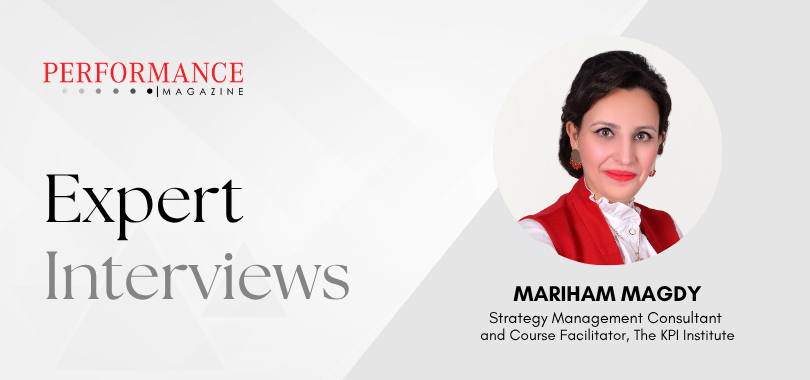
In high-stakes industries like oil and gas, human resources (HR) is more than an administrative function; it’s the engine of operational stability. With over 18 years of corporate experience, Mariham Magdy has built a career navigating the high-pressure demands of this field. As a facilitator for The KPI Institute, she leads the Certified Employee Performance Management Professional, empowering practitioners to bridge the gap between individual output and departmental goals.
A versatile expert, Magdy also delivers the other certifications: Certified KPI Professional, Certified Strategy and Business Planning Professional, Certified Balanced Scorecard Management System Professional, Certified Agile Strategy and Execution Professional, and Certified Strategy and Performance Maturity Assessment Professional. Moreover, she is an award-winning researcher, receiving the Best ROI Article 2018 award from the ROI Institute for her contributions to the field.
In this feature, Magdy shares her approaches to professional development. She explores how leaders thrive in fast-paced environments by treating individual strengths as milestones in a larger narrative. By moving beyond one-size-fits-all briefings, Magdy provides a roadmap for integrating employee well-being into performance discussions to ensure that measurable results never come at the cost of the individual.
Can you describe your current role and how your daily responsibilities relate to HR strategy and performance management? I’m deeply involved in a wide range of HR functions. I’m a strategic HR leader in end-to-end recruitment, ROI-driven talent initiatives, and organization design. By integrating sophisticated selection tools like Competency Based Interview (CBI) and the Myers-Briggs Type Indicator (MBTI), I align human capital with business objectives. My expertise spans HR governance, total rewards, and leadership development (GLA 360), ensuring operational compliance and a sustainable competitive advantage for global clients.
Have you worked in fast-paced or high-pressure environments? If so, can you describe your experience? If not, how do you think employee growth should be included in performance discussions without losing focus on operational results?
Yes, I do have extensive experience thriving in demanding settings, particularly within the oil and gas industry, which is known for its dynamic and high-pressure nature. I have over 18 years of corporate experience, starting from building HR departments from scratch to managing all HR functions.
My experience spans from handling HR operations in the oil and gas sector, including offshore personnel coordination. This has required me to respond swiftly and effectively to unexpected challenges, ensuring both operational continuity and support for the team. Furthermore, leading strategic management and planning initiatives has allowed me to align HR practices with business needs in rapidly changing environments, while implementing performance systems and KPIs that have ensured organizational goals are met even under pressure.
Moreover, delivering training to various management levels in fast-paced sectors has allowed me to maintain quality and engagement, even when timelines are tight.
With your experience in HR, consulting, and training, how do you see the connection between individual development and organizational goals?
In today’s dynamic business environment, organizations are constantly seeking ways to align their strategic objectives with the evolving needs and aspirations of their workforce.
I see the connection between individual development and organizational goals as a catalyst for sustainable growth and innovation for both the organization and the individual. When people see clear pathways for advancement and understand how their growth aligns with broader company goals, they are more likely to innovate and go the extra mile.
Our role then as organizations and learning and development (L&D) professionals is to integrate personal development plans with organizational KPIs. Thus, leaders can transform their teams into engines of achievement and resilience.
When setting performance expectations, what approaches help clarify goals while reflecting each employee’s strengths?
Imagine a team meeting at the start of a new quarter. Instead of delivering a one-size-fits-all briefing, the manager gathers everyone and begins with a question: “What does success look like for each of you, and how can your unique talents help us get there?”
As each team member shares their perspective, the manager listens intently, making note of individual strengths and weaving them directly into the team’s targets. By breaking down overarching objectives into personalized, strength-based tasks, everyone feels seen and valued. Over time, these goals become more than mere metrics; they transform into milestones in an ongoing story where each person’s specific abilities move the team forward.
I always love to apply Steve Jobs’ philosophy with my team: “We don’t hire smart people to tell them what to do, we hire smart people to tell us what to do.”
How do you identify the competencies that matter most for employees in different functions, such as training, consulting, or corporate HR?
Identifying the right competencies for employees in diverse functions like training, consulting, and corporate HR starts with understanding both the unique demands of each role and the broader goals of the organization.
The key is to combine data-driven methods—such as analyzing top performers and collecting feedback from stakeholders—with an appreciation for the evolving landscape of each function. We also have to review job requirements, stay attuned to industry trends, and invite input from employees themselves to ensure that competency frameworks remain relevant and empowering across all areas.
How do you align employee behaviors with performance criteria while keeping assessments flexible and practical?
Leaders should start by clearly articulating what successful behaviors look like in the context of specific roles and team objectives. These criteria should be transparent and directly linked to the company’s values and goals, ensuring that everyone understands how their work and behaviors contribute to the big picture.
To keep assessments practical, organizations can incorporate regular check-ins, peer feedback, and self-reflection opportunities. This creates a dynamic feedback loop where employees are empowered to adjust their approach and see how their behaviors drive results. Flexibility then comes from recognizing that excellence may manifest differently across individuals and situations. As such, performance criteria should allow room for creativity and personal strength.
Based on your experience, what role do informal feedback and day-to-day interactions play in helping employees reach their performance goals?
Let’s imagine a typical scenario that we witness: a busy office where, between project deadlines and team meetings, small conversations happen in the hallway or over coffee. These everyday moments of feedback, often spontaneous and genuine, create a culture where improvement feels natural and supportive rather than intimidating. When employees know their efforts are recognized in real time, they’re more likely to adjust behaviors, reinforce positive habits, and stay motivated.
Informal feedback acts as a compass, keeping everyone on course toward their performance goals, one conversation at a time.
How do you balance structured evaluation processes with opportunities for personal growth for employees?
Structured evaluations, such as annual reviews, goal setting, and competency frameworks, provide clarity and consistency in measuring performance. However, these formal processes must be complemented by avenues for personal growth that acknowledge each employee’s unique talents and aspirations. This could be by encouraging employees to pursue stretch assignments or by allowing space for mentorship, skill-building workshops, and self-directed projects that foster creativity and initiative.
I believe that managers can use performance check-ins to discuss both progress on specific targets and areas where the employee wishes to grow. This dual focus helps employees feel valued for their achievements and empowered to shape their own professional journeys.
When planning development initiatives, what factors guide your choices about which skills or behaviors to focus on?
I prioritize skills and behaviors that not only address current performance gaps but also anticipate future challenges, such as technological changes or shifting client expectations. Gathering input from employees and managers helps ensure that our focus areas are relevant and impactful. This creates opportunities for growth that are meaningful and aligned with our business objectives.
How do you measure progress in employee development beyond standard metrics?
I look for signs such as increased initiative, adaptability to new challenges, and a willingness to take on stretch assignments. Qualitative feedback from peers and managers, examples of creative problem-solving, and evidence of willingness to mentor others are strong indicators of development.
Additionally, I consider how employees pursue self-directed learning, seek feedback, and contribute to a positive team culture. These factors help paint a fuller picture of professional growth that metrics alone cannot capture.
From your perspective, what trends in performance management are influencing HR practices in Egypt and the wider region today?
In Egypt and the wider region, performance management is increasingly shifting toward continuous feedback and development-focused conversations rather than relying solely on annual reviews. There is also a growing emphasis on leveraging technology platforms to streamline performance tracking and data-driven decision-making, which makes the process more transparent and accessible for both employees and managers.
Additionally, there is a trend toward integrating employee well-being and engagement metrics into performance discussions, reflecting a more holistic approach to talent management. As companies are increasingly recognizing the importance of aligning individual and team objectives with organizational strategy, they are focusing on building a culture of continuous learning and adaptability to remain competitive in a rapidly evolving market.
How do you manage the balance between meeting immediate targets and developing longer-term skills in your teams?
I encourage team members to identify learning opportunities within their current projects, so that skill-building becomes part of daily work rather than a separate activity. I also support both the achievement of business objectives and the cultivation of future capabilities within the team
When employees have high autonomy, what practical steps help maintain accountability and alignment with performance expectations?
When employees have high autonomy, it’s important to establish clear goals and regularly communicate expectations to ensure accountability and alignment. Setting measurable criteria, along with frequent check-ins or progress reviews, helps maintain focus and provides opportunities for feedback.
Additionally, fostering a culture of transparency—where team members openly share updates and challenges—encourages mutual responsibility and ensures everyone remains aligned with performance standards.
From your experience, how should feedback be structured to support learning and measurable performance outcomes?
By including well-being and engagement measures, organizations can promote continuous learning, adaptability, and a culture of shared responsibility. Effective feedback in high-autonomy teams should be clear, timely, and actionable, focusing on specific behaviors and measurable outcomes while fostering open dialogue and a growth-oriented mindset.
What strategies work best for keeping motivation and engagement when teams face heavy workloads or tight deadlines?
When teams encounter heavy workloads or tight deadlines, maintaining motivation and engagement hinges on several key strategies. It begins with the clear communication of priorities, which helps individuals focus on the most critical tasks and reduces overwhelm. To sustain this focus over time, breaking large projects into manageable milestones and celebrating small wins can sustain momentum and reinforce progress.
Additionally, regular check-ins support sustaining the efforts in order to acknowledge effort, offer support, address challenges, and create a supportive environment that values both results and well-being.
Throughout your career, which leadership practices have had the greatest impact on employee performance in demanding work settings?
We can summarize leadership practices that have the greatest impact on employee performance in three simple steps: setting clear expectations, communicating priorities effectively, and fostering an environment of open dialogue.
Additionally, recognizing and celebrating incremental achievements sustains engagement and reinforces progress even during high-pressure periods. Promoting transparency around workload and inviting team input also empowers employees to co-create solutions, building trust and a sense of shared responsibility.
**********
Inspired by Mariham Magdy’s perspective on aligning employee growth with organizational performance?
Meta To Roll Out Changes to Performance Review System in 2026
Tech giant Meta is redesigning the way it reviews employee performance in 2026, according to a report by Business Insider.
The revamp will incorporate a review platform dubbed Checkpoint, which will be used to re-examine employee performance biannually to determine if there are any changes. Checkpoint will hone in on identifying both top and bottom performers, rewarding the former with bonuses that could amount to up to 300% of their pay.
“While our employees have always been held to a high-performance, impact-based culture, this new direction allows for more frequent feedback and recognition in a more efficient way,” a Meta spokesperson said.
Meta is set to implement the changes in the middle of 2026.
Amazon Now Requiring Proof of Productivity for Performance Evaluations
Amazon’s annual review process, known internally as Forte, now reportedly requires employees to list three to five primary accomplishments for the year as proof of their performance. This information was gleaned from internal guidelines acquired by Business Insider.
The guidelines define accomplishments as “specific projects, goals, initiatives, or process improvements that show the impact of your work.”
Amazon’s mandate for employees to provide proof of productivity during performance reviews appears to be part of a larger cultural shift in the corporate sector. In September 2025, xAI employees were also asked to list their responsibilities and accomplishments to determine their future in the company.
AI Layoffs Continue to Impact Tech Sector
The technology sector has been hit with another round of layoffs. Quarterly reports indicate that one of India’s prominent IT services firms, TCS, has laid off around 30,000 employees over the span of six months. This massive downsizing was reportedly driven by widespread artificial intelligence (AI) adoption within the tech industry.
These layoffs are not localized phenomena. On the other side of the world, Silicon Valley has faced similar circumstances, as 2025 also saw several AI-driven layoffs.
The layoffs appear indicative of a trend, something many experts expected. In 2025, Goldman Sachs published a report predicting AI-driven layoffs to continue. .
Study Shows Employees Find Narrative-Based Performance Reviews Most Fair
A study conducted by researchers at Cornell University found that narrative-only feedback is considered by employees as the most fair form of feedback in the context of performance reviews. Published in December 2025, the study compared responses from 1,600 employees to performance feedback organized in three formats—numerical-only, narrative-only, or mixed.
The researchers attribute the study’s findings to the employees’ perception and interpretation of data. “We guess that the presence of a numeric component in the combined feedback may have been interpreted as evaluative or accountability focused [sic], rather than developmental. Employees may view feedback with numerical ratings as highlighting their weaknesses,” they wrote in the report.
Despite the findings, the researchers are hesitant to recommend exclusively using narrative-only performance assessments, stating, “…if you don’t have numbers, there can be some other disadvantages when you are trying to do things like administer bonuses or promotions.”
If you’ve ever experienced an unpleasant state of panic and restlessness before a job interview, or presentation, if performance reviews make you feel uncomfortable, if you tend to come up with excuses to avoid being in the spotlight, chances are you’re dealing with workplace performance anxiety. If this condition, affecting millions of people, goes out of hand, it could turn into generalized anxiety disorder or panic attacks.
Apparently, performance anxiety in today’s society is quite common. Healthcare professionals and psychologists have to frequently deal with people (teens, students, young adults) struggling to cope with the pressure of ‘being the best. Nonetheless, the good news is that performance anxiety is treatable through anxiety counseling.
What is Performance Anxiety?
Anxiety disorders are categorized as being amongst the most common mental health issues, whereas, The World Health Organization estimates that approximately 260 million people are living with anxiety globally. Indeed, staying on top of the game can be stressful, considering how, in our constantly evolving society, people become fixated on being competitive while delivering spectacular results.
In addition to WHO’s statistics, Darcy E. Gruttadaro, JD, the director of the Center for Workplace Mental Health at the American Psychiatric Association Foundation, says anxiety disorders are the most frequent mental health condition in the U.S.
“It’s not uncommon for people to feel nervous about a big presentation, meeting with clients, or working directly with senior leaders,” Gruttadaro explains. “Anxiety disorders involve more extreme, often crippling, and persistent levels of fear, apprehension, and worry.”
Gruttadaro points out that red flags suggesting someone might be affected by an anxiety disorder include:
A drop in performance;
Excessive missed days of work;
Not appearing engaged in work;
Physical complaints, like sweating, upset stomach, and not sleeping well (without another rational explanation);
Poor job productivity.
The root cause of anxiety at work depends on the person. For some people, extra-long work hours, high stress, a lack of support from managers and co-workers, and affiliated factors can lead to someone developing anxiety at work, Gruttadaro explains.
Unfortunately, performance anxiety can frequently potentially ruin our career at once, also preventing us from doing what we enjoy, while also impacting self-esteem and self-confidence.
Ironically, people with performance anxiety are commonly perceived by others are being ambitious perfectionists who deliver impeccable outcomes, bringing a contribution to the overall ‘wellbeing’ of the company.
However, many people ignore the fact that people with performance anxiety generally struggle with self-doubt. The motive behind their state is the conflict between self-imposed standards and self-doubt.
Overcoming workplace anxiety can start by adjusting your mindset.
You could follow these next tips to rise above it:
Plan ahead, by preparing yourself for potentially unpleasant surprises. Planning will save you a lot of headaches, whenever you have to deliver a striking product presentation, cut loose a brilliant idea, etc. You can do this by brainstorming or actually putting it all down on paper.
Challenge your thinking, by reinterpreting how your audience (authority figures, management), perceives you, preventing your anxiety-filled thoughts to bring your worst fears to life. By adopting a set of rational beliefs, you’re challenging your mindset, avoiding counterproductive irrational thoughts that fuel your workplace performance anxiety. Moreover, a rational perspective will nurture in you positive emotions, such as encouragement and enthusiasm.
Reframe failure, by turning it into a valuable learning opportunity. People struggling with workplace performance anxiety are terrified of criticism (constructive/destructive), perceiving it as a sign of failure. However, failure is part of life, whereas you should think of the fact that successful people have failed countless times, with each challenge they surpassed making them stronger and wiser.
Try not to get anxious, get excited!In 2013, a professor at Harvard University published a study emphasizing how performance anxiety can be reassessed as excitement, by encouraging subjects to exclaim: “I’m excited” prior to participating in several activities. Therefore, by telling yourself this, instead of “I’m concerned/anxious”, anxiety can be used to your advantage, transforming it into a driving force.
Celebrate your success, by marking your work and thanking the people who helped you, before moving on to your next task.
Take breaks when you need to. Taking a walk to clear your head, going on a vacation would do the trick, in terms of feeling refreshed and ready to get back to work once your return.
Use your time management skills. Via time management, your anxiety could be, to some extent, alleviated. You can use to-do lists to prioritize your assignments, whereas these can also help you reserve enough time to accomplish each task.
In conclusion, overcoming workplace performance anxiety mainly revolves around challenging your irrational beliefs and adopting a healthy right attitude towards criticism, feedback, and evaluation, and failure, respectively.