Leaders have different ways and strategies to engage their employees,depending on the size of each organization. Employees’ productivity is, most of the times, reflected in their commitment towards the organization. Therefore, every organization defines and has diverse approaches to make their workers engaged and, ultimately, more productive.
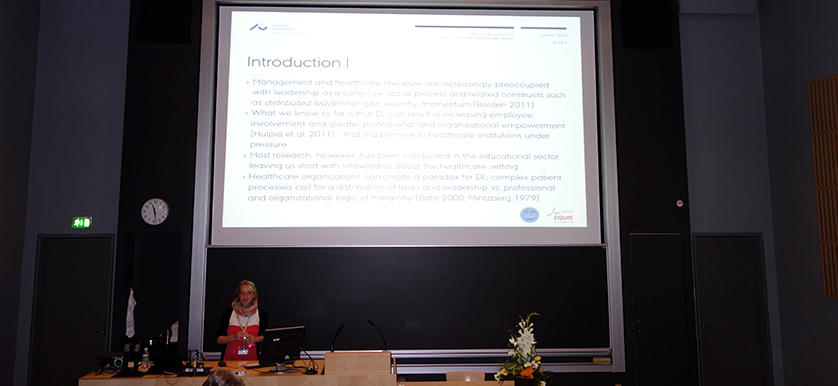
The presentation “Relationship between Trust, Distributed Leadership and Job Performance in Health Care Context: Exploring the mediating role of Job Satisfaction” was offered, on the third day of the PMA 2014 Conference, by Ajay K. Jain, from the Department of Human Behavior and Organization Development, of the Management Development Institute Gurgaon, India and along with Franziska Guenzel-Jensen, of the Aarhus University.
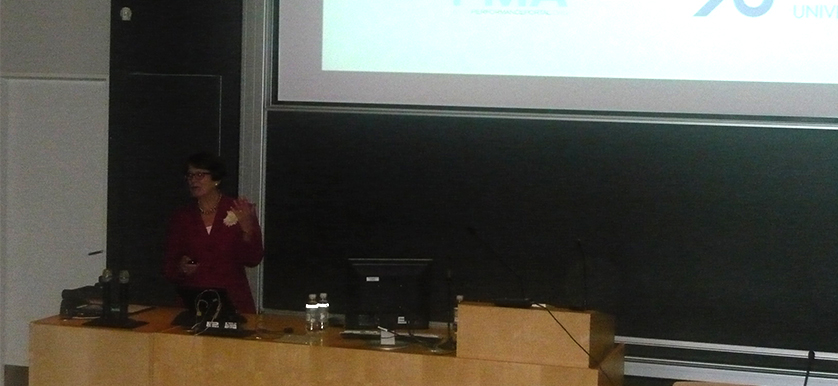
The presentation “Disciplined collaborative performance as the road to results” was offered, in the second day of the PMA 2014 Conference, by Mary Jo Hall, from Gambrough Group, DeVry University, and Association for Talent Development, USA.
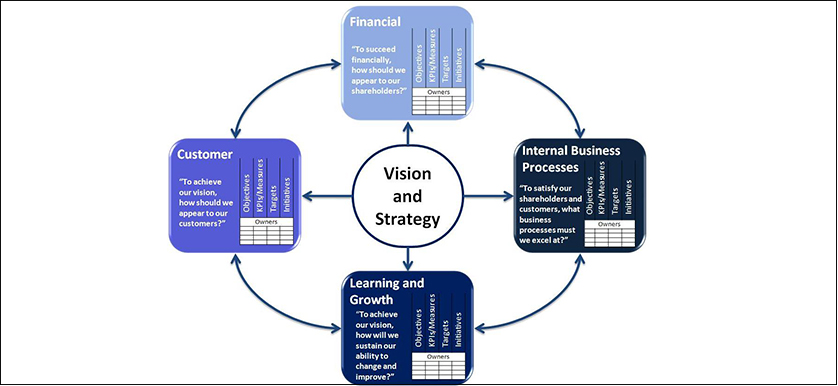
One of the leading international management thinkers, Professor Robert Kaplan, from Harvard Business School, made a visit in Australia in mid September 2010 to talk about the new developments in the field of strategic performance management and Balanced Scorecard.
As it goes, discussing team performance and performance management gives due attention to means and measurements that address staff qualities. This is understandable, as a great part of the overall productivity is attributed to the quality and effort invested by team members into their work. Also, there is a reasonably larger number of team members, than there are team managers and leaders. This assumption provides a healthy premise for investing in research that aims for boosting performance through stimulating staff qualities. Nevertheless, when discussing team efficacy, one cannot and should not overlook the effect team leaders have on the overall performance.