Expert Interview Series: Balancing People, Performance, and Growth with Mariham Magdy


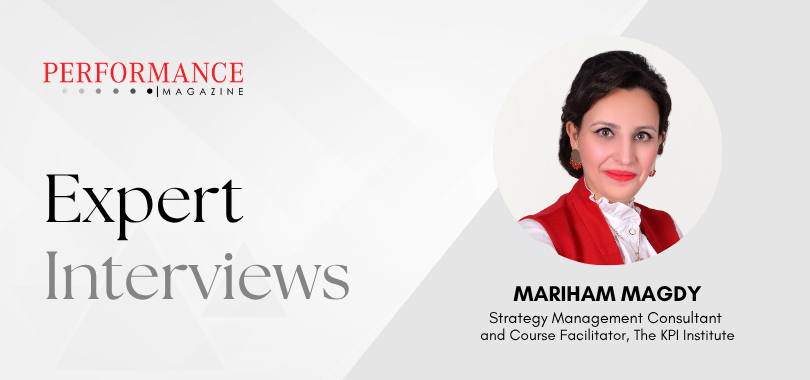
In high-stakes industries like oil and gas, human resources (HR) is more than an administrative function; it’s the engine of operational stability. With over 18 years of corporate experience, Mariham Magdy has built a career navigating the high-pressure demands of this field. As a facilitator for The KPI Institute, she leads the Certified Employee Performance Management Professional, empowering practitioners to bridge the gap between individual output and departmental goals.
A versatile expert, Magdy also delivers the other certifications: Certified KPI Professional, Certified Strategy and Business Planning Professional, Certified Balanced Scorecard Management System Professional, Certified Agile Strategy and Execution Professional, and Certified Strategy and Performance Maturity Assessment Professional. Moreover, she is an award-winning researcher, receiving the Best ROI Article 2018 award from the ROI Institute for her contributions to the field.
In this feature, Magdy shares her approaches to professional development. She explores how leaders thrive in fast-paced environments by treating individual strengths as milestones in a larger narrative. By moving beyond one-size-fits-all briefings, Magdy provides a roadmap for integrating employee well-being into performance discussions to ensure that measurable results never come at the cost of the individual.
Can you describe your current role and how your daily responsibilities relate to HR strategy and performance management?
I’m deeply involved in a wide range of HR functions. I’m a strategic HR leader in end-to-end recruitment, ROI-driven talent initiatives, and organization design. By integrating sophisticated selection tools like Competency Based Interview (CBI) and the Myers-Briggs Type Indicator (MBTI), I align human capital with business objectives. My expertise spans HR governance, total rewards, and leadership development (GLA 360), ensuring operational compliance and a sustainable competitive advantage for global clients.
Have you worked in fast-paced or high-pressure environments? If so, can you describe your experience? If not, how do you think employee growth should be included in performance discussions without losing focus on operational results?
Yes, I do have extensive experience thriving in demanding settings, particularly within the oil and gas industry, which is known for its dynamic and high-pressure nature. I have over 18 years of corporate experience, starting from building HR departments from scratch to managing all HR functions.
My experience spans from handling HR operations in the oil and gas sector, including offshore personnel coordination. This has required me to respond swiftly and effectively to unexpected challenges, ensuring both operational continuity and support for the team. Furthermore, leading strategic management and planning initiatives has allowed me to align HR practices with business needs in rapidly changing environments, while implementing performance systems and KPIs that have ensured organizational goals are met even under pressure.
Moreover, delivering training to various management levels in fast-paced sectors has allowed me to maintain quality and engagement, even when timelines are tight.
With your experience in HR, consulting, and training, how do you see the connection between individual development and organizational goals?
In today’s dynamic business environment, organizations are constantly seeking ways to align their strategic objectives with the evolving needs and aspirations of their workforce.
I see the connection between individual development and organizational goals as a catalyst for sustainable growth and innovation for both the organization and the individual. When people see clear pathways for advancement and understand how their growth aligns with broader company goals, they are more likely to innovate and go the extra mile.
Our role then as organizations and learning and development (L&D) professionals is to integrate personal development plans with organizational KPIs. Thus, leaders can transform their teams into engines of achievement and resilience.
When setting performance expectations, what approaches help clarify goals while reflecting each employee’s strengths?
Imagine a team meeting at the start of a new quarter. Instead of delivering a one-size-fits-all briefing, the manager gathers everyone and begins with a question: “What does success look like for each of you, and how can your unique talents help us get there?”
As each team member shares their perspective, the manager listens intently, making note of individual strengths and weaving them directly into the team’s targets. By breaking down overarching objectives into personalized, strength-based tasks, everyone feels seen and valued. Over time, these goals become more than mere metrics; they transform into milestones in an ongoing story where each person’s specific abilities move the team forward.
I always love to apply Steve Jobs’ philosophy with my team: “We don’t hire smart people to tell them what to do, we hire smart people to tell us what to do.”
How do you identify the competencies that matter most for employees in different functions, such as training, consulting, or corporate HR?
Identifying the right competencies for employees in diverse functions like training, consulting, and corporate HR starts with understanding both the unique demands of each role and the broader goals of the organization.
The key is to combine data-driven methods—such as analyzing top performers and collecting feedback from stakeholders—with an appreciation for the evolving landscape of each function. We also have to review job requirements, stay attuned to industry trends, and invite input from employees themselves to ensure that competency frameworks remain relevant and empowering across all areas.
How do you align employee behaviors with performance criteria while keeping assessments flexible and practical?
Leaders should start by clearly articulating what successful behaviors look like in the context of specific roles and team objectives. These criteria should be transparent and directly linked to the company’s values and goals, ensuring that everyone understands how their work and behaviors contribute to the big picture.
To keep assessments practical, organizations can incorporate regular check-ins, peer feedback, and self-reflection opportunities. This creates a dynamic feedback loop where employees are empowered to adjust their approach and see how their behaviors drive results. Flexibility then comes from recognizing that excellence may manifest differently across individuals and situations. As such, performance criteria should allow room for creativity and personal strength.
Based on your experience, what role do informal feedback and day-to-day interactions play in helping employees reach their performance goals?
Let’s imagine a typical scenario that we witness: a busy office where, between project deadlines and team meetings, small conversations happen in the hallway or over coffee. These everyday moments of feedback, often spontaneous and genuine, create a culture where improvement feels natural and supportive rather than intimidating. When employees know their efforts are recognized in real time, they’re more likely to adjust behaviors, reinforce positive habits, and stay motivated.
Informal feedback acts as a compass, keeping everyone on course toward their performance goals, one conversation at a time.
How do you balance structured evaluation processes with opportunities for personal growth for employees?
Structured evaluations, such as annual reviews, goal setting, and competency frameworks, provide clarity and consistency in measuring performance. However, these formal processes must be complemented by avenues for personal growth that acknowledge each employee’s unique talents and aspirations. This could be by encouraging employees to pursue stretch assignments or by allowing space for mentorship, skill-building workshops, and self-directed projects that foster creativity and initiative.
I believe that managers can use performance check-ins to discuss both progress on specific targets and areas where the employee wishes to grow. This dual focus helps employees feel valued for their achievements and empowered to shape their own professional journeys.
When planning development initiatives, what factors guide your choices about which skills or behaviors to focus on?
I prioritize skills and behaviors that not only address current performance gaps but also anticipate future challenges, such as technological changes or shifting client expectations. Gathering input from employees and managers helps ensure that our focus areas are relevant and impactful. This creates opportunities for growth that are meaningful and aligned with our business objectives.
How do you measure progress in employee development beyond standard metrics?
I look for signs such as increased initiative, adaptability to new challenges, and a willingness to take on stretch assignments. Qualitative feedback from peers and managers, examples of creative problem-solving, and evidence of willingness to mentor others are strong indicators of development.
Additionally, I consider how employees pursue self-directed learning, seek feedback, and contribute to a positive team culture. These factors help paint a fuller picture of professional growth that metrics alone cannot capture.
From your perspective, what trends in performance management are influencing HR practices in Egypt and the wider region today?
In Egypt and the wider region, performance management is increasingly shifting toward continuous feedback and development-focused conversations rather than relying solely on annual reviews. There is also a growing emphasis on leveraging technology platforms to streamline performance tracking and data-driven decision-making, which makes the process more transparent and accessible for both employees and managers.
Additionally, there is a trend toward integrating employee well-being and engagement metrics into performance discussions, reflecting a more holistic approach to talent management. As companies are increasingly recognizing the importance of aligning individual and team objectives with organizational strategy, they are focusing on building a culture of continuous learning and adaptability to remain competitive in a rapidly evolving market.
How do you manage the balance between meeting immediate targets and developing longer-term skills in your teams?
I encourage team members to identify learning opportunities within their current projects, so that skill-building becomes part of daily work rather than a separate activity. I also support both the achievement of business objectives and the cultivation of future capabilities within the team
When employees have high autonomy, what practical steps help maintain accountability and alignment with performance expectations?
When employees have high autonomy, it’s important to establish clear goals and regularly communicate expectations to ensure accountability and alignment. Setting measurable criteria, along with frequent check-ins or progress reviews, helps maintain focus and provides opportunities for feedback.
Additionally, fostering a culture of transparency—where team members openly share updates and challenges—encourages mutual responsibility and ensures everyone remains aligned with performance standards.
From your experience, how should feedback be structured to support learning and measurable performance outcomes?
By including well-being and engagement measures, organizations can promote continuous learning, adaptability, and a culture of shared responsibility. Effective feedback in high-autonomy teams should be clear, timely, and actionable, focusing on specific behaviors and measurable outcomes while fostering open dialogue and a growth-oriented mindset.
What strategies work best for keeping motivation and engagement when teams face heavy workloads or tight deadlines?
When teams encounter heavy workloads or tight deadlines, maintaining motivation and engagement hinges on several key strategies. It begins with the clear communication of priorities, which helps individuals focus on the most critical tasks and reduces overwhelm. To sustain this focus over time, breaking large projects into manageable milestones and celebrating small wins can sustain momentum and reinforce progress.
Additionally, regular check-ins support sustaining the efforts in order to acknowledge effort, offer support, address challenges, and create a supportive environment that values both results and well-being.
Throughout your career, which leadership practices have had the greatest impact on employee performance in demanding work settings?
We can summarize leadership practices that have the greatest impact on employee performance in three simple steps: setting clear expectations, communicating priorities effectively, and fostering an environment of open dialogue.
Additionally, recognizing and celebrating incremental achievements sustains engagement and reinforces progress even during high-pressure periods. Promoting transparency around workload and inviting team input also empowers employees to co-create solutions, building trust and a sense of shared responsibility.
**********
Inspired by Mariham Magdy’s perspective on aligning employee growth with organizational performance?
Take the next step with The KPI Institute’s Certified Employee Performance Management Professional course—where you might have the opportunity to learn directly from her as a facilitator.