More engagement, more performance!


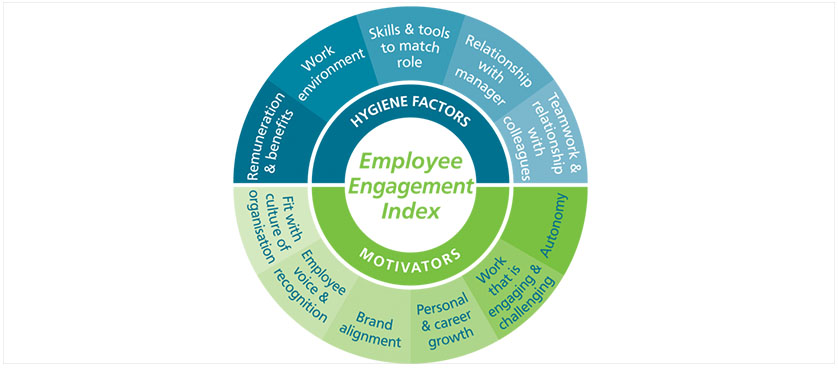
Employee engagement is a very popular concept nowadays. In a severe competition on most markets, the human resource represents an important competitive advantage.
Get the opportunity to grow your influence by giving your products or services prime exposure with Performance Magazine.
If you are interested in advertising with Performance Magazine, leave your address below.

Employee engagement is a very popular concept nowadays. In a severe competition on most markets, the human resource represents an important competitive advantage.


Firm performance can be measured in so many ways and according to so many factors. One of these factors may be gender and the issues linked to it in the business world. The long-discussed problem of women entering the business world and occupying a wide range of positions that are generally thought as masculine, appears to reach now a common level of understanding. Companies are now displaying encouragement for female candidates to apply to vacant positions and the response does not fail to emerge. More and more women now hold important positions in the hierarchy of a company, thus creating confidence for others to follow.


We all know that when an ambulance approaches, with its siren on, we should pull over in order to make room for it. But what if your radio is on, windows up and you can’t hear it coming? Well, that’s not a problem anymore, as now ambulances can hijack nearby AM and FM signals to announce their arrival to the drivers. If you think this is illegal, you are wrong.


The Sherman Kent School for Intelligence Analysis was created in 2000, in order to address the Agency’s analytic weaknesses, being meant to enable intelligence officers to work in cross-component teams and to increase their analytic depth and improve their expertise in producing finished intelligence analysis. It was named after Sherman Kent, a leader in developing the profession of intelligence analysis, who also had a great impact in turning DI into what it is today.


A great number of articles in the recent press publications discuss the idea of great sales managers. They all focus on listing tips, solutions and methods to use in order to become a successful sales manager. Being a sales manager implies having great responsibilities like making sure the team they lead is reaching the daily, weekly, monthly and yearly targets. Along with this responsibility, they have the moral obligation to coach and motivate every member of the team, as well as possessing the knowledge on ways to develop the business and execute successful sales strategies.
Terms of use | Privacy Statement | Cookie Policy | Disclaimer | Online Dispute Resolution (ODR)
Copyright © 2004-2026 The KPI Institute Pty. Ltd. All rights reserved