In Performance Management, the performance review meeting, as conceptualized by Robert Bacal in his book “A Briefcase Book”, is seen as a process in which the manager and the employee encounter in order to work together and discuss performance matters, such as the degree to which the employee has attained his or her goals.
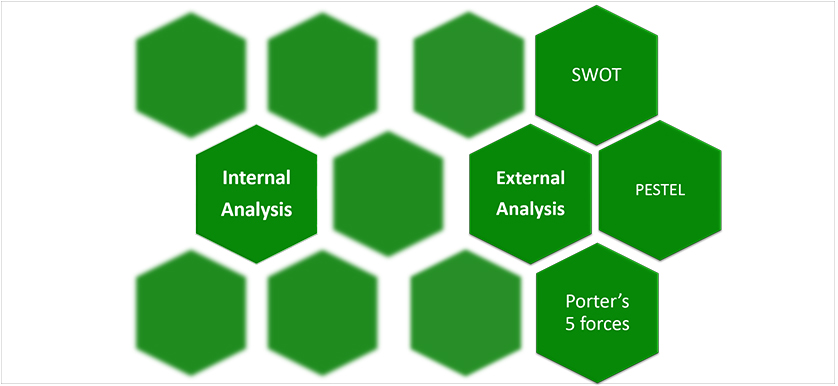
Every company has a strategy regarding the objectives they want to achieve, but the difference between a successful and an unsuccessful strategy lies in the steps that are taken when formulating the strategy, more specifically in the first step, the external analysis. In order to facilitate this process, organizations can deploy a number of tools to perform an external analysis thoroughly.
1. SWOT
It is an acronym for Strengths, Weaknesses, Opportunities and Threats. Strengths and Weaknesses are used for the internal scan of the company, while Opportunities and Threats are part of the external scan. By analyzing the external environment, the company can better focus its internal resources to reduce the threats and capitalize on its opportunities.
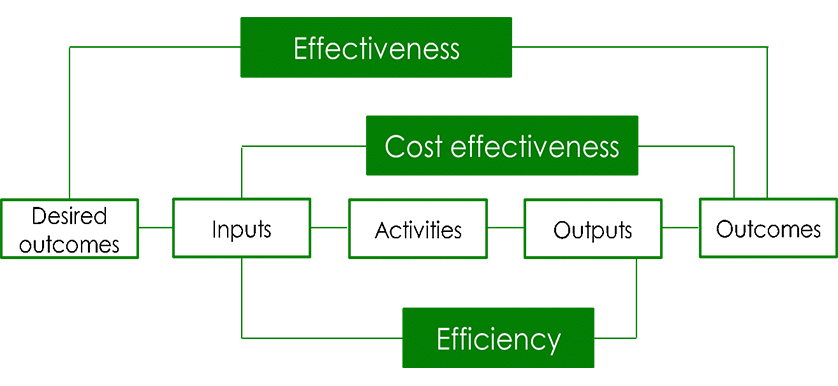
The Value Flow Analysis (VFA) represents a Key Performance Indicators (KPIs) selection technique, focused on analyzing the value generated by a system at all stages: Input, Process, Output and Outcome. This technique is mostly used during the KPI selection workshop, in order to properly measure the value generated within each stage. For each objective, KPIs are selected for Input, Process, Output and Outcome. Based on this initial listing, the KPIs that best reflect the achievement of the objective are selected.
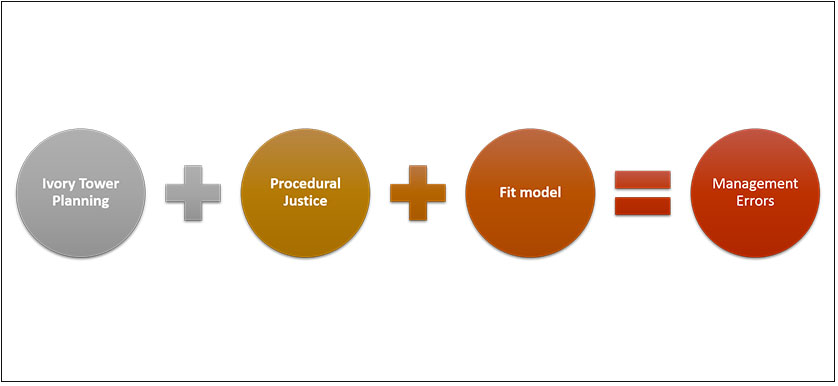
When discussing about management errors, Eleanor Roosevelt said it best: “Learn from the mistakes of others. You can’t live long enough to make them all yourself. ” If we analyze the decision making process in companies all over the world, we find that mistakes are common, but what makes the difference between an excellent and an average manager, is the ability to find solutions for errors and learn from others’ mistakes.