Improving ambulance services


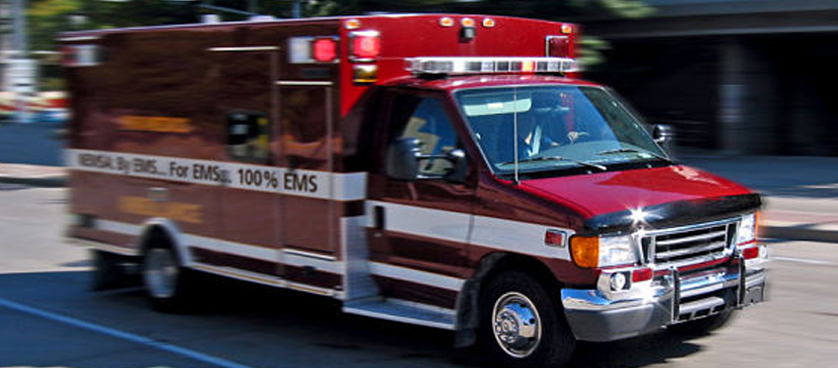
We all know that when an ambulance approaches, with its siren on, we should pull over in order to make room for it. But what if your radio is on, windows up and you can’t hear it coming? Well, that’s not a problem anymore, as now ambulances can hijack nearby AM and FM signals to announce their arrival to the drivers. If you think this is illegal, you are wrong. In Ecuador, for instance, a creative agency cooperates with the Radio Association of Ecuador in order to ‘suit up’ ambulances: they are equipped with low-power broadcast antennas, overriding all AM and FM station within a 1 km range. So, those who are near-by can be alerted well in advance, thus reducing considerably the ambulance response time.
Truly, this is an interesting way of reducing the ambulance response time. However, this is not enough to increase the performance of ambulance services, as there’s more here than meets the eye. Although time is a significant issue related to clinical outcomes for some life-threatening calls, it makes up only for a small number of cases. Therefore, performance indicators that measure the quality and appropriateness of pre-hospital care, as well as its timeliness, have to be set in place. Ambulance services have been encouraged to develop performance measures in order to promote a more efficient and effective operational management, being under a constant pressure of meeting the expectations of consumers, funders and managers.
Performance management can be defined briefly as the process ensuring that goals are constantly being met in an effective and efficient manner, by collecting and collating individual indicators. Performance measures or benchmarks have to be reliable, easy to understand and their collection must be cost-effective.
The ambulance services need to have performance indicators that fit into a wider performance framework. The community is interested in the extent to which ambulance services are:
• accessible, in the face of financial, geographic, organizational and cultural barriers;
• clinically effective;
• appropriate to need;
• timely;
• in line with agreed standards;
• delivered by appropriately trained and educated staff.
For instance, in the U.S., the Emergency Medical Services Outcome Project (EMSOP) provides a useful framework for ambulance service performance measurement. The following table is a summary of the six major outcome categories:
| Term | Definition |
| Survival | Mortality directly attributable to the condition. |
| Impaired physiology | Objectively measurable signs of altered physiology. |
| Limit disability | A change in the functional status of the patient in terms of ability to live independently and go about their daily lives at home, work, or recreation. |
| Alleviate discomfort | Uncomfortable symptoms such as pain, nausea, vertigo, or shortness of breath. |
| Satisfaction | Expectations of patients and families are met by service provided |
| Cost-effectiveness | The financial consequences of health care to the patient and society. |
Another great example would be the South Australian Ambulance Service, which developed an integrated measurement system encompassing the need for measures and indicators at operational, managerial and strategic levels. Eight success measures were defined and then ten performance indicators were linked to them, making it possible to measure the ambulance service performance in those areas. When measuring performance, the most important step must be establishing the effectiveness of an intervention. The following table summarizes the South Australian Ambulance Service framework:
| Success Measures | Key Performance Indicators |
| Patients ready for ongoing treatment | Patient condition on delivery |
| Accuracy of information to hospital | |
| Timelines | Time from emergency call to arrival at hospital |
| Delay in meeting Ambulance Transport Services contracted commitments | |
| Communication with patients | Communication with patients |
| Cost | Cost relative to best practice |
| Revenue | Revenue |
| Preparedness for disasters | Preparedness for disasters |
| Community awareness | Community confidence rating |
| Staff satisfaction | Employee satisfaction rating |
We should all agree that, in one way or another, the traditional performance indicators used to measure and monitor the ambulance service need to be improved as time passes. Its importance is crucial, as it is a question of life and death.
References:
Image Source:

Tags: Healthcare performance, KPI, KPI in Practice, Performance in Ecuador, Performance Management